
Learning Hub
Glossary
Aluminum (Al)
Aluminum (chemical symbol Al, atomic number 13) is a lightweight, silvery-white metal known for its low density, strength-to-weight ratio, corrosion resistance, and high electrical and thermal conductivity. It is the most abundant metal in the Earth’s crust, making up about 8% of its mass, and is the second most widely used metal in the world, after steel.
In its pure form, aluminum is soft, ductile, and nonmagnetic, but it becomes much stronger when alloyed with other elements such as magnesium, silicon, copper, zinc, and manganese. These alloys are used extensively across industries because they combine lightness with strength and durability.
One of aluminum’s most important properties is its natural corrosion resistance. When exposed to air, it forms a thin, protective layer of aluminum oxide (Al₂O₃) on its surface that prevents further oxidation. This makes it ideal for applications in aerospace, automotive, construction, and marine environments.
Because it is both lightweight and strong, aluminum is used in aircraft and spacecraft structures, vehicle frames, bridges, and building facades. It’s also highly conductive, making it a common material for power lines, electronics, and heat exchangers. Additionally, it’s non-toxic and impermeable, which makes it perfect for food packaging, beverage cans, and kitchen utensils.
Aluminum is extracted primarily from bauxite ore, which is refined into alumina (aluminum oxide) and then reduced to metallic aluminum using the Hall–Héroult electrolytic process. This process is energy-intensive, which is why aluminum recycling is so valuable—recycling aluminum requires only about 5% of the energy needed to produce new metal.
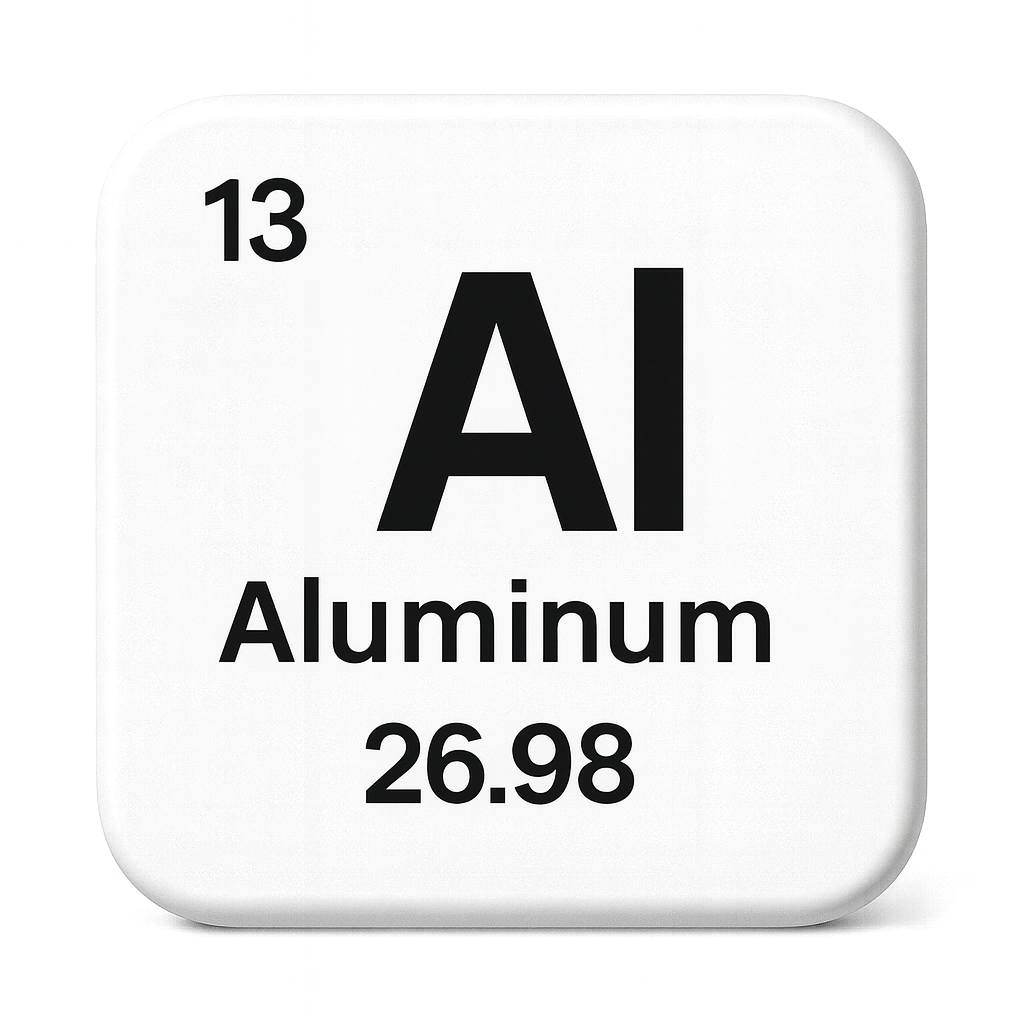
Aluminum 1100
Aluminum 1100 (often written AA 1100) is a commercially pure wrought aluminum in the 1xxx series, meaning it’s at least 99.00% aluminum by composition. In industrial terms, 1100 is chosen when you want aluminum’s “greatest hits”—excellent corrosion resistance, very high formability, and high thermal/electrical conductivity—and you don’t need high strength.
Because it’s essentially pure aluminum, 1100 is not heat-treatable for strengthening; instead, it’s strengthened mainly by cold work (the “H” tempers). You’ll commonly see it sold as 1100-O (annealed, soft for deep drawing/spinning) or 1100-H14 (half-hard, a common “commercial grade” sheet temper that’s stiffer but less formable than O).
Where it shows up (applications): 1100 is a workhorse for chemical equipment and food-handling/packaging, heat exchanger and fin stock, decorative/trim and lighting reflectors, and lots of thin-gauge formed parts where corrosion resistance and shaping are more important than strength. It’s also used for items like nameplates/dials, spun hollowware, foil/containers, and certain rivets (in the “pure aluminum” family).
The designation “1100” comes from the wrought aluminum numbering system created and maintained by The Aluminum Association. According to the Association, the wrought alloy designation system was established in 1954, later approved as ANSI H35.1, and then adopted internationally in 1970 as part of the international designation framework. In that system, the “1xxx” series denotes 99%+ aluminum, and for 1xxx alloys the last two digits relate to the minimum aluminum purity—so “1100” corresponds to 99.00% minimum Al.
How It's Made
Aluminum 1100 starts with making primary aluminum metal. Bauxite ore is refined into alumina (Al₂O₃) using the Bayer refining route, then alumina is converted into molten aluminum by the Hall–Héroult electrolytic smelting process. In Hall–Héroult, alumina is dissolved in a molten cryolite bath and electric current separates aluminum from oxygen; molten aluminum collects and is tapped into holding furnaces for further processing.
To make AA 1100, the melt shop targets a “commercially pure” chemistry: ≥99.00% aluminum, with tightly controlled small amounts of elements like iron and silicon (and trace limits on others). This is why 1100 has excellent corrosion resistance and conductivity—but it’s also why it’s not heat-treatable for strength; it can’t be precipitation-hardened the way 2xxx/6xxx/7xxx alloys can.
From there, the alloy is typically cast into a wrought product form—most commonly a rolling ingot/slab (for sheet/plate) or a billet (for extrusion). For sheet products, the standard downstream route is: ingot casting → hot rolling → cold rolling → finishing. Plants often include steps like scalping the ingot surface, homogenizing/preheating the ingot to even out microstructure/segregation, then hot rolling down to a workable gauge before cold rolling to final thickness.
Finally, 1100’s “strength level” is set mainly by cold work and annealing, which is why you see tempers like 1100-O (fully annealed/soft for deep drawing and spinning) and 1100-H14 (strain-hardened to “half-hard,” a very common sheet temper). In other words: you roll it down (cold reduction increases strength), then you may partially anneal to land at the desired balance of strength vs. formability—rather than solution-treating and aging like a heat-treatable alloy.
AKA: AA 1100
Aluminum Alloy
An aluminum alloy is a metallic material composed primarily of aluminum combined with one or more additional elements to improve its mechanical, chemical, or physical properties. Pure aluminum is relatively soft and has limited strength, so alloying elements are added to increase characteristics such as strength, hardness, corrosion resistance, wear resistance, or high-temperature performance. These alloys allow aluminum to be used in demanding structural applications while retaining the metal’s natural advantages, including low density, good corrosion resistance, and high thermal and electrical conductivity.
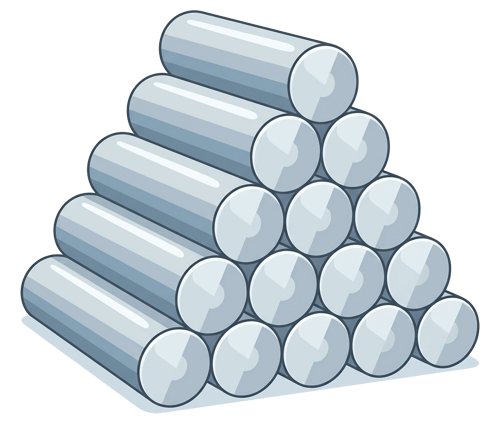
Aluminum alloys are created by adding controlled amounts of elements such as copper, magnesium, silicon, zinc, manganese, or lithium to molten aluminum during the manufacturing process. Each alloying element changes the internal structure of the metal in specific ways. For example, copper can significantly increase strength through heat treatment, magnesium improves strength and corrosion resistance, silicon enhances casting properties and wear resistance, and zinc contributes to the very high strength seen in certain aerospace alloys. These elements form solid solutions or microscopic precipitates within the aluminum’s crystal structure, which impede dislocation movement and increase the material’s strength.
Aluminum alloys are generally grouped into two broad categories: wrought alloys and cast alloys. Wrought aluminum alloys are mechanically worked into shapes through processes such as rolling, extrusion, forging, or drawing. These alloys are commonly used for structural components, sheet, plate, and fasteners. Cast aluminum alloys, on the other hand, are poured into molds while molten to produce complex shapes such as engine blocks, housings, and machine components. The alloy compositions used for casting are optimized to flow well and solidify without defects.
Wrought aluminum alloys are further organized into numbered alloy series, each indicating the primary alloying element. For example, the 1xxx series consists of nearly pure aluminum used for electrical conductivity and corrosion resistance; the 2xxx series contains aluminum-copper alloys used in aerospace structures; the 3xxx series contains aluminum-manganese alloys known for good formability; the 5xxx series includes aluminum-magnesium alloys used in marine environments; the 6xxx series combines magnesium and silicon and is widely used in structural extrusions; and the 7xxx series contains aluminum-zinc alloys that provide extremely high strength for aerospace applications.
Many aluminum alloys can also be heat treated to increase their strength. In heat-treatable alloys, controlled heating and cooling produce fine precipitates within the aluminum matrix that strengthen the material through a mechanism known as precipitation hardening. Other alloys strengthen primarily through strain hardening, where mechanical deformation during rolling or forming increases the metal’s strength.
Because aluminum alloys combine light weight with relatively high strength, they are widely used in industries such as aerospace, transportation, construction, marine engineering, electronics, and industrial manufacturing. Aircraft structures, automotive components, heat exchangers, pressure vessels, and many types of fasteners rely on aluminum alloys for their favorable strength-to-weight ratio and corrosion resistance.
Aluminum Association
The Aluminum Association is the main U.S. trade association representing the aluminum industry—covering primary production, value-added products, recycling, and key suppliers. It acts as the industry’s “front door” for advocacy, industry data/statistics, and technical insight, and it says its member companies account for about 70% of the aluminum and aluminum products shipped in North America.
A big practical reason engineers and buyers run into the Aluminum Association is standards and alloy designations. The Association serves as the secretariat/administrator for the American National Standards Institute H35 committee and is tied to the ANSI H35.1 / H35.1M designation system that governs alloy and temper naming/registration (the “AA 6061-T6” style nomenclature).
The Association’s own history materials describe roots in 1933 (during the New Deal era) and note it reorganized into the Aluminum Association “as we know it today” in 1935, with an early official meeting held in October 1935.

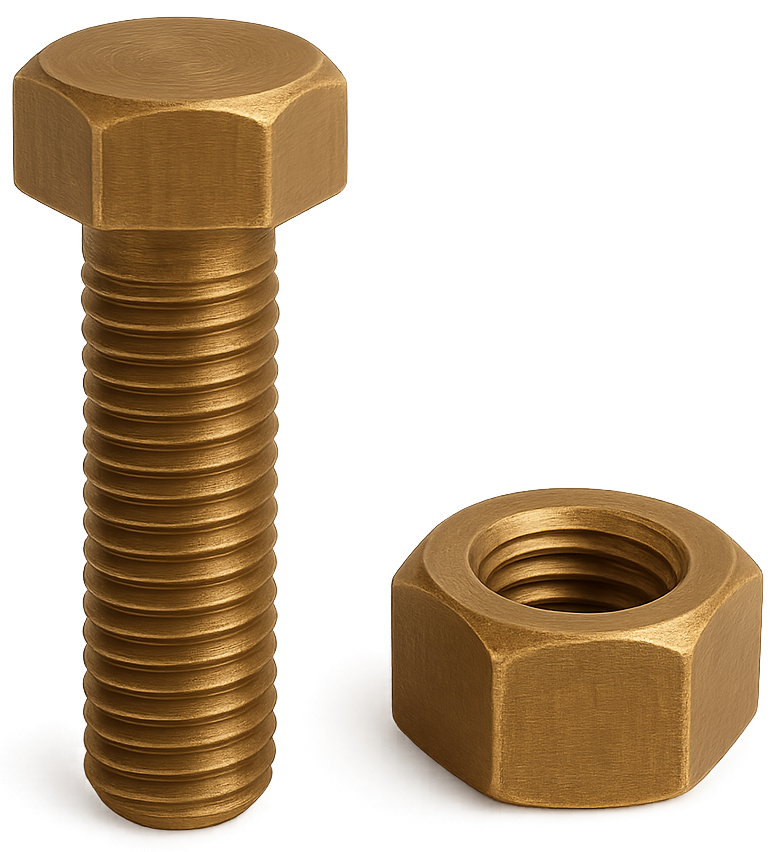
Aluminum Bronze Fasteners
An Aluminum Bronze Fastener is a bolt, screw, nut, or other fastening component made from aluminum bronze, which is a copper-based alloy containing 5–12% aluminum and sometimes additional elements such as iron, nickel, or manganese. This alloy is highly valued for its combination of high strength, excellent corrosion resistance, and long-term durability, particularly in environments where other materials would fail. These properties make aluminum bronze fasteners a preferred choice in demanding and specialized industrial applications.
The properties of aluminum bronze fasteners are extensive. Their strength is comparable to, and in some cases greater than, many steels, yet they retain good ductility, which allows them to be used in applications requiring both toughness and flexibility. They also offer outstanding corrosion resistance, remaining unaffected by seawater, brine, sulfides, chlorides, and many industrial chemicals, which makes them especially well-suited for marine and offshore use. In addition, aluminum bronze has low-friction characteristics that provide excellent wear and galling resistance, reducing the chance of thread damage during installation or use. Another key property is that these fasteners are non-sparking, making them safe for use in explosive or flammable environments such as oil refineries, offshore rigs, and munitions facilities. Furthermore, because of their copper content, aluminum bronze fasteners also have antimicrobial qualities, helping resist bacteria and biofouling in wet or marine conditions.
These fasteners offer several advantages beyond their basic material properties. They deliver a long service life when used in saltwater and corrosive atmospheres, ensuring reliability in applications where replacement would be costly or impractical. They also retain their mechanical properties over a wide temperature range, performing effectively in both high and low heat environments. In addition, they combine strength with fatigue resistance, making them suitable for use in areas exposed to repeated stress and vibration. Their ability to withstand heavy loads while maintaining durability makes them ideal for critical installations.
The applications of aluminum bronze fasteners are broad and span multiple industries. In the marine industry, they are widely used in shipbuilding, propeller systems, pumps, and seawater valves. In oil and gas, they are applied in offshore drilling rigs, subsea equipment, and pipelines, where both corrosion resistance and non-sparking qualities are vital. In aerospace, they are chosen for areas requiring strength, fatigue resistance, and corrosion protection. In mining and heavy industry, these fasteners are used where abrasive and corrosive conditions are common, while in power generation, they are employed in turbines and equipment that operate in high-heat, high-humidity conditions.
Aluminum bronze fasteners are manufactured to meet strict standards to ensure consistency and performance. They are commonly produced in accordance with ASTM B150, ASME, or DIN specifications, which define alloy composition and mechanical requirements. Adjustments in aluminum and nickel content are made depending on the intended application, allowing manufacturers to tailor the alloy for specific mechanical strength or environmental resistance. This makes aluminum bronze fasteners a versatile and reliable option for some of the most challenging industrial environments.
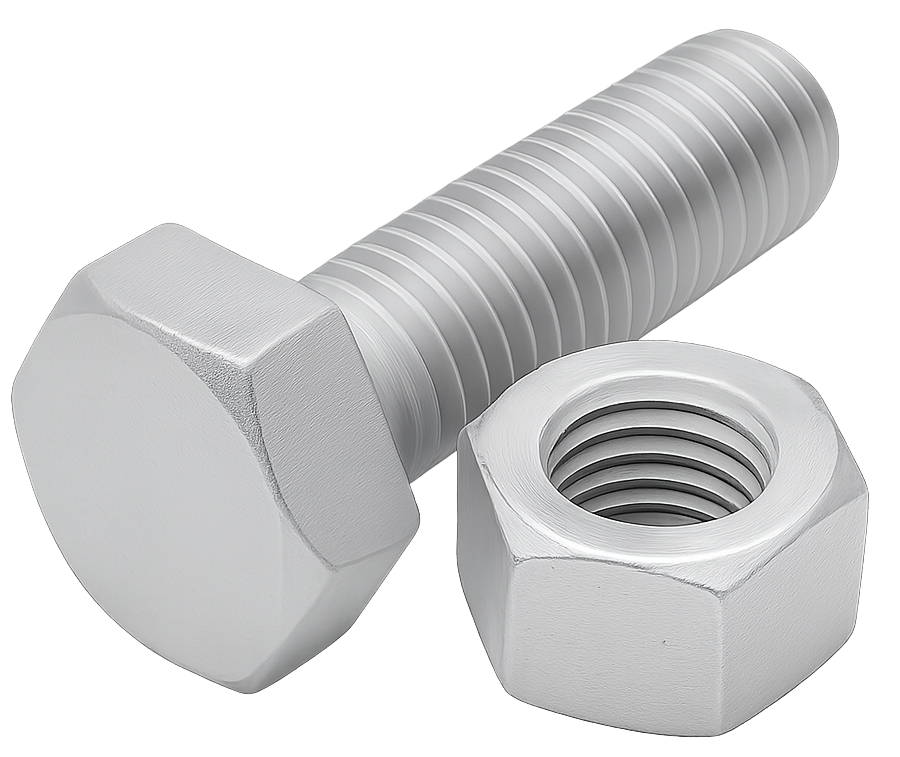
Aluminum Fastener
An aluminum fastener is a fastening component—such as a bolt, screw, nut, rivet, or washer—made primarily from aluminum or aluminum alloys rather than traditional steels or other metals. These fasteners are chosen when a combination of light weight, corrosion resistance, and non-magnetic properties is required.
One of their most important features is that they are lightweight. Because aluminum has a much lower density than steel, aluminum fasteners are especially valuable in weight-sensitive industries like aerospace, automotive, and electronics. They also offer corrosion resistance, since aluminum naturally develops a thin oxide layer that shields it from atmospheric corrosion, particularly in non-saline environments. Additionally, they are non-magnetic, which is useful in applications where magnetic interference could disrupt electronic systems or other sensitive equipment. Another notable property is their conductivity, as aluminum is a good conductor of both electricity and heat, making certain fasteners suitable for electrical applications.
Aluminum fasteners see wide use across several industries. In aerospace and automotive applications, they help reduce weight, which improves performance and fuel efficiency. In electronics and electrical equipment, they are preferred for their non-magnetic nature and conductive qualities. In marine environments, they can be applied in boats, docks, and offshore structures, particularly when combined with protective coatings or specially designed alloys to resist saltwater damage. In architectural and construction projects, aluminum fasteners are ideal for lightweight assemblies, facades, and structures where corrosion resistance is critical.
Despite their advantages, aluminum fasteners have certain limitations. They generally have lower strength compared to steel, which means they cannot usually handle the same loads, though high-strength aluminum alloys such as 7075-T6 can enhance performance. They are also susceptible to thread galling, as aluminum threads are softer and can wear or strip if over-tightened. Finally, there is a galvanic corrosion risk when aluminum fasteners are used in contact with dissimilar metals like steel in moist or salty environments, unless protective insulation or coatings are applied.
Aluminum Oxide (Al₂O₃)
Aluminum oxide (chemical formula Al₂O₃) is a white, crystalline oxide of aluminum that occurs naturally as the mineral corundum. It is one of the most important industrial compounds, known for its exceptional hardness, high melting point, chemical stability, and electrical insulation properties.

In its pure crystalline form, aluminum oxide appears as colorless sapphire or red ruby, depending on trace impurities such as chromium or iron. Artificially produced aluminum oxide is typically a fine white powder, widely used in metallurgy, ceramics, abrasives, and electronics.
Aluminum oxide forms naturally when aluminum metal reacts with oxygen. This reaction creates a thin, adherent oxide film that protects aluminum from further corrosion or oxidation—this is why aluminum is so corrosion-resistant. The oxide layer is often thickened intentionally through anodizing, a process that enhances wear and corrosion resistance while allowing for decorative coloring.
In industrial applications, aluminum oxide is produced from bauxite ore through the Bayer process, which extracts and purifies the oxide as calcined alumina. This refined Al₂O₃ serves as the feedstock for aluminum metal production via the Hall–Héroult electrolytic process, where it is dissolved in molten cryolite and reduced to pure aluminum.
Aluminum oxide’s hardness (9 on the Mohs scale) makes it ideal for abrasives, such as sandpaper, grinding wheels, and cutting tools. It’s also an excellent thermal and electrical insulator, used in spark plugs, electronic substrates, resistors, and high-temperature crucibles. In ceramics and refractories, Al₂O₃ provides strength and heat resistance up to temperatures exceeding 2,000°C (3,632°F).
Additionally, aluminum oxide plays a role in chemical and medical fields—it’s used as a catalyst support, chromatography medium, and even as an ingredient in certain dental and orthopedic implants due to its biocompatibility and inertness.
AKA: Alumina