
Learning Hub
Glossary
Molten Aluminium
Molten aluminium is aluminium that has been heated above its melting point until it becomes a liquid metal. Pure aluminium melts at about 660°C / 1220°F, although aluminium alloys may begin melting or soften over a range of temperatures depending on their composition.
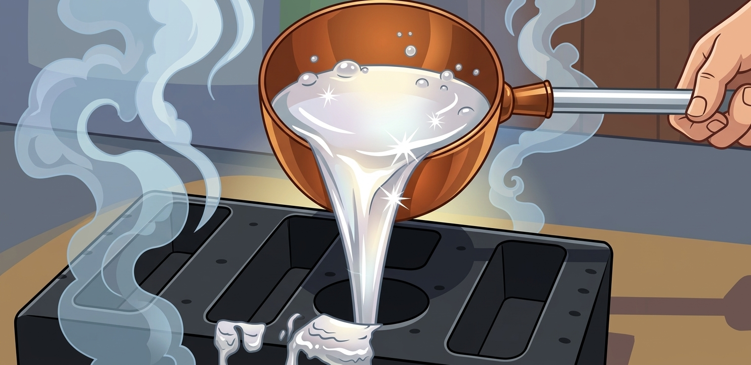
In its molten state, aluminium changes from a solid, silvery metal into a bright, fluid liquid that can be poured, cast, alloyed, or processed into new shapes. This is the form used in aluminium casting, where liquid aluminium is poured into molds to make parts such as housings, brackets, engine components, machine parts, structural castings, and other formed products.
Molten aluminium is important because aluminium is lightweight, corrosion resistant, and relatively easy to melt compared with many industrial metals. Steel, for comparison, melts at a much higher temperature, generally above 1370°C / 2500°F depending on the alloy. That lower melting point makes aluminium attractive for foundry work, die casting, recycling, and high-volume manufacturing.
Chemically, molten aluminium is highly reactive with oxygen. When exposed to air, it quickly forms a thin layer of aluminium oxide on the surface. This oxide skin can help protect the metal, but in casting it can also become a defect if it folds into the liquid metal and gets trapped inside the finished part. Foundries manage this through controlled handling, fluxing, degassing, skimming, filtration, and careful pouring practices.
Molten aluminium can also absorb hydrogen, especially when moisture is present. As the metal cools and solidifies, excess hydrogen can form tiny gas pores in the casting. This is why moisture control is extremely important around molten aluminium. Wet tools, damp scrap, or water contamination can be dangerous and can also create serious quality problems.