Learning Hub
Glossary
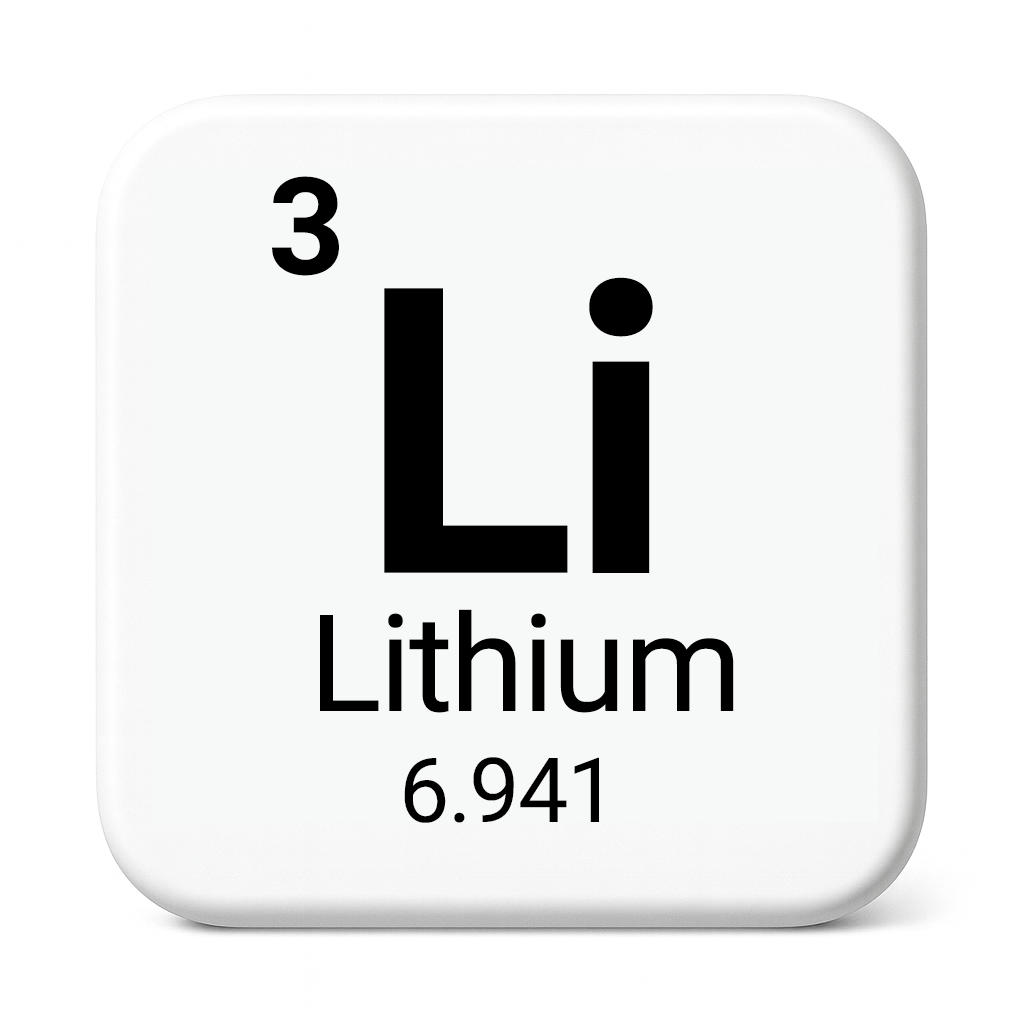
Lithium (Li)
Lithium is a soft, silvery-white metallic element with the chemical symbol Li and atomic number 3. It is the lightest metal and the lightest solid element at room temperature, which makes it especially important in applications where weight matters. Lithium belongs to the alkali metal family, the same group as sodium and potassium, and like those metals, it is highly reactive.
Lithium is not normally used as a structural fastener material by itself because it is too soft and chemically reactive. Freshly cut lithium has a shiny metallic appearance, but it quickly reacts with air and moisture, forming surface compounds such as lithium oxide, lithium hydroxide, and lithium carbonate. Because of this reactivity, metallic lithium is usually stored under oil or in controlled environments to prevent unwanted reactions.
The biggest industrial importance of lithium comes from its ability to store and release electrical energy efficiently. Lithium ions are small, lightweight, and highly mobile, which makes lithium especially valuable in rechargeable lithium-ion batteries used in phones, laptops, power tools, electric vehicles, energy storage systems, and industrial electronics. In a lithium-ion battery, lithium is not usually present as loose metallic lithium; instead, lithium ions move between electrode materials during charging and discharging.
Lithium is also used in lightweight metal alloys, especially with aluminum and magnesium. Small additions of lithium can reduce density and improve stiffness in certain aerospace-grade aluminum alloys. These alloys are used where high strength-to-weight performance is important, such as aircraft structures and advanced transportation components. However, these are specialized engineered alloys, not ordinary commercial fastener steels or stainless steels.
Chemically, lithium compounds have many uses. Lithium carbonate and lithium hydroxide are major raw materials for battery production. Lithium stearate is used in some high-performance greases. Lithium compounds are also used in ceramics, glass, air purification systems, and specialized chemical processes.