
Learning Hub
Glossary
Aluminum Alloy
An aluminum alloy is a metallic material composed primarily of aluminum combined with one or more additional elements to improve its mechanical, chemical, or physical properties. Pure aluminum is relatively soft and has limited strength, so alloying elements are added to increase characteristics such as strength, hardness, corrosion resistance, wear resistance, or high-temperature performance. These alloys allow aluminum to be used in demanding structural applications while retaining the metal’s natural advantages, including low density, good corrosion resistance, and high thermal and electrical conductivity.
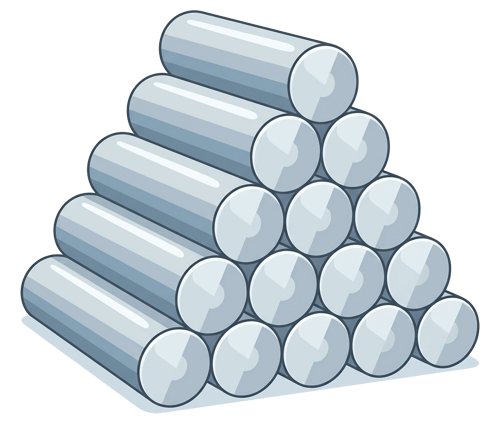
Aluminum alloys are created by adding controlled amounts of elements such as copper, magnesium, silicon, zinc, manganese, or lithium to molten aluminum during the manufacturing process. Each alloying element changes the internal structure of the metal in specific ways. For example, copper can significantly increase strength through heat treatment, magnesium improves strength and corrosion resistance, silicon enhances casting properties and wear resistance, and zinc contributes to the very high strength seen in certain aerospace alloys. These elements form solid solutions or microscopic precipitates within the aluminum’s crystal structure, which impede dislocation movement and increase the material’s strength.
Aluminum alloys are generally grouped into two broad categories: wrought alloys and cast alloys. Wrought aluminum alloys are mechanically worked into shapes through processes such as rolling, extrusion, forging, or drawing. These alloys are commonly used for structural components, sheet, plate, and fasteners. Cast aluminum alloys, on the other hand, are poured into molds while molten to produce complex shapes such as engine blocks, housings, and machine components. The alloy compositions used for casting are optimized to flow well and solidify without defects.
Wrought aluminum alloys are further organized into numbered alloy series, each indicating the primary alloying element. For example, the 1xxx series consists of nearly pure aluminum used for electrical conductivity and corrosion resistance; the 2xxx series contains aluminum-copper alloys used in aerospace structures; the 3xxx series contains aluminum-manganese alloys known for good formability; the 5xxx series includes aluminum-magnesium alloys used in marine environments; the 6xxx series combines magnesium and silicon and is widely used in structural extrusions; and the 7xxx series contains aluminum-zinc alloys that provide extremely high strength for aerospace applications.
Many aluminum alloys can also be heat treated to increase their strength. In heat-treatable alloys, controlled heating and cooling produce fine precipitates within the aluminum matrix that strengthen the material through a mechanism known as precipitation hardening. Other alloys strengthen primarily through strain hardening, where mechanical deformation during rolling or forming increases the metal’s strength.
Because aluminum alloys combine light weight with relatively high strength, they are widely used in industries such as aerospace, transportation, construction, marine engineering, electronics, and industrial manufacturing. Aircraft structures, automotive components, heat exchangers, pressure vessels, and many types of fasteners rely on aluminum alloys for their favorable strength-to-weight ratio and corrosion resistance.