
Learning Hub
Glossary
American Iron and Steel Institute (AISI)
The American Iron and Steel Institute (AISI) is a trade association that represents the North American steel industry. Established in 1908, it was created to promote the interests of steel producers, support research and development, and provide a unified voice on issues that affect the industry.
One of AISI’s key roles is industry representation, where it advocates on behalf of steelmakers in critical areas such as trade policy, environmental regulation, energy policy, infrastructure, and workforce development. It also plays a major part in standards development, having historically created and published technical standards and specifications for steel products, including structural steel design guides that are widely used by engineers and architects.
In addition, AISI invests heavily in research and innovation, funding and coordinating work in areas such as new steel grades, sustainability, recycling, advanced manufacturing, and energy efficiency. Beyond this, the organization is engaged in public outreach, promoting the benefits of steel—including its strength, recyclability, and sustainability—to governments, industries, and the public at large.
In fastener, materials, and industrial supply chains, “AISI” is also commonly used as shorthand for the AISI steel designation/numbering convention, especially for stainless steels (for example, AISI 304 and AISI 316). Those AISI numbers are widely used in catalogs and specs to communicate a stainless family/composition, even though standards and product requirements are often ultimately controlled by specifications like ASTM/ASME/SAE/ISO depending on the application.

Cast Iron
Cast iron is a group of iron-carbon alloys containing more than 2% carbon, along with varying amounts of silicon, manganese, and trace impurities such as sulfur and phosphorus. It is produced by melting pig iron (a crude form of iron extracted from a blast furnace) and then casting the molten metal into molds, rather than shaping it through forging or rolling. The high carbon content gives cast iron its characteristic hardness, wear resistance, and excellent fluidity when molten, but it also makes the material brittle compared to steel.
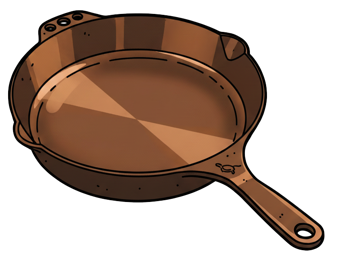
The structure of cast iron depends on how carbon solidifies in the alloy. Carbon can appear either as graphite flakes, nodules, or iron carbides (cementite), and these different forms define the main types of cast iron:
- Gray cast iron: The most common type, in which carbon forms as graphite flakes. These flakes interrupt the metal matrix, giving gray iron its characteristic dull gray fracture surface. It has excellent machinability, vibration damping, and compressive strength, making it ideal for engine blocks, machinery bases, and pipe fittings.
- Ductile (nodular) cast iron: Also called spheroidal graphite iron, this type is treated with magnesium or cerium to make the graphite form into spherical nodules instead of flakes. This structure significantly improves tensile strength and ductility, allowing it to behave more like steel while retaining cast iron’s wear resistance.
- White cast iron: Here, carbon remains combined as iron carbide (Fe₃C), giving the metal a white fracture surface. It is extremely hard and wear-resistant but very brittle, often used for crusher liners, grinding balls, and abrasion-resistant surfaces.
- Malleable cast iron: Produced by heat-treating white cast iron, which decomposes the carbides into small graphite particles. The result is a more ductile and tough material suitable for pipe fittings, brackets, and automotive parts.
Cast iron has a lower melting point (around 1150–1200°C) than pure iron, which makes it easy to pour into intricate molds—a major reason it’s favored for complex or detailed castings. However, its brittleness means it cannot absorb much tensile stress or bending without fracturing.
Because of its combination of strength, castability, vibration damping, and heat retention, cast iron remains one of the most widely used materials in engineering. It’s found in everything from machine tools and cookware to engine components, heavy-duty pipes, and architectural structures—a testament to its versatility despite being one of the oldest known engineering materials.
Cast Iron Fastener
A cast iron fastener is a piece of hardware whose main body is made from cast iron—most commonly gray iron, ductile (nodular) iron, or malleable iron—formed by pouring molten iron into a mold and then machining features such as threads. Unlike the vast majority of modern bolts and screws, which are wrought (rolled) steel, cast iron fasteners rely on the cast microstructure of iron. This makes them suitable for parts where the geometry is complex and casting is economical (clamps, hangers, brackets, decorative hardware, certain rail clips, and some thumb/wing-style nuts), but it also means they are rarely used for high-tension, safety-critical bolting.
Performance depends on the iron type. Gray iron (ASTM A48) contains flake graphite that gives excellent compressive strength, vibration damping, and machinability, but it is brittle in tension and notch-sensitive, so it is generally poor for highly stressed threaded fasteners. Ductile iron (ASTM A536; grades such as 60-40-18, 65-45-12, 80-55-06) has spheroidal graphite that markedly improves tensile strength and elongation; it can handle moderate service loads and is common for cast components that include tapped holes or integral studs, though it still does not match the fatigue and impact resistance of quenched-and-tempered alloy steel bolts. Malleable iron (ASTM A197/A197M) is heat-treated white iron that attains reasonable ductility and has long been used in pipe fittings, beam and conduit clamps, and other hardware with threads, but it is likewise intended for relatively low to moderate stresses.
Manufacturing and design constraints follow from the material. Because cast iron cannot be cold-formed, the part’s shape is created in the mold and then finished by machining. Threads in cast iron are cut or chased, not roll-formed, and coarse pitches with generous root radii are preferred to reduce stress concentration. Good practice is to keep the iron component primarily in compression or shear, avoid shock and cyclic tension, provide generous fillets and section transitions, and size bosses and wall thicknesses to support threads. Where higher preload is required, the better solution is usually to cast the body from iron (for shape and cost) and use separate steel fasteners for the threaded elements, or to install steel inserts (helicoils/solid inserts) in tapped cast iron to increase thread strength and wear resistance.
In application, cast iron fasteners and fastener-like hardware appear in building hardware, pipe and conduit supports, rail and heavy-equipment castings, vintage machinery, and architectural pieces where casting enables complex geometry or an “as-cast” aesthetic. They are commonly zinc-plated, galvanized, painted, or powder-coated to mitigate corrosion, which is broadly similar to carbon steel. They are not appropriate substitutes for standardized structural or pressure-boundary bolting; for those uses, wrought steel fasteners to standards such as ASTM/SAE/ISO bolting specifications are required, with the cast iron component serving only as the clamped part or housing.
It is also worth distinguishing “cast iron fastener” from “fastening into cast iron.” When you are joining to a cast iron substrate (engine blocks, housings, machinery bases), the recommended practice is to use steel screws/bolts with adequate washer area to spread load, apply appropriate torque (often lower than for steel-on-steel to avoid cracking), use anti-seize to protect threads, and consider thread inserts for repeated service or higher loads. In short, cast iron can be used to make certain fastener bodies and fastener-like components when casting advantages outweigh mechanical limits, but for high-preload, fatigue- or impact-critical joints, the threaded fastener itself should be steel while the cast iron remains the part being clamped.
Free Iron
Small particles of unalloyed (pure) iron that become embedded or smeared onto the surface of stainless steel during manufacturing processes such as machining, forming, or handling. Because these particles are not part of the stainless steel alloy, they can oxidize (rust) when exposed to moisture or air, leading to localized corrosion or staining if not removed through the chemical treatment process of passivation.
Iron (Fe)
Iron is a metallic element with the chemical symbol Fe (from the Latin ferrum) and atomic number 26. It is one of the most abundant elements on Earth—making up about 5% of the Earth's crust—and is the primary component of the planet’s core. Iron is the foundation of modern industry and metallurgy, serving as the base metal for steel, which is the most widely used material in the world.
In its pure form, iron is a lustrous, silvery-gray metal that is relatively soft and ductile. However, pure iron is rarely used in practice because it corrodes easily when exposed to moisture and oxygen, forming iron oxide (rust). Instead, iron is almost always used in alloy form, where it’s combined with small amounts of other elements such as carbon, chromium, nickel, or molybdenum to improve its strength, hardness, and corrosion resistance.
Iron’s versatility comes from its ability to exist in several crystalline forms (allotropes) and to combine easily with other elements. When carbon is added in controlled amounts (typically 0.02–2.1%), it becomes steel, which can be hardened, tempered, and alloyed for countless industrial applications. Higher carbon content (above 2%) produces cast iron, which is harder but more brittle.
Most of the world’s iron is extracted from iron ore, primarily from minerals like hematite (Fe₂O₃) and magnetite (Fe₃O₄). The extraction process involves smelting, where the ore is heated in a blast furnace with coke (carbon) and limestone. This chemical reduction removes oxygen from the ore, producing molten pig iron, which is then refined into steel or other iron-based alloys.
Iron’s unique combination of strength, magnetism, and abundance makes it indispensable across nearly every industry. It’s used in construction (beams, rebar, bridges, ships), machinery, automobiles, tools, pipelines, and fasteners. It also plays a vital biological role—iron atoms in hemoglobin enable red blood cells to carry oxygen throughout the body.

Iron Ore
Iron ore is a naturally occurring mineral rock from which metallic iron (Fe) can be economically extracted. It serves as the primary raw material for producing iron and steel, which together make up about 95% of all metal used globally. The ore itself is a combination of iron-bearing minerals and impurities such as silica, alumina, and other oxides.
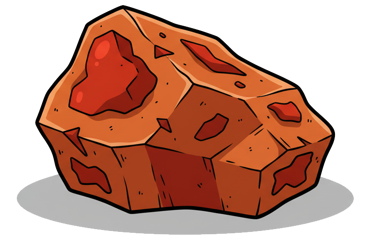
To extract usable iron, the ore must contain a high percentage of iron compounds, typically iron oxides, which can be reduced to pure metallic iron through smelting in a blast furnace or a direct reduction process. The most important iron-bearing minerals are:
- Hematite (Fe₂O₃): Usually red to reddish-brown in color and containing up to 70% iron, hematite is one of the richest and most sought-after iron ores. It is the principal source of iron in many modern steelmaking operations.
- Magnetite (Fe₃O₄): A black, magnetic mineral containing about 72% iron, magnetite is the highest-grade iron ore. It often requires magnetic separation to concentrate the iron before smelting.
- Goethite (FeO(OH)) and Limonite (FeO(OH)·nH₂O): Brownish ores with lower iron content (40–60%) that often form through weathering of other iron minerals.
- Siderite (FeCO₃): An iron carbonate mineral containing around 48% iron, used less commonly because it requires additional processing to remove carbon dioxide.
The process of turning iron ore into usable metal begins with mining, followed by crushing, grinding, and concentration to increase the iron content and remove impurities. The resulting iron ore concentrate or pellets are then fed into a blast furnace, where they are chemically reduced by carbon monoxide (produced from coke) according to reactions such as:
Fe2O3+3CO→2Fe+3CO2
This reduction converts iron oxide into molten pig iron, which can then be refined into steel or cast iron.
Major iron ore deposits are found in Australia, Brazil, China, India, Russia, and the United States, with Australia and Brazil accounting for the majority of global exports. The ore is typically transported as raw rock, concentrate, or pellets to steel mills around the world.
Iron Oxide
Iron oxide is a compound formed when iron (Fe) reacts with oxygen (O₂), creating a family of chemical compounds that consist of iron and oxygen in various ratios. These compounds occur naturally as minerals and artificially through corrosion, oxidation, or controlled synthesis, and they are among the most common inorganic materials on Earth.

Chemically, iron oxides are represented by several forms, depending on the oxidation state of iron and the environment in which they form. The three most significant types are:
1. Iron(II) oxide (FeO) — also known as wüstite, this is a black or dark gray compound where iron is in the +2 oxidation state. It typically forms under low-oxygen conditions or as an intermediate product in high-temperature reactions such as steelmaking. FeO is unstable in air and tends to oxidize further.
2. Iron(III) oxide (Fe₂O₃) — commonly called hematite or rust, this is a reddish-brown compound in which iron is in the +3 oxidation state. It is the most stable and widespread form of iron oxide, found both in nature (as hematite ore) and as the end product of corrosion when iron or steel reacts with oxygen and moisture. The reaction can be summarized as:
4Fe + 3O₂ → 2Fe₂O₃
3. Iron(II,III) oxide (Fe₃O₄) — also known as magnetite, this compound contains both Fe²⁺ and Fe³⁺ ions and has a black, magnetic appearance. It forms under moderate oxygen conditions and is used in magnets, pigments, and recording materials. The oxidation process can be written as:
3Fe + 2O₂ → Fe₃O₄
These oxides are not only important in geology and metallurgy but also have widespread industrial and technological uses. For instance, iron oxides serve as pigments (red, yellow, and black iron oxides) in paints, ceramics, and cosmetics; as polishing agents (jeweler’s rouge); and as magnetic materials in electronics and data storage.
In corrosion, iron oxides are often undesirable, forming the flaky, porous “rust” that compromises structural integrity. However, controlled oxidation is sometimes beneficial—such as in passivation layers on stainless steel, where a stable oxide film protects against further corrosion.
Pig Iron
Pig iron is the crude, high-carbon form of iron that is produced as the first product of smelting iron ore in a blast furnace. It serves as the primary raw material for making both cast iron and steel. The term “pig iron” comes from the traditional shape of the ingots cast in sand molds: molten iron was poured into a central channel (the “runner”) with smaller branching molds that resembled piglets nursing from a sow—hence the name.

Pig iron typically contains 3.5–4.5% carbon, along with 1–3% silicon, 0.5–1% manganese, and small amounts of sulfur and phosphorus. This high carbon content makes pig iron hard and brittle, meaning it cannot be used directly for most structural or mechanical applications. However, it’s an essential intermediate material—a starting point for refining into more useful forms of iron and steel.
The process of producing pig iron begins with the blast furnace, where a mixture of iron ore (usually hematite or magnetite), coke (carbon source), and limestone (flux) is heated to temperatures of around 1,500–2,000°C (2,700–3,600°F). Inside the furnace, several key reactions take place:
1.The coke burns in the presence of air, producing carbon monoxide (CO):
C+O2→CO2
and then
CO2+C→2CO
2. The carbon monoxide reduces the iron ore (Fe₂O₃ or Fe₃O₄) to metallic iron:
Fe2O3+3CO→2Fe+3CO2
3. The limestone (CaCO₃) acts as a flux, combining with impurities like silica to form slag, which floats on top of the molten iron.
The result is a molten pool of pig iron at the bottom of the furnace, which is periodically drained and cast into ingots or transported in molten form for further processing.
There are several grades of pig iron, depending on composition and intended use:
- Basic pig iron, for conversion into steel in basic oxygen furnaces.
- Foundry pig iron, used directly for making cast iron products.
- High-phosphorus pig iron, used in certain specialized chemical processes.
Pig iron on its own is too brittle for shaping or forming, but when remelted and refined to reduce carbon and impurities, it becomes steel; when remelted with additional carbon and silicon, it becomes cast iron.