
Learning Hub
Glossary
Spring Steel
Spring steel is a high-strength steel designed to flex, bend, twist, or deflect under load and then return to its original shape without taking a permanent set. It is used where a part needs to store and release mechanical energy, maintain pressure, absorb shock, or provide repeated elastic movement.
The key property of spring steel is a high yield strength. Yield strength is the stress level where permanent deformation begins. In a spring application, the material must operate below that point so it can flex elastically and recover. A normal mild steel part may bend and stay bent, but properly processed spring steel can deflect many times and still spring back.
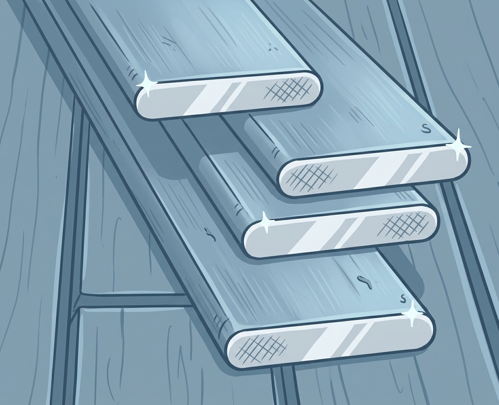
Spring steel is not one single alloy. It is a family of steels that are selected and processed for elastic performance. Common spring steels include high-carbon steel, music wire, oil-tempered wire, chrome-silicon steel, chrome-vanadium steel, and some stainless spring steels. Carbon is important because it allows the steel to be hardened and strengthened through heat treatment. Alloying elements such as chromium, silicon, vanadium, manganese, and nickel may be added to improve strength, toughness, fatigue resistance, hardenability, or temperature performance.
Spring steel can be strengthened by cold working, heat treatment, or both. In many cases, the steel is hardened and tempered to achieve the right balance of strength and toughness. Hardening increases strength, but can make the steel brittle. Tempering reduces brittleness and adjusts the final mechanical properties so the steel can flex repeatedly without cracking too easily. That balance is the whole trick: spring steel must be strong enough to resist permanent bending, but tough enough to survive repeated loading.
In industrial and fastener-related applications, spring steel is used for spring washers, lock washers, retaining rings, snap rings, clips, clamps, Belleville washers, wave washers, hose clamps, cotter pins, spring pins, wire forms, and tensioning components. These parts are not just holding pieces together; they are actively applying force, maintaining contact pressure, absorbing movement, or resisting loosening.
A major design concern with spring steel is fatigue. A spring part may fail not because it was overloaded once, but because it was flexed thousands or millions of times. Surface condition, edge quality, heat treatment, corrosion, scratches, forming radius, stress concentration, and operating environment all matter. A tiny notch or pit can become the starting point for a fatigue crack.
Spring steel is also commonly supplied in different conditions, such as annealed, hard-drawn, oil-tempered, blue-tempered, or spring-temper strip. Softer annealed material is easier to form, while spring-temper material already has high elastic strength but may be harder to bend without cracking. For stamped or formed spring parts, manufacturers often choose between forming first and heat treating later, or forming material that is already in spring temper.