
Learning Hub
Glossary
Corrosion Protection
Corrosion protection is the use of materials, coatings, treatments, design methods, or environmental controls to slow or prevent the chemical or electrochemical deterioration of a metal. Corrosion occurs when a metal reacts with moisture, oxygen, salts, acids, or other substances in its surroundings. The reaction gradually converts the metal into oxides, hydroxides, or other compounds, weakening the surface and sometimes reducing the strength or function of the component.
One common method of corrosion protection is to place a barrier coating between the metal and the environment. Paint, powder coating, polymer coatings, oils, waxes, and sealers prevent water, oxygen, and contaminants from reaching the base metal. These systems work well while the barrier remains continuous, but scratches, pores, or damaged areas may expose the underlying metal and allow corrosion to begin.
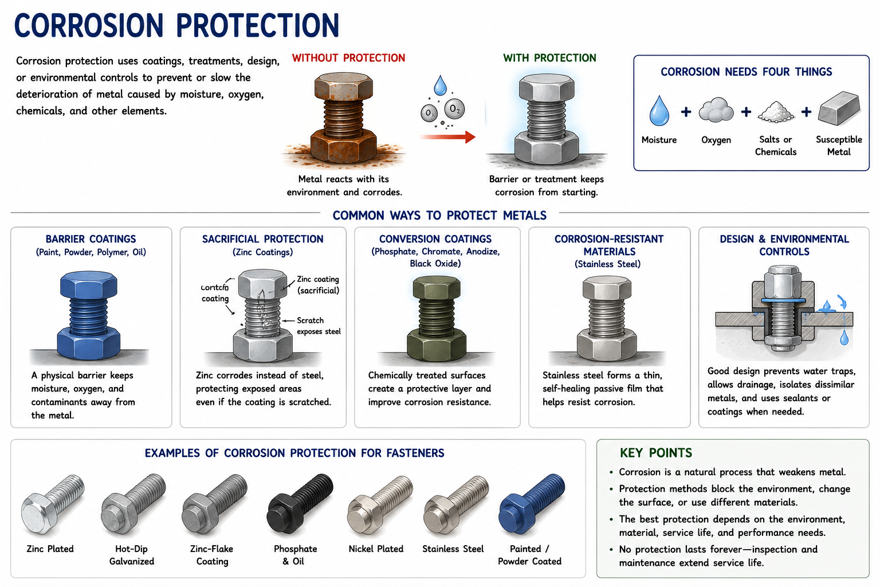
Another method is sacrificial protection, in which a more reactive metal corrodes in place of the protected metal. Zinc coatings on steel are a common example. If a zinc-plated or galvanized steel surface is scratched, the surrounding zinc can continue to protect the exposed steel by corroding preferentially. This is why zinc-based coatings may provide protection beyond their function as a simple physical barrier.
Other protective processes chemically modify the metal surface. Phosphate coatings, passivation treatments, anodizing, black oxide, and chromate or other conversion coatings create or strengthen a surface layer that improves corrosion resistance or provides a better foundation for oil, paint, or another topcoat. Stainless steel relies largely on a thin, self-forming chromium-rich passive film that helps prevent continued attack.
In fastener applications, corrosion protection may involve zinc plating, mechanical galvanizing, hot-dip galvanizing, zinc-flake coatings, phosphate and oil, nickel plating, stainless steel, or specialized organic and inorganic coating systems. The correct protection depends on the fastener material, service temperature, required lifespan, exposure to salt or chemicals, electrical contact with other metals, dimensional tolerances, and the effect of the finish on friction and tightening performance.
Corrosion protection also includes good joint design and material selection. Preventing water traps, allowing drainage, avoiding crevices, isolating dissimilar metals, controlling humidity, and selecting materials suited to the environment can be just as important as applying a coating. Contact between dissimilar metals in the presence of an electrolyte can create galvanic corrosion, so washers, sealants, insulating materials, or compatible finishes may be used to separate them.
No protective system makes every metal completely corrosion-proof. Coatings can wear, crack, dissolve, or be damaged during installation, and even corrosion-resistant alloys can corrode under severe conditions. Corrosion protection is therefore intended to reduce the corrosion rate and extend the useful life of the component while maintaining its appearance, strength, and function.