
Learning Hub
Glossary
Sacrificial Protection
Sacrificial protection is a corrosion-control method where a more reactive metal is intentionally used to protect a less reactive metal from corroding. The protective metal “sacrifices” itself by corroding first, while the base metal remains protected. In fastener and steel applications, zinc is one of the most common sacrificial materials used to protect steel.
The idea works because different metals have different tendencies to give up electrons and corrode. When two suitable metals are electrically connected in the presence of moisture or another electrolyte, the more active metal becomes the anode and corrodes preferentially. The less active metal becomes the cathode and is protected. Since zinc is more active than steel, a zinc coating can corrode instead of the steel underneath it.
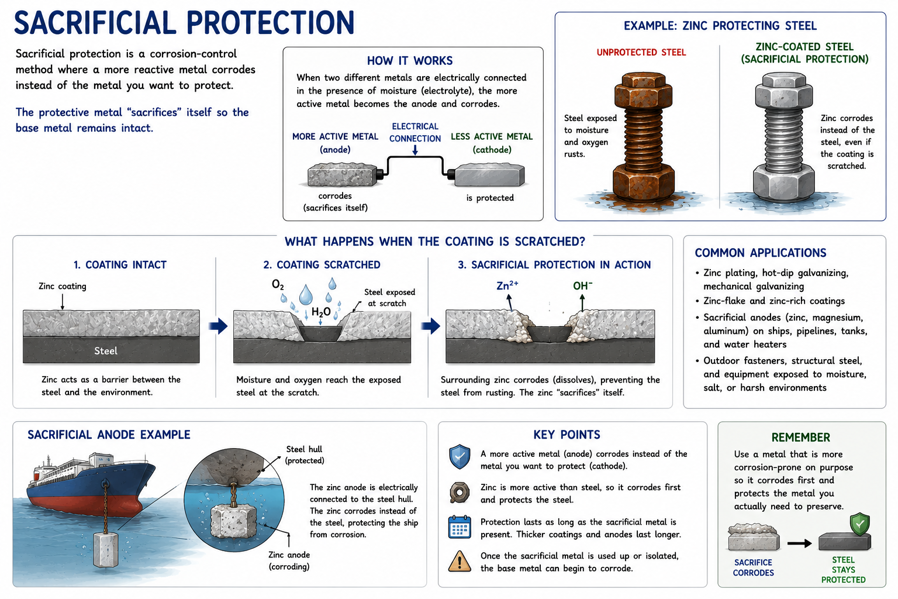
This is why zinc plating, hot-dip galvanizing, mechanical galvanizing, and many zinc-rich coatings are widely used on steel fasteners and components. The zinc provides both a physical barrier and sacrificial protection. If the coating is scratched, chipped, or slightly damaged, the surrounding zinc can still help protect the exposed steel by corroding in its place. That is different from a simple paint coating, where a scratch may expose the steel directly and allow rust to begin at the damaged spot.
Sacrificial protection is also used with sacrificial anodes attached to ships, pipelines, tanks, water heaters, and offshore structures. In those systems, pieces of zinc, magnesium, or aluminum are connected to the protected steel structure. The sacrificial anode gradually corrodes away and must eventually be replaced.
In fastener applications, sacrificial protection is useful because fasteners are often exposed to moisture, road salt, chemicals, or outdoor environments. However, it is not unlimited protection. Once the sacrificial coating has been consumed, damaged too severely, or isolated from the steel, the base metal can begin to corrode. The service life depends on coating thickness, environment, exposure severity, installation damage, and whether the coating is sealed or paired with a topcoat.
In practical terms, sacrificial protection means using a more corrosion-prone material on purpose so it corrodes first and protects the metal you actually need to preserve.