
Learning Hub
Glossary
Boron Carbide (B₄C)
Boron carbide (B₄C) is an extremely hard ceramic composed of boron and carbon. It is one of the hardest known materials, ranking just below diamond and cubic boron nitride, which makes it highly valuable for applications where exceptional hardness, wear resistance, and low weight are critical. Because of its unique properties, boron carbide is widely used in industrial, defense, and nuclear applications.
The material’s structure gives it outstanding mechanical properties. It has a hardness of about 9.5 on the Mohs scale and a very high melting point exceeding 2,700 °C (4,892 °F). Despite being extremely hard, it is relatively lightweight, with a density of only about 2.52 g/cm³, which is much lighter than metals such as steel. Boron carbide also offers excellent resistance to chemical attack and remains stable in harsh environments. However, like other ceramics, it is brittle and can fracture when exposed to high-impact loads or tensile stresses.
Boron carbide is manufactured synthetically rather than mined. It is typically produced by reacting boron oxide (B₂O₃) with carbon in an electric arc furnace at very high temperatures. The resulting crystalline material can be ground into powders, hot-pressed into solid components, or incorporated into composites, depending on the intended application.
Its applications are wide-ranging. In defense and security, boron carbide is widely used in body armor, vehicle armor, and protective shields because it combines extreme hardness with very low weight, making protection both effective and practical. In industrial uses, it serves as an abrasive for grinding, lapping, and polishing hard materials. In the nuclear industry, it is an important neutron absorber for control rods and shielding due to boron’s high neutron capture capability. It is also used in sandblasting nozzles, pump seals, and other wear-resistant parts, as well as in refractory materials designed for high-temperature environments.
The advantages of boron carbide include its extreme hardness and wear resistance, lightweight nature compared to metals, high chemical and thermal stability, and neutron absorption capability that makes it essential in nuclear applications. However, it also has limitations. Its brittleness makes it prone to cracking under sharp impact or tensile stress. It is also expensive to produce and process, and its extreme hardness requires specialized equipment for machining and shaping. Despite these challenges, boron carbide remains one of the most valuable advanced ceramics for critical applications where strength, durability, and lightweight performance are essential.
Carbide
Carbide refers to a class of very hard compounds composed of carbon and a metal or metalloid element. The most well-known type is tungsten carbide (WC), which is formed by combining tungsten and carbon, but there are many others such as silicon carbide (SiC), titanium carbide (TiC), and boron carbide (B₄C). These materials are prized for their extreme hardness, wear resistance, and ability to withstand high temperatures, which makes them essential in many industrial applications.
Structure and Properties
Carbides typically have a crystalline structure where carbon atoms bond tightly with metal atoms. This gives them unique mechanical properties:
Extreme hardness: Many carbides are harder than steel, and some approach the hardness of diamond.
Wear resistance: They resist abrasion, erosion, and deformation under high stress.
High melting points: Carbides remain stable at very high temperatures.
Brittleness: While extremely hard, carbides can also be brittle, making them prone to cracking under impact or shock loading.
Common Types of Carbide
Tungsten Carbide (WC): The most widely used, known for exceptional hardness and toughness; often combined with cobalt as a binder.
Silicon Carbide (SiC): Lightweight, highly heat-resistant, and often used as an abrasive or in high-temperature applications.
Boron Carbide (B₄C): Extremely hard and lightweight, used in armor and cutting tools.
Titanium Carbide (TiC): Known for high hardness and resistance to oxidation, often used in coatings.
Applications
Carbides are used across industries where strength, durability, and resistance to wear are essential:
Cutting tools: Drill bits, milling cutters, lathe tools, and saw tips are often made with tungsten carbide.
Mining and drilling: Carbide-tipped equipment is used for rock drilling and excavation.
Abrasives: Silicon carbide is used in sandpapers, grinding wheels, and polishing compounds.
Armor: Boron carbide is used in body armor, tank armor, and bulletproof vests.
Mechanical components: Bearings, seals, and nozzles made from carbides handle high wear and corrosive environments.
Advantages
- Exceptional hardness and durability.
- Long service life compared to steel in abrasive conditions.
- High temperature and corrosion resistance.
Limitations
- Brittle compared to steels or alloys; prone to fracture under shock.
- More expensive to produce and machine.
- Typically requires specialized equipment for shaping or bonding.
Cemented Carbide
Cemented carbide is a composite material made by combining fine particles of a hard carbide compound—usually tungsten carbide—with a metallic binder, typically cobalt (Co) or sometimes nickel (Ni). The mixture is pressed into shape and then sintered at high temperatures (around 1400–1600 °C), causing the binder metal to melt slightly and bond the hard carbide grains together. The result is an exceptionally hard, wear-resistant material that retains strength even at very high temperatures.
The tungsten carbide grains provide extreme hardness and resistance to abrasion, while the cobalt binder gives the material toughness and impact resistance, preventing it from shattering under stress. The ratio between carbide and binder determines the final properties: a higher carbide content produces greater hardness but lower toughness, while more binder improves ductility at the cost of hardness.
Cemented carbide is widely used in cutting tools, drills, end mills, inserts, dies, and wear parts—anywhere that hardness, heat resistance, and durability are essential. In metalworking, it can cut hardened steels and superalloys that would quickly destroy ordinary high-speed steel tools. It’s also used in mining, oil and gas drilling, woodworking, and construction equipment, and for precision components such as valves, bearings, and nozzle tips.
Because of its extreme hardness (second only to diamond and cubic boron nitride), cemented carbide maintains sharp cutting edges and dimensional stability even under intense friction and pressure. However, it can be brittle—especially at low cobalt contents—and may fracture if subjected to sudden impacts. To overcome this, modern manufacturing often applies surface coatings like titanium nitride (TiN) or aluminum oxide (Al₂O₃) using chemical vapor deposition (CVD) or physical vapor deposition (PVD) processes, further extending tool life.
Silicon Carbide (SiC)
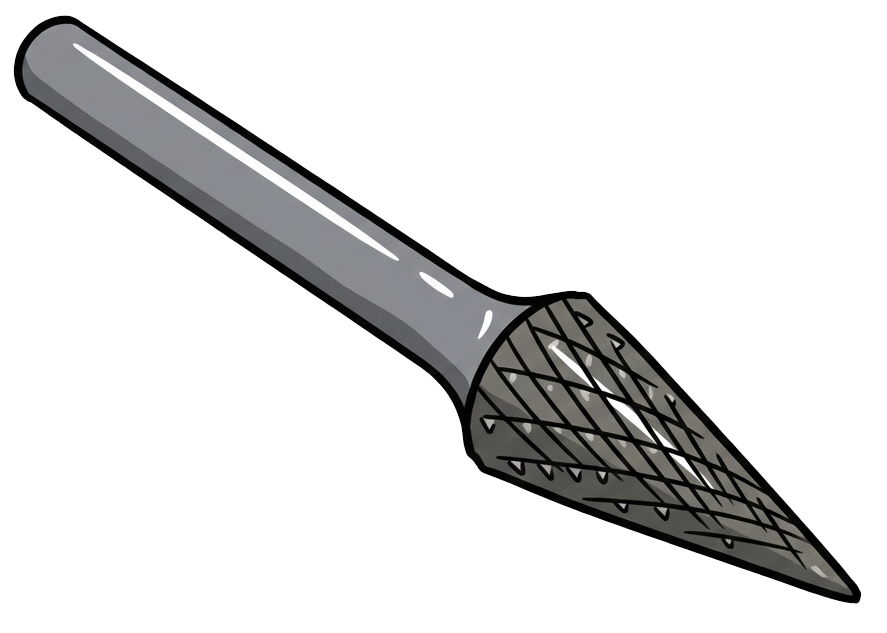
Silicon carbide (SiC) is a compound of silicon and carbon that is recognized for its exceptional hardness, thermal stability, and chemical resistance. While it occurs naturally in extremely rare mineral forms such as moissanite, it is primarily produced synthetically and has become one of the most important advanced ceramics in modern industry. Its unique combination of properties allows it to be used both as a high-performance structural material and as a semiconductor in power electronics.
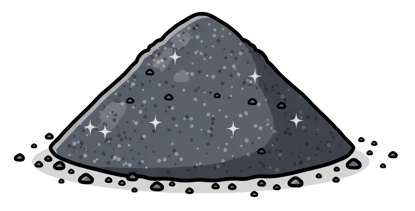
Silicon carbide’s strength comes from its crystalline structure, in which silicon and carbon atoms alternate in strong covalent bonds. This gives it a hardness of about 9–9.5 on the Mohs scale, placing it just below diamond and cubic boron nitride. Unlike many ceramics, it also has high thermal conductivity, which allows it to transfer heat efficiently. SiC can withstand temperatures above 1,600 °C (2,912 °F) without losing strength and is highly resistant to oxidation, corrosion, and chemical attack. In addition, certain forms of SiC function as semiconductors, offering a wide bandgap, high voltage resistance, and efficiency that make them highly valuable in advanced electronics.
The material is typically manufactured through the Acheson process, in which a mixture of silica sand (SiO₂) and carbon, often from petroleum coke, is heated in an electric resistance furnace at temperatures between 2,000–2,500 °C (3,632–4,532 °F). The reaction produces silicon carbide crystals, which can then be ground into abrasive powders, sintered into ceramic components, or grown into wafers for use in electronics.
Applications of silicon carbide are diverse. Its hardness makes it ideal for abrasives such as grinding wheels, sandpapers, and polishing compounds, as well as cutting tools that must endure high wear. In ceramics and refractories, it is used for furnace linings, kiln shelves, and crucibles that must tolerate high heat. In the electronics sector, silicon carbide is increasingly important as a semiconductor material for high-performance power devices used in electric vehicles, solar inverters, and high-frequency systems. The automotive industry uses SiC in performance brake discs, clutches, and heat exchangers, while its lightweight hardness makes it suitable for armor in protective vests and vehicles.
The advantages of silicon carbide include its extreme hardness and wear resistance, ability to withstand very high operating temperatures, chemical stability, corrosion resistance, and efficiency in conducting both heat and electricity in specialized applications. However, it does have limitations. It is brittle compared to metals and can fracture under sudden impact or shock loads. Production costs, particularly for semiconductor-grade SiC, are relatively high. Additionally, its hardness requires specialized equipment and processes for shaping, machining, and finishing. Despite these challenges, silicon carbide remains an essential material for industries demanding high performance in extreme environments.
Titanium Carbide (TiC)
Titanium carbide (TiC) is a hard, refractory ceramic compound formed from titanium and carbon. It belongs to the family of transition metal carbides and is known for its extreme hardness, high melting point, and resistance to wear and corrosion. These properties make TiC an important material in industries that require durable, heat-resistant components such as cutting tools, coatings, and high-performance composites.
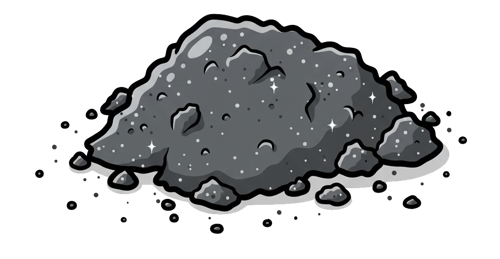
The material has a crystalline structure similar to sodium chloride, where carbon atoms fit into the spaces between titanium atoms. This arrangement produces very strong atomic bonds, which give TiC a hardness of about 9–9.5 on the Mohs scale. It also has an exceptionally high melting point of around 3,160 °C (5,720 °F). Titanium carbide is highly resistant to oxidation and chemical attack even at elevated temperatures. Its density, approximately 4.9 g/cm³, makes it heavier than boron carbide but still lighter than tungsten carbide, giving it a useful balance of hardness and weight.
Titanium carbide is produced by reacting titanium dioxide (TiO₂) with carbon, usually graphite, at extremely high temperatures in an inert or reducing atmosphere. The resulting TiC can be manufactured as a powder and then sintered into solid shapes, or it can be deposited as a thin coating using methods such as chemical vapor deposition (CVD) or physical vapor deposition (PVD). These different production techniques make it possible to use TiC both as a bulk material and as a surface treatment.
The applications of TiC are diverse. It is widely used in cutting tools, often combined with tungsten carbide (WC) and cobalt, to improve wear resistance and reduce tool chipping. As a protective coating, TiC is applied to tool surfaces and machine parts to extend their service life and enhance hardness. In abrasive applications, it is incorporated into grinding wheels and wear parts that must withstand high friction. In aerospace and defense industries, TiC is valued for its ability to maintain stability and strength at extremely high temperatures. It is also used in ceramics and composite materials to enhance toughness, hardness, and resistance to wear.
Titanium carbide provides many advantages, including extreme hardness, high wear resistance, excellent thermal stability, and strong resistance to corrosion and chemical attack. It significantly improves the durability and performance of cutting tools and industrial components, especially when combined with other carbides. However, it also has limitations. Like many ceramics, it is brittle and can crack under shock or impact loads. It is also more expensive to produce and machine than conventional metals. For these reasons, TiC is most often used in coatings or composites rather than as a standalone structural material.
Tungsten Carbide (WC)
Tungsten carbide (WC) is a compound of tungsten and carbon that is highly valued for its extreme hardness, wear resistance, and durability. It is one of the most important carbides in industrial use and is commonly found in cutting tools, drilling equipment, and wear-resistant parts. To improve toughness, tungsten carbide is often combined with a binder metal, such as cobalt or nickel, to form cemented carbide, which maintains the hardness of WC while adding greater resistance to fracture.
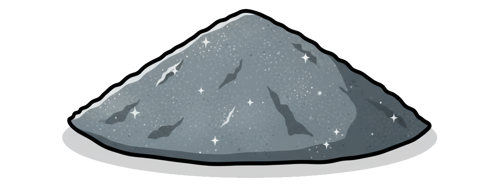
The material’s properties come from its crystalline structure, where tungsten atoms bond strongly with carbon atoms to create a dense and exceptionally hard substance. Tungsten carbide ranks between 8.5 and 9.0 on the Mohs scale, making it nearly as hard as diamond. It also has a very high melting point of around 2,870 °C (5,200 °F), which ensures excellent stability under extreme heat. Its density is about twice that of steel, giving it a noticeably heavy feel. WC is highly resistant to wear and abrasion, which makes it ideal for demanding applications, although it can also be brittle and prone to fracture under heavy impacts if not alloyed with a binder.
Tungsten carbide is typically produced through powder metallurgy. Tungsten powder is mixed with carbon black and heated at high temperatures in a controlled atmosphere to form WC. To improve its toughness, this WC powder is blended with cobalt, nickel, or iron powders and then sintered into solid components, resulting in cemented carbide products. This process allows manufacturers to shape WC into inserts, tool tips, and other parts that must endure extreme service conditions.
The applications of tungsten carbide are widespread across industries. It is a staple in cutting and machining tools, such as drill bits, milling cutters, lathe inserts, and saw tips. In mining and drilling, WC is used in rock-cutting tools, oil and gas drilling bits, and teeth for tunnel-boring machines. It also serves in wear-resistant components like nozzles, bearings, dies, and valve seats. Outside heavy industry, it is used in jewelry, particularly rings, due to its scratch resistance and durability. In defense and aerospace, tungsten carbide finds use in armor-piercing ammunition and protective armor plating.
The material offers numerous advantages, including exceptional hardness, excellent wear resistance, stability at high temperatures, and long service life compared to steels and many alloys. However, it also has limitations. It is more brittle than steel and may chip or crack under impact or bending stress. It is expensive to produce and machine, and it requires specialized techniques such as precision grinding or electrical discharge machining (EDM). Despite these challenges, tungsten carbide remains one of the most critical materials for industries that demand high performance under extreme conditions.
Tungsten Carbide-Cobalt (WC-Co)
Tungsten carbide–cobalt (WC-Co) is the classic “carbide” used for cutting tools and wear parts—more precisely, it’s a cemented carbide (hardmetal): a composite made of very hard tungsten carbide (WC) grains held together by a tough, ductile cobalt (Co) metal binder. Think “crushed diamond-like grit in a metal glue,” except the grit is WC and the glue is cobalt.
It’s typically made by powder metallurgy: WC powder and Co powder are mixed/milled, pressed into shape, and then liquid-phase sintered. During sintering, the cobalt becomes (at least partially) molten, wets the WC grains, and pulls the structure dense as it bonds everything together; many high-performance grades are also HIP’d to reduce residual porosity.
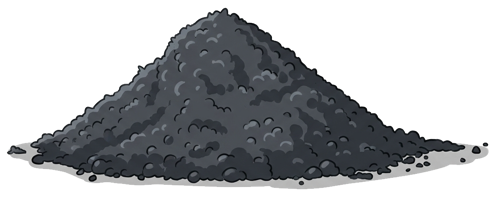
The magic is the tradeoff you can dial in. WC provides the hardness and wear resistance, while cobalt provides toughness (resistance to cracking/chipping). Commercial WC-Co grades commonly span roughly 3–25 wt% cobalt (sometimes broader depending on product family); more cobalt → tougher but less hard/wear-resistant, and finer WC grain size → harder and better edge retention (often with a toughness cost). Industry literature also notes grades are commonly classified by cobalt content and WC grain size, and additional carbides can be added in some grades to tune performance.
That’s why you see WC-Co everywhere in “metal meets misery” applications: indexable cutting inserts, end mills/drills, reamers, wire-drawing and extrusion dies, punches, cold-form tooling, seal/valve components, and mining/rock-drilling wear parts—anywhere you need high abrasion resistance with enough toughness to survive impact and thermal/mechanical shock.
One important real-world note: in occupational settings, exposure to hard-metal mixtures containing tungsten carbide and cobalt (especially dust) is taken seriously; IARC/NCBI summaries describe metallic cobalt with tungsten carbide (hard-metal industry) as probably carcinogenic to humans (Group 2A), so shops focus on dust control, ventilation, and SDS/industrial hygiene practices.