Learning Hub
Glossary
Cemented Carbide
Cemented carbide is a composite material made by combining fine particles of a hard carbide compound—usually tungsten carbide—with a metallic binder, typically cobalt (Co) or sometimes nickel (Ni). The mixture is pressed into shape and then sintered at high temperatures (around 1400–1600 °C), causing the binder metal to melt slightly and bond the hard carbide grains together. The result is an exceptionally hard, wear-resistant material that retains strength even at very high temperatures.
The tungsten carbide grains provide extreme hardness and resistance to abrasion, while the cobalt binder gives the material toughness and impact resistance, preventing it from shattering under stress. The ratio between carbide and binder determines the final properties: a higher carbide content produces greater hardness but lower toughness, while more binder improves ductility at the cost of hardness.
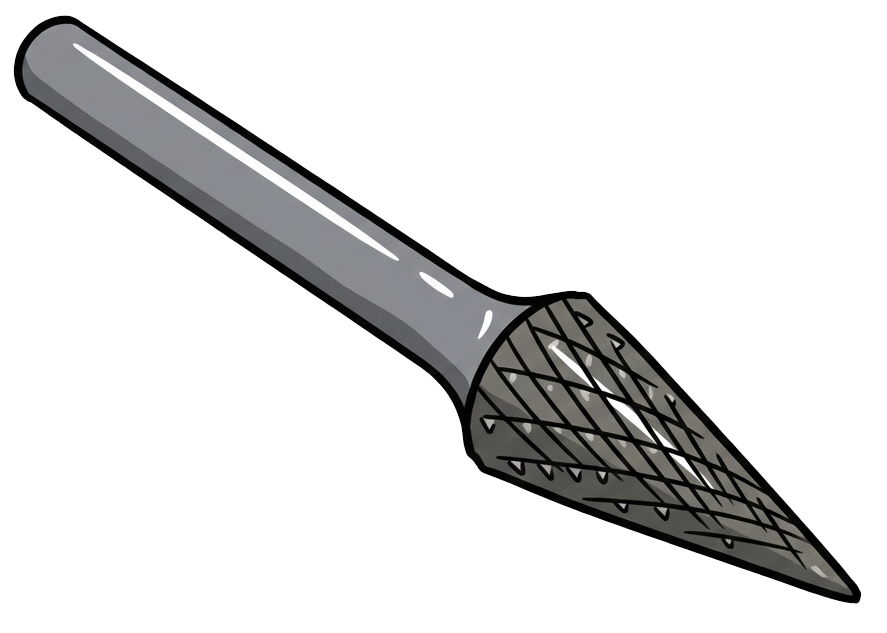
Cemented carbide is widely used in cutting tools, drills, end mills, inserts, dies, and wear parts—anywhere that hardness, heat resistance, and durability are essential. In metalworking, it can cut hardened steels and superalloys that would quickly destroy ordinary high-speed steel tools. It’s also used in mining, oil and gas drilling, woodworking, and construction equipment, and for precision components such as valves, bearings, and nozzle tips.
Because of its extreme hardness (second only to diamond and cubic boron nitride), cemented carbide maintains sharp cutting edges and dimensional stability even under intense friction and pressure. However, it can be brittle—especially at low cobalt contents—and may fracture if subjected to sudden impacts. To overcome this, modern manufacturing often applies surface coatings like titanium nitride (TiN) or aluminum oxide (Al₂O₃) using chemical vapor deposition (CVD) or physical vapor deposition (PVD) processes, further extending tool life.