Learning Hub
Glossary
Jobber Drill Bit
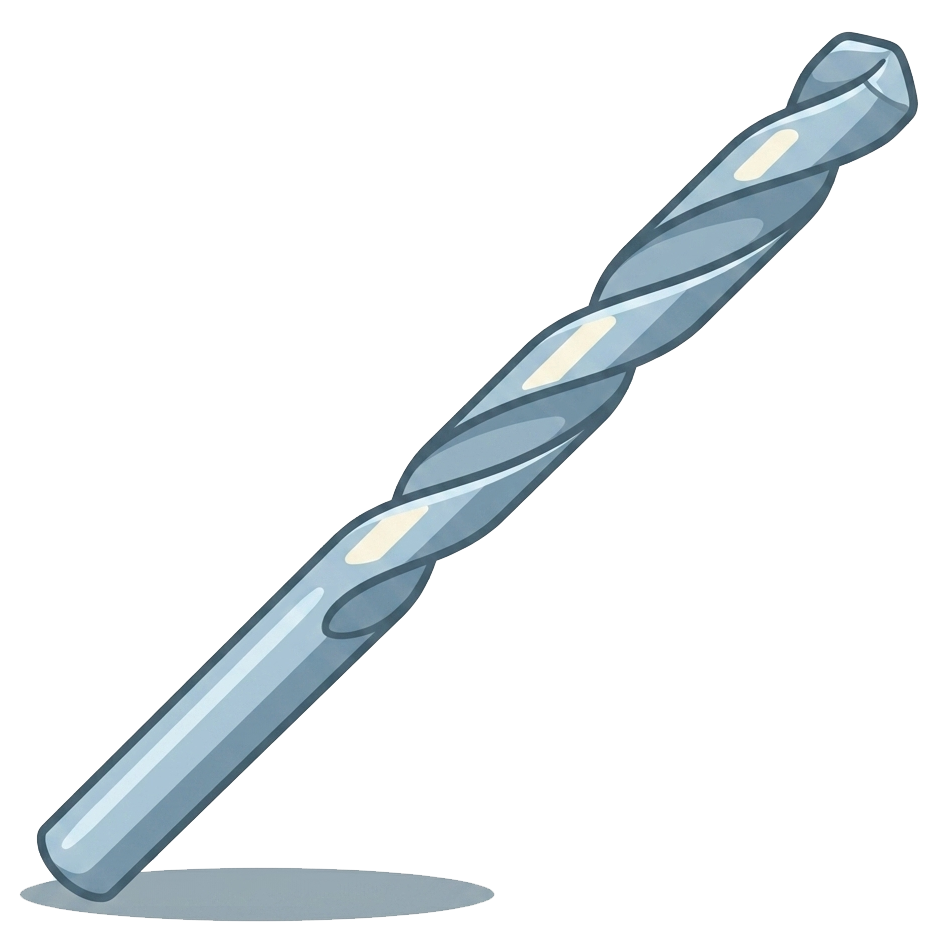
A jobber drill bit is the standard general-purpose twist drill commonly used for drilling holes in metal, wood, plastic, and other materials in shop, maintenance, and production environments. The term “jobber” refers primarily to the bit’s proportion, especially its overall length relative to its diameter. A jobber-length drill is longer than a stub-length or screw-machine-length drill, but shorter and more rigid than an extra-long or aircraft drill, making it the most common all-around drill style for everyday drilling work.
Jobber drill bits typically have a helical flute design that carries chips out of the hole and a pointed cutting tip that begins the cut as the bit rotates. They are available in many materials and finishes, including high-speed steel, cobalt, and carbide, as well as black oxide, bright, TiN, and other surface treatments depending on the intended material and performance requirements. Because they offer a practical balance of reach, strength, and versatility, jobber drills are widely used for hand drilling, drill presses, CNC work, maintenance tasks, and general fabrication.
In practical use, a jobber drill bit is often considered the default drill style unless another length is specified. Its longer body gives it more reach than a stub drill, but that extra length also makes it somewhat less rigid, so it is not always the best choice for high-precision starting, deep-hole specialty work, or applications where maximum stiffness is needed. Selection depends on diameter, point angle, flute geometry, base material, coating, and the accuracy and finish required for the hole.