Learning Hub
Glossary
Stub Drill Bit
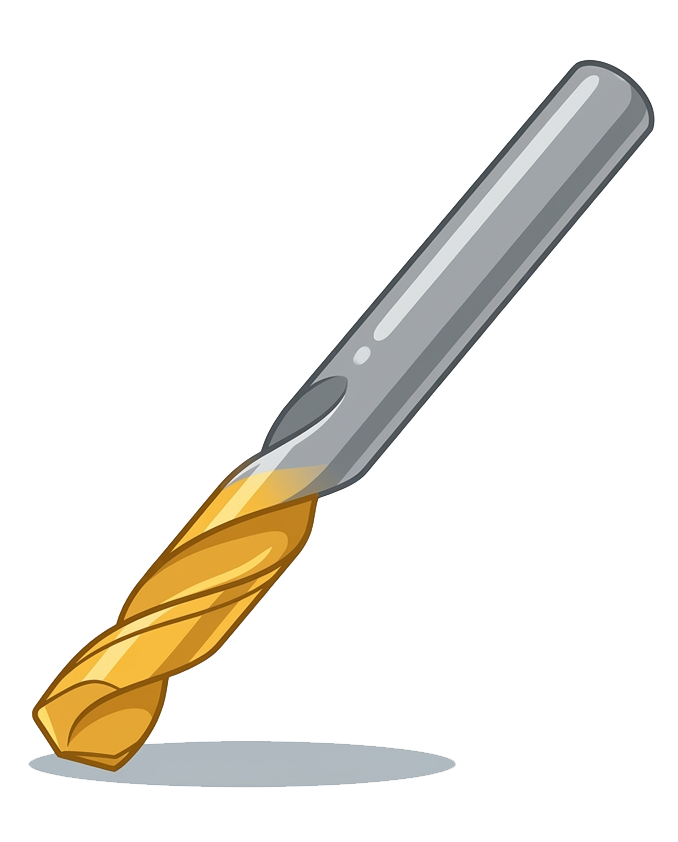
A stub drill bit is a short, rigid twist drill designed for improved strength, reduced deflection, and more accurate hole starting compared with a standard jobber-length drill bit. Because it is shorter in overall length and flute length, a stub drill is less likely to wander, flex, or break under load, making it well suited for precision drilling, tougher materials, and applications where hole location accuracy is important.
Stub drill bits are commonly used in metalworking, machining, maintenance, and production environments where a shorter, more stable tool is preferred over the longer reach of a standard drill. They are often used for starting holes, drilling in harder materials, working in setups with limited clearance, or reducing the chance of runout and chatter. In many shops, stub drills are also referred to as screw-machine-length drills, although exact terminology can vary slightly by manufacturer and catalog.
They are available in the same general material options as other twist drills, including high-speed steel, cobalt, and carbide, and may be furnished with different point angles, coatings, and flute designs depending on the material being drilled. The main tradeoff is reach: a stub drill offers better rigidity and control, but it cannot drill as deeply as a longer jobber drill of the same diameter. Selection depends on hole depth, material, tolerance requirements, machine setup, and the need for stiffness versus reach.