
Learning Hub
Glossary
Cobalt (Co)
Cobalt is a hard, lustrous, silver-gray metal with the chemical symbol Co and atomic number 27. It is a transition metal known for its magnetic properties, wear resistance, and ability to form strong, heat-resistant alloys. Cobalt is chemically similar to iron and nickel, and it plays an essential role in both industrial manufacturing and biological systems.
In metallurgy, cobalt is most valued for its use in superalloys—high-performance alloys that retain strength and stability at extreme temperatures. These alloys are used in jet engines, gas turbines, cutting tools, and space applications. Cobalt improves hardness, tensile strength, and resistance to oxidation and corrosion, especially under high stress and heat.
Cobalt compounds also have important uses. Cobalt oxide and cobalt aluminate provide vivid blue pigments known as cobalt blue, used in ceramics, glass, and paints since ancient times. Cobalt salts are used as catalysts in chemical industries and in electroplating, providing a hard, attractive, and corrosion-resistant surface finish.
In modern technology, cobalt is critical in rechargeable batteries, particularly lithium-ion batteries, where it stabilizes the cathode and improves energy density and lifespan. This makes cobalt a key material for electric vehicles, smartphones, and renewable energy storage.
Biologically, cobalt is an essential trace element as part of vitamin B₁₂ (cobalamin), which is necessary for red blood cell production and neurological function. However, excessive exposure to cobalt (such as dust or fumes in industrial settings) can be toxic, leading to respiratory or cardiac issues.
Cobalt is typically obtained as a byproduct of nickel and copper mining, with major producers including the Democratic Republic of the Congo, Russia, Canada, and Australia.
Cobalt Oxide
Cobalt oxide refers to a group of chemical compounds composed of cobalt and oxygen, the most common being cobalt(II) oxide (CoO) and cobalt(III) oxide (Co₂O₃). These oxides are important industrial materials used in ceramics, batteries, catalysts, and pigments because of their unique color, magnetic, and chemical properties.
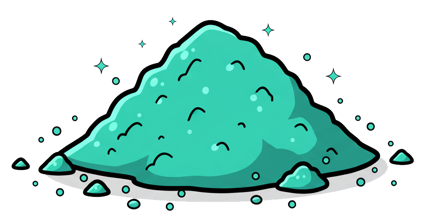
Cobalt(II) oxide (CoO) is a grayish or olive-green powder that forms when cobalt metal is heated in air at moderate temperatures. It has a cubic crystal structure and is slightly soluble in acids but insoluble in water. CoO is used primarily as a pigment (giving a bluish-green tint), in glass and enamel production, and as a precursor in making other cobalt salts and compounds. It’s also used in lithium-ion batteries as part of the cathode material, contributing to high energy density and stability.
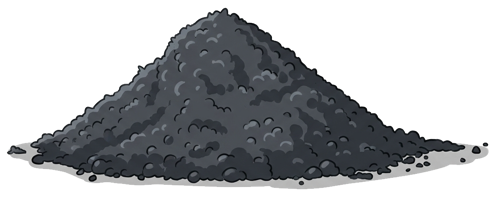
Cobalt(III) oxide (Co₂O₃), on the other hand, is a black crystalline powder that forms when cobalt compounds are oxidized at higher temperatures or in strong oxidizing environments. It contains cobalt in the +3 oxidation state and is less stable than CoO. Co₂O₃ is used mainly as an oxidizing agent, in ceramic glazes, and in certain chemical catalysts, especially for hydrocarbon oxidation and hydrogenation reactions.
Another related compound is cobalt(II,III) oxide (Co₃O₄), which is actually the most stable and technologically important cobalt oxide. It appears as a black powder and contains both +2 and +3 oxidation states of cobalt. Co₃O₄ is widely used in rechargeable batteries, particularly in lithium-ion and sodium-ion cathodes, as well as in supercapacitors, solar cells, and gas sensors. It also functions as a catalyst in environmental and industrial processes such as CO oxidation and water splitting.
Tungsten Carbide-Cobalt (WC-Co)
Tungsten carbide–cobalt (WC-Co) is the classic “carbide” used for cutting tools and wear parts—more precisely, it’s a cemented carbide (hardmetal): a composite made of very hard tungsten carbide (WC) grains held together by a tough, ductile cobalt (Co) metal binder. Think “crushed diamond-like grit in a metal glue,” except the grit is WC and the glue is cobalt.
It’s typically made by powder metallurgy: WC powder and Co powder are mixed/milled, pressed into shape, and then liquid-phase sintered. During sintering, the cobalt becomes (at least partially) molten, wets the WC grains, and pulls the structure dense as it bonds everything together; many high-performance grades are also HIP’d to reduce residual porosity.
The magic is the tradeoff you can dial in. WC provides the hardness and wear resistance, while cobalt provides toughness (resistance to cracking/chipping). Commercial WC-Co grades commonly span roughly 3–25 wt% cobalt (sometimes broader depending on product family); more cobalt → tougher but less hard/wear-resistant, and finer WC grain size → harder and better edge retention (often with a toughness cost). Industry literature also notes grades are commonly classified by cobalt content and WC grain size, and additional carbides can be added in some grades to tune performance.
That’s why you see WC-Co everywhere in “metal meets misery” applications: indexable cutting inserts, end mills/drills, reamers, wire-drawing and extrusion dies, punches, cold-form tooling, seal/valve components, and mining/rock-drilling wear parts—anywhere you need high abrasion resistance with enough toughness to survive impact and thermal/mechanical shock.
One important real-world note: in occupational settings, exposure to hard-metal mixtures containing tungsten carbide and cobalt (especially dust) is taken seriously; IARC/NCBI summaries describe metallic cobalt with tungsten carbide (hard-metal industry) as probably carcinogenic to humans (Group 2A), so shops focus on dust control, ventilation, and SDS/industrial hygiene practices.