
Learning Hub
Glossary
Camrail Bolt
A camrail bolt is a specialized heavy-duty fastener used in railroad track construction, particularly for attaching rail components such as joint bars (fishplates), guard rails, and other rail fittings to the rail or supporting hardware. It is designed specifically for the extreme vibration, shear forces, and dynamic loads that occur when trains pass over the track.
The defining feature of a camrail bolt is its cam-shaped or rectangular neck located directly beneath the head of the bolt. This neck fits into a matching slot or recess in the rail hardware. When the bolt is inserted into the hole, the cam-shaped neck locks the bolt from rotating, allowing the nut to be tightened from the opposite side without needing to hold the bolt head with a wrench. In railroad installation environments—where access is often limited and speed of installation is important—this anti-rotation feature significantly improves efficiency.
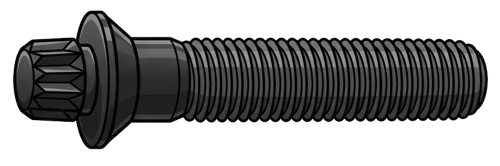
Camrail bolts typically have a large, round, low-profile head and a heavy shank diameter designed to withstand high shear loads. They are usually manufactured from high-strength carbon or alloy steel and may be heat-treated to achieve the toughness and tensile strength required for rail service. Depending on the application, they may also be coated or treated for corrosion resistance, although many railway bolts rely primarily on the inherent strength of the steel rather than decorative plating.
In operation, the camrail bolt works as part of a rail joint assembly. The bolt passes through aligned holes in the rail and joint bar (or other rail component), the cam neck engages the slot to prevent rotation, and a heavy hex nut is tightened to clamp the assembly together. Because railroad joints experience constant cyclic loading and vibration, the bolt must maintain clamping force while resisting fatigue and loosening.
Historically, camrail bolts evolved alongside early railway fastening systems in the 19th and early 20th centuries, when engineers needed fastening methods that could be installed quickly along long track runs and maintained without complex tools. The cam-locking feature allowed track workers to tighten large numbers of bolts rapidly during track laying or repair.