Learning Hub
Glossary
Sulfur
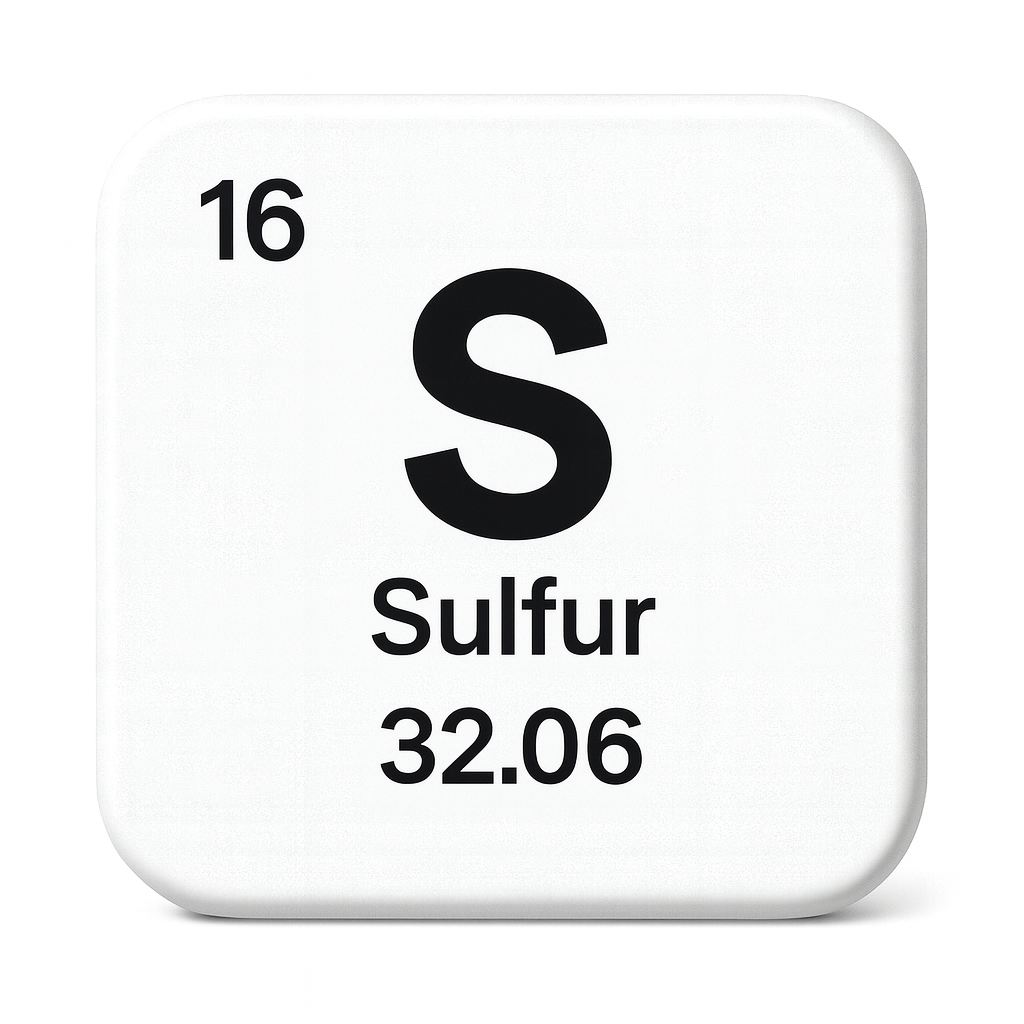
Sulfur is a nonmetallic chemical element (symbol S, atomic number 16) known for its bright yellow color, distinctive smell when burned, and essential role in both industrial processes and biological systems. It is abundant on Earth, occurring naturally in minerals like pyrite, gypsum, and galena, as well as in volcanic regions where elemental sulfur can form large deposits. In its pure form, sulfur is brittle, crystalline, and odorless—its characteristic “rotten egg” smell actually comes from hydrogen sulfide (H₂S), a sulfur-containing gas.
Industrially, sulfur is extremely important. It is used to produce sulfuric acid (H₂SO₄), one of the most widely manufactured chemicals in the world and a key ingredient in fertilizers, battery acids, petroleum refining, mineral processing, wastewater treatment, and chemical synthesis. Sulfur is also used in vulcanizing rubber, improving durability and elasticity in tires and industrial elastomers. It appears in pharmaceuticals, fungicides, matches, gunpowder, dyes, and detergents, and plays a role in metal ore processing and mining.
In metallurgy and fasteners, sulfur is intentionally added in small amounts to steels—especially free-machining steels—because it forms manganese sulfide (MnS) inclusions that help break chips and improve machinability. However, sulfur can also reduce weldability and toughness if not properly controlled, particularly in structural steels or components subjected to high stresses.
Biologically, sulfur is essential for life. It appears in amino acids like cysteine and methionine, in vitamins, in proteins, and in metabolic processes. It is part of the natural sulfur cycle, circulating through the atmosphere, oceans, soil, and living organisms.