
Learning Hub
Glossary
Coil Stock
Coil stock is metal supplied in a long continuous strip or wire wound into a coil for storage, handling, shipping, and high-volume manufacturing. Instead of being delivered as individual sheets, bars, blanks, or cut lengths, the material is rolled up so it can be fed continuously into production equipment such as stamping presses, fourslide machines, roll forming lines, wire forming machines, slitting lines, or automated cut-to-length systems.
In metalworking, coil stock can refer to flat strip coil, sheet coil, or wire coil, depending on the process. Flat coil stock is often used for stamped parts, clips, brackets, washers, terminals, shims, and other formed components. Wire coil stock is used for springs, cotter pins, retaining clips, wire forms, hooks, rings, and other parts made from round or shaped wire. The coil allows the machine to keep running with less manual loading, which improves production speed and consistency.
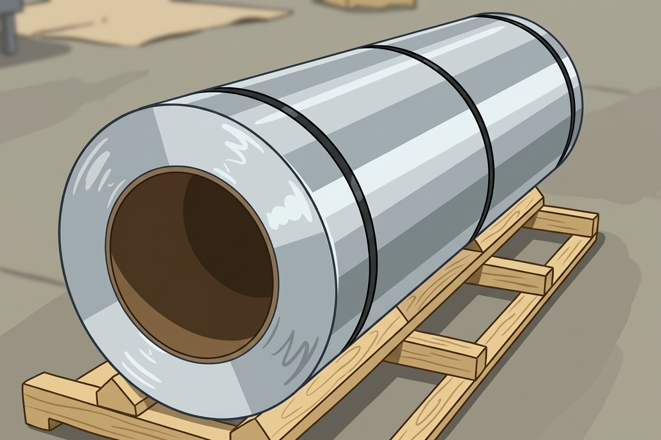
Coil stock can be made from many materials, including carbon steel, stainless steel, spring steel, aluminum, brass, copper, phosphor bronze, beryllium copper, and other alloys. The material may be supplied in a specific width, thickness, temper, hardness, surface finish, edge condition, and coating. For example, a manufacturer might buy zinc-plated steel strip coil for stamped fastener clips, stainless steel coil for corrosion-resistant brackets, or spring-temper wire coil for retaining rings or spring clips.
In fastener and industrial component manufacturing, coil stock is important because it supports efficient, repeatable production. A press or forming machine can pull material directly from the coil, straighten it, feed it into tooling, punch or form the part, and cut off the finished piece. This is especially useful for high-volume parts where consistent material feed, controlled grain direction, reduced handling, and lower scrap are important.
Coil stock is not usually the finished product. It is a raw or semi-finished material form prepared for additional processing. Its main advantage is that it gives manufacturers a continuous, controlled supply of material that can be converted into finished parts quickly and accurately.