
Learning Hub
Glossary
Calcination
Calcination is a high-temperature treatment used to drive off water, carbon dioxide, or other volatile substances from a solid material and to cause a controlled chemical or physical change. The material is heated below its melting point, usually in a furnace or kiln, so it remains largely solid while its composition is altered.
A common example is the calcination of limestone. When calcium carbonate is strongly heated, it breaks down into calcium oxide, known as quicklime, and carbon dioxide gas. In words, calcium carbonate becomes calcium oxide plus carbon dioxide. The carbon dioxide escapes, leaving behind a lighter and more chemically reactive solid.
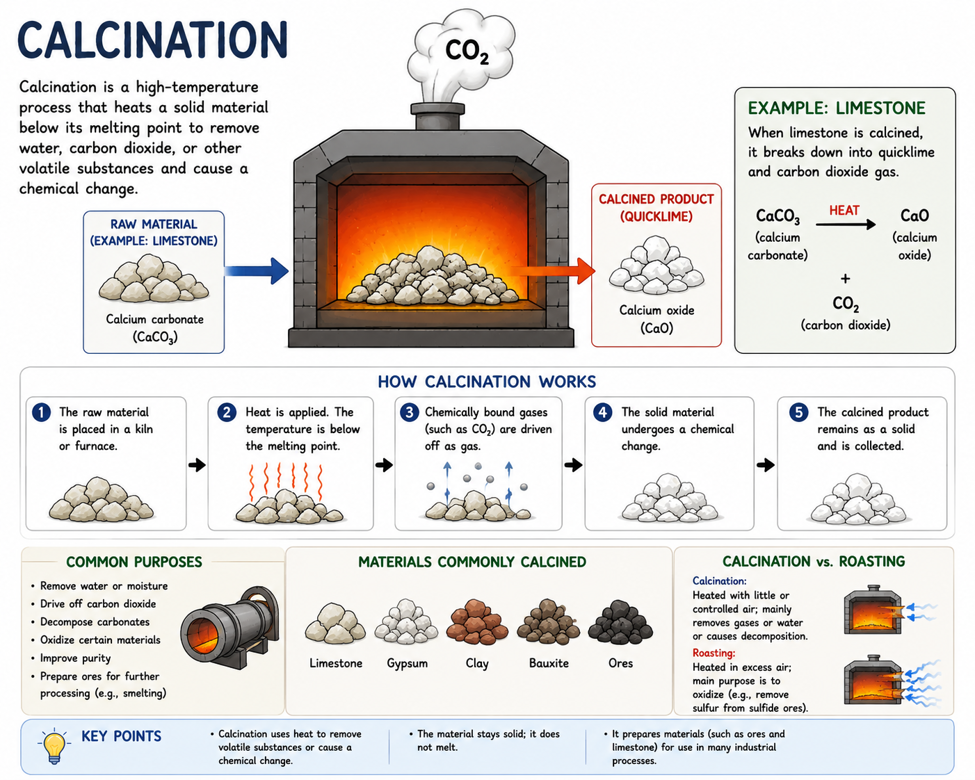
Calcination is also used to remove chemically bound water from minerals, decompose carbonates, oxidize certain materials, improve purity, and prepare ores for later processing. Materials commonly treated by calcination include limestone, gypsum, clay, bauxite, magnesite, and metal-bearing ores.
The process normally uses limited or carefully controlled amounts of air. This distinguishes calcination from roasting, which generally heats an ore in the presence of excess oxygen to oxidize sulfides or remove sulfur. Calcination does not necessarily involve oxidation; its main purpose is usually thermal decomposition or the removal of volatile components.
In metallurgy, calcination may prepare an ore for smelting by converting it into a more useful chemical form. For example, removing carbon dioxide or moisture can reduce the amount of material that must be heated in the smelting furnace and can make later chemical reactions easier to control.
Calcination is different from melting because the material is not intentionally turned into a liquid. It is also different from smelting, which uses heat and chemical reactions to separate and collect a metal, often in molten form. In practical terms, calcination uses heat to remove unwanted gases or moisture and transform a solid material into a more useful or reactive form.