
Learning Hub
Glossary
Red Rust
Red rust is the familiar reddish-brown corrosion product that forms when steel or iron oxidizes—basically iron oxides/hydroxides (commonly lumped as “rust”). In industrial terms, “red rust” is a big deal because it usually means the base steel is actively corroding, not just a coating discoloration.
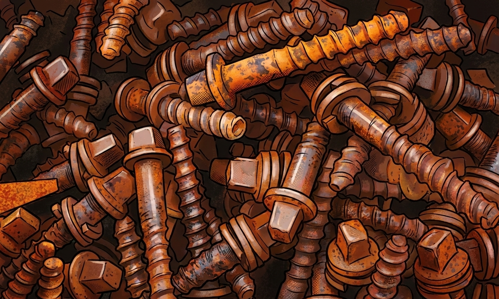
In coated parts (zinc-plated, zinc flake, paint, etc.), red rust is often used as a go/no-go field indicator: once you see red rust, the protective system has broken through far enough that the steel substrate is exposed. That’s different from white rust, which is typically zinc corrosion products (white, chalky bloom) that can appear while the zinc is still sacrificing itself to protect the steel.
You’ll also hear “red rust” in corrosion testing and quality talk—like salt spray testing—where people track time to white corrosion vs. time to red rust. White corrosion can be ugly but may still indicate protection is working; red rust is the “uh oh” milestone because it signals substrate attack.
Common real-world triggers include damaged coating, thin/porous coating, poor pretreatment, contaminants (chlorides), trapped moisture, galvanic coupling, or simply time + oxygen + water doing what they do best.
Rust
A destructive, reddish-brown corrosion that forms on iron or steel fasteners due to exposure to oxygen and moisture weakening their structure and impeding function. It is commonly mitigated by the use of protective finishes or corrosion-resistant materials, like stainless steel.
White Rust
A chalky, white corrosion that forms on fasteners with zinc or cadmium-based metallic finishes, such as electroplated zinc or zinc-rich coatings. White rust indicates the surface finish has started to degrade, usually due to moisture or improper storage. This residue flakes off over time, exposing the underlying steel.