
Learning Hub
Glossary
Graphite
Graphite is a naturally occurring (and also manufactured) crystalline form of carbon where the carbon atoms are arranged in stacked, hexagonal layers. Those layers can slide easily over one another, which is why graphite feels slippery and is an excellent solid lubricant. It is also thermally stable in many environments, chemically resistant to a wide range of chemicals, and electrically/thermally conductive due to its bonding structure.
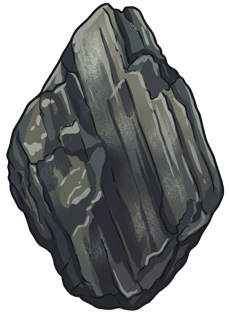
In industrial and chemical service, graphite’s biggest practical value is that it can provide lubricity and sealing performance at temperatures and pressures where many organic materials fail. That’s why graphite is widely used in anti-seize and high-temperature lubricants, and why flexible/expanded graphite is a common gasket facing material (including on kammprofile gaskets and other high-performance gasket designs). Graphite facings help gaskets conform to flange surface imperfections and maintain sealing stress across thermal cycling, while the graphite itself resists many process chemicals.
Important limitations are environment-dependent. In oxidizing atmospheres (air), graphite can oxidize at elevated temperatures, which can reduce long-term performance in hot, oxygen-rich service. Graphite is also electrically conductive and relatively cathodic, so when it is in contact with certain metals in the presence of an electrolyte, it can contribute to galvanic corrosion of the less noble metal (a key consideration with some aluminum or carbon steel interfaces, depending on exposure).