Learning Hub
Glossary
Argon (Ar)
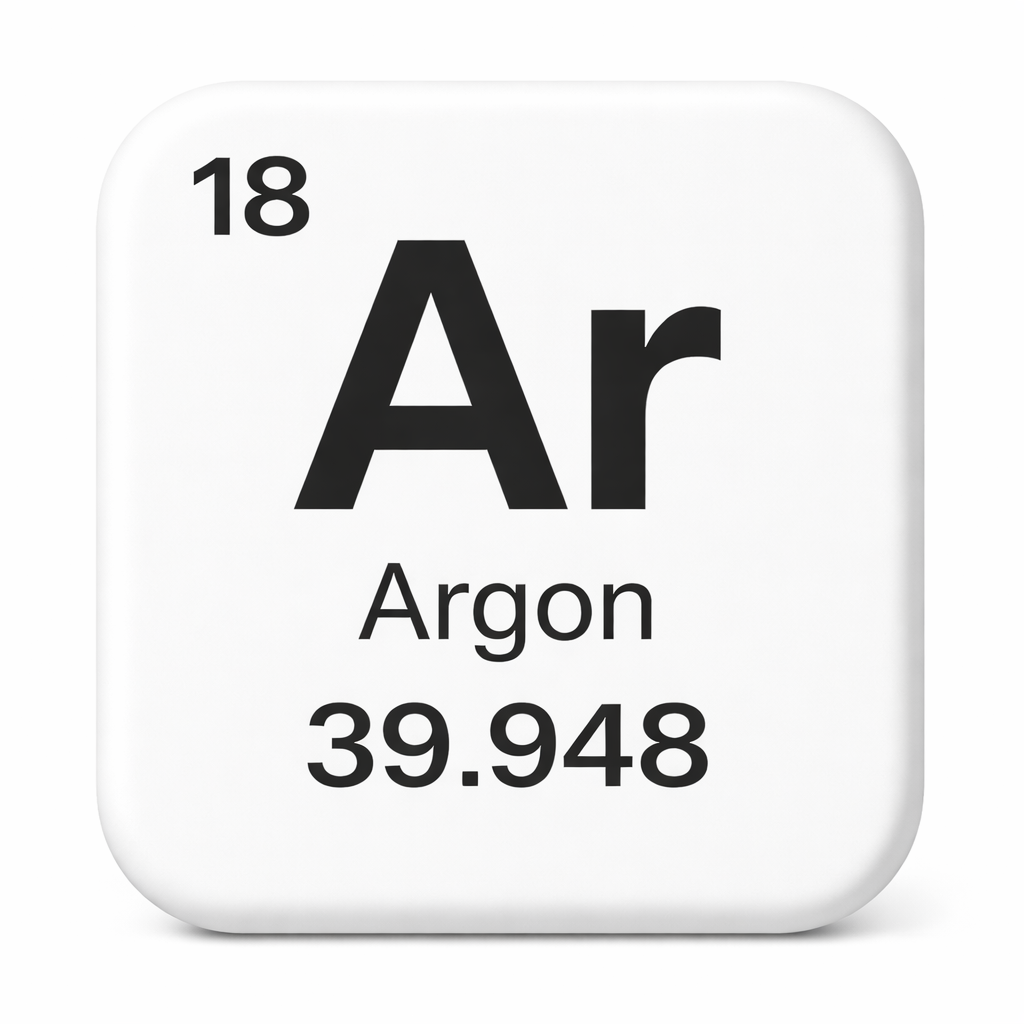
Argon (Ar) is a chemical element—a noble gas that makes up about 1% of Earth’s atmosphere. It’s colorless, odorless, nonflammable, and—most importantly for industry—very chemically inert. That “doesn’t want to react with anything” personality is exactly why it shows up all over manufacturing and metallurgy.
In industrial work, argon is used as a shielding and protective atmosphere gas. In welding (especially GTAW/TIG and many GMAW/MIG applications), argon blankets the molten metal so oxygen and nitrogen from air don’t cause oxidation, porosity, or ugly weld chemistry. In metallurgy, argon is commonly used to protect reactive molten metals and hot parts, and it’s the go-to gas inside processes like hot isostatic pressing (HIP) because it can deliver very high pressure while staying inert.
Argon is also used in heat treating and sintering atmospheres, purging piping/vessels before introducing reactive gases, plasma processes, and even in some insulated glazing (as a fill gas) because it reduces heat transfer better than air. The unifying theme: whenever you need an atmosphere that won’t mess with your process, argon is often on the short list.
Safety-wise, argon’s main hazard is sneaky: it’s an asphyxiant. Because it has no smell and doesn’t burn, it can displace oxygen in confined or poorly ventilated spaces without obvious warning. So in plants it’s treated with the same respect as nitrogen: good ventilation, oxygen monitoring where needed, and proper gas-handling procedures.