Learning Hub
Glossary
Eye Lag Screw
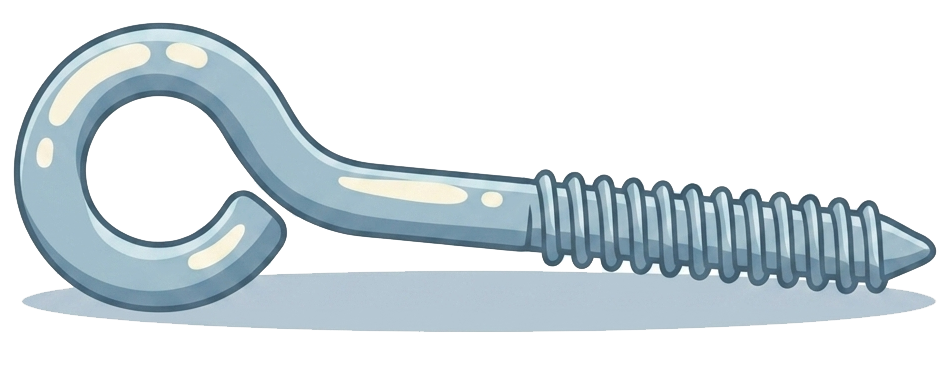
An eye lag screw is a one-piece fastener that combines a lag-screw-style threaded shank with a circular eye formed at the head. It is designed to be driven into wood or other suitable base materials so the threaded portion provides holding power while the eye serves as an attachment point for rope, chain, cable, wire, hooks, or other hanging or tie-off hardware. Unlike a standard bolt, an eye lag screw does not use a nut for installation; it relies on its coarse, pointed wood-screw-style thread to anchor directly into the material.
Eye lag screws are commonly used in light- to medium-duty hanging, support, guiding, and restraint applications such as overhead lines, plant hangers, gate hardware, clotheslines, utility attachments, and general-purpose rigging points in wood. They are typically made from steel, stainless steel, or other corrosion-resistant materials and may be furnished in plain, zinc-plated, galvanized, or decorative finishes depending on the environment. Selection depends on shank diameter, thread length, eye inside diameter, material strength, embedment depth, load direction, and exposure conditions.
Although the eye provides a convenient connection point, an eye lag screw is not automatically suitable for heavy lifting, fall protection, or critical overhead loads unless it is specifically engineered, rated, and installed for that purpose. In many applications, its strength is governed not only by the fastener itself but also by the withdrawal and shear capacity of the wood or supporting material. Proper pilot hole size and installation depth are important to reduce splitting and help achieve reliable performance.
Hex Flange Lag Screw
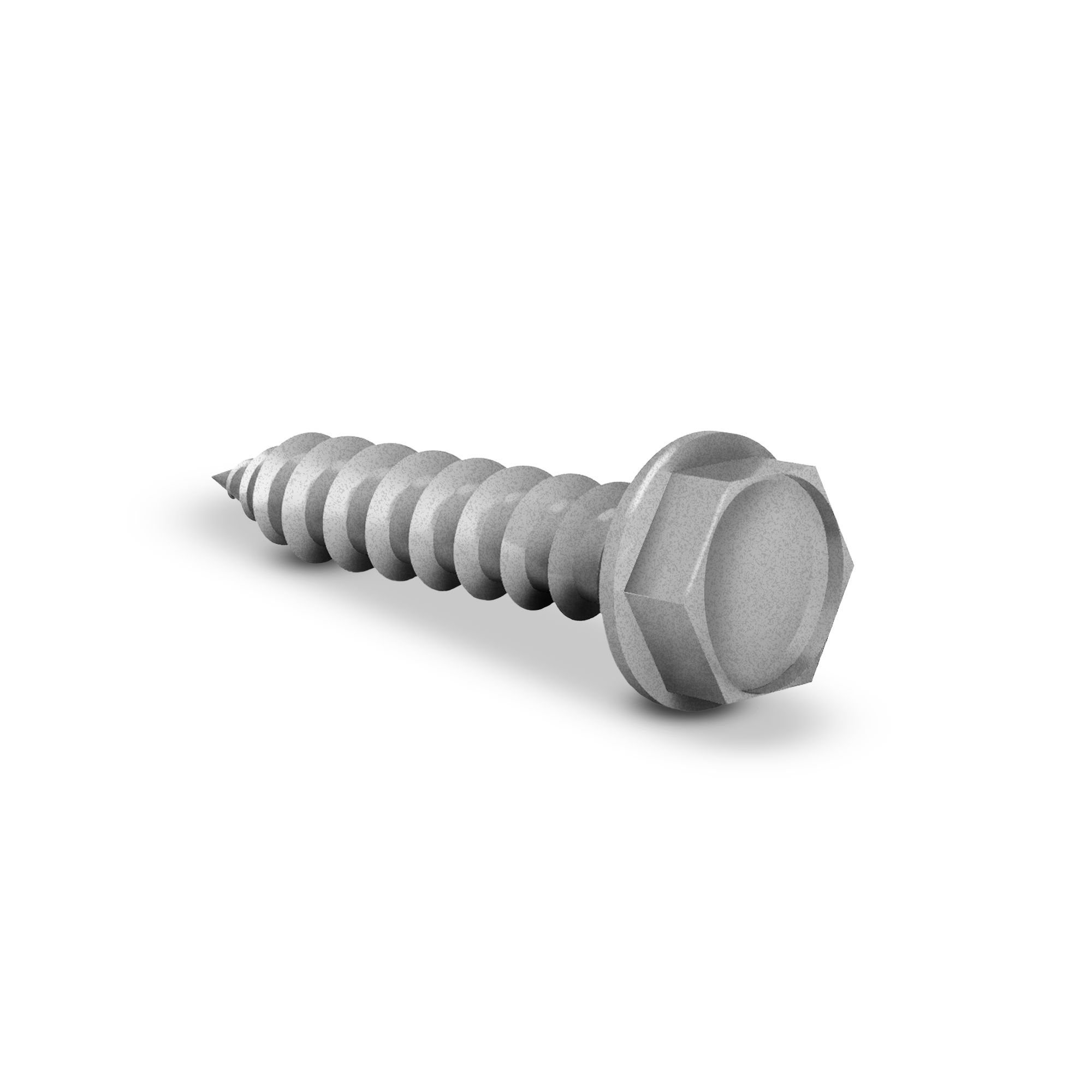
A hex lag screw, also known as a lag bolt, is a large, heavy-duty screw with a hexagonal head, designed for securing heavy materials such as wood, metal, or masonry. Unlike traditional screws, lag screws require pre-drilled holes and are commonly used in construction, woodworking, and outdoor projects where strong, durable fastening is necessary.