Learning Hub
Glossary
Ferrule
A ferrule is a small sleeve, ring, or collar used to reinforce, protect, locate, or mechanically secure something—usually at an end, joint, or interface. In industrial hardware, it’s basically the “tiny bodyguard” that keeps a component from fraying, splitting, crushing, loosening, or wearing out where forces concentrate.
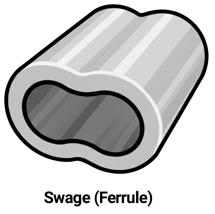
In wire rope and rigging, a ferrule is the swage sleeve that’s pressed onto the rope to lock an eye termination (like a Flemish eye) by clamping the rope body and tail together into a permanent assembly. In cable and electrical work, a ferrule is a crimped terminal sleeve that consolidates fine strands into a solid, reliable end so the conductor can be clamped under a screw or inserted into a terminal without strands splaying or breaking.
In tubing, piping, and compression fittings, the ferrule is the ring (often a front ferrule / back ferrule arrangement in instrumentation fittings) that bites into or grips the tube as you tighten the nut, creating a strong mechanical hold and a leak-resistant seal. In hoses, ferrules are the metal sleeves that crimp over the hose and fitting stem to keep the connection from blowing off under pressure.
You’ll also see ferrules in mechanical assemblies (as spacers or wear sleeves), bearings and shafts (as protective collars), and fiber optics (the precision sleeve that centers and protects the fiber end in a connector). The common thread: a ferrule is a simple-looking part that exists because the interface it’s protecting is not simple—loads, vibration, pressure, and handling abuse all like to attack ends and joints first.
Flemish Eye Ferrule
A Flemish Eye Ferrule is the metal sleeve (ferrule) that gets pressed/swaged onto a wire rope to lock and secure a Flemish eye splice. In other words, you form the Flemish eye (the eye/loop made by re-laying the strands), and the ferrule is the “mechanical lock” that clamps the main body of the rope plus the strand tails so the eye becomes a permanent, load-rated termination.
In industry language you’ll also see this described as a “Flemish eye ferrule-secured termination”—a Flemish eye formed at the rope end and then secured by means of a ferrule pressed on the rope body and the tail ends of the strands.
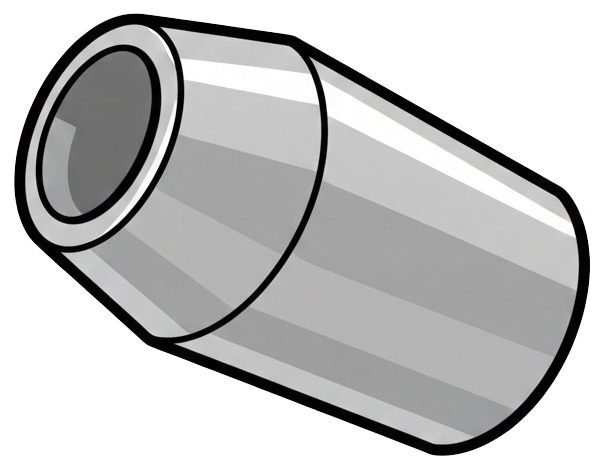
From a practical shop-floor view, the ferrule is typically a tubular/conical sleeve installed over the rope and then hydraulically swaged (compressed) using the correct dies and press sequence for the rope size and ferrule type. Many Flemish-eye terminations are visually recognizable because the sleeve is often tapered (conical) on one end (depending on the style/spec).
Ferrules for these terminations are commonly made from non-alloy carbon steel or aluminum under European practice, and the requirements around ferrule-secured eyes (including Flemish eyes) are covered by EN 13411-3 (which is specifically about ferrule-secured eye terminations and the ferrules themselves).
What matters most in real use is that the ferrule is not just “any sleeve that fits”—it has to match the wire rope construction/diameter and be swaged with the correct tooling and process so the termination achieves its intended efficiency and reliability. That’s why reputable sling shops treat the ferrule + press + die set as a controlled system, and why standards focus heavily on dimensions, positioning of the dead end, and verification checks.