Learning Hub
Glossary
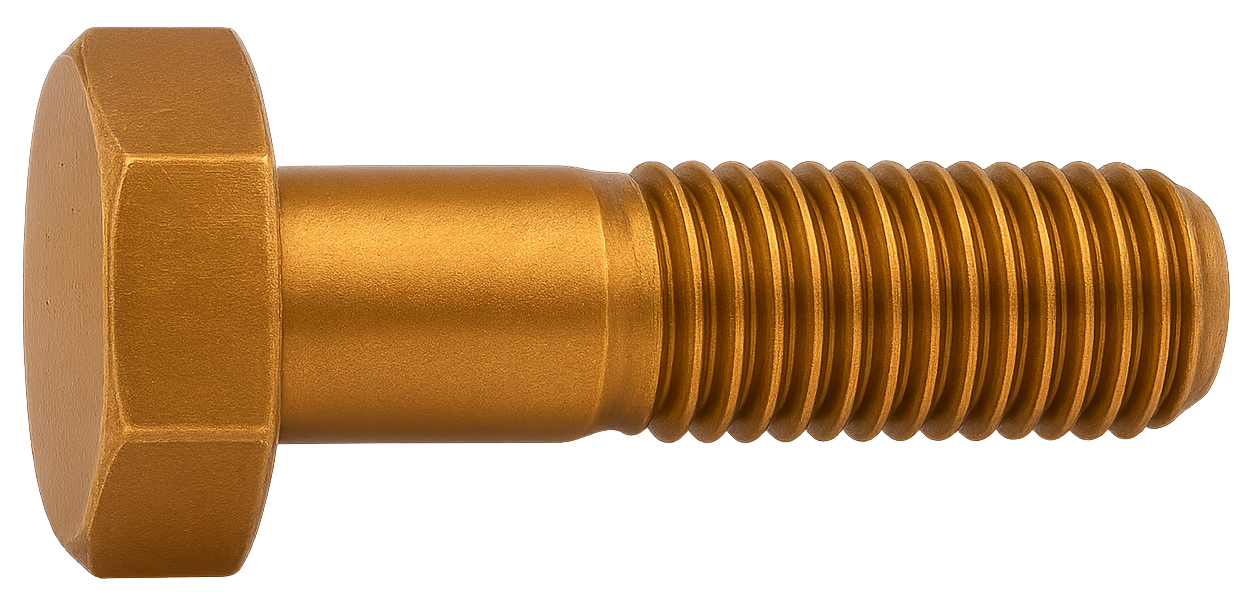
Beryllium Copper (BeCu)
Beryllium Copper (BeCu), also known as copper beryllium or spring copper, is a high-performance copper alloy containing a small percentage of beryllium—usually between 0.5% and 3%—along with possible additions of nickel or cobalt. Even though the beryllium content is low, the alloy delivers an exceptional balance of properties, including strength, hardness, conductivity, and corrosion resistance. This unique combination makes BeCu one of the most versatile and valuable copper-based alloys available.
BeCu is notable for its impressive properties. After heat treatment, it can achieve strength levels comparable to hardened steel while still maintaining toughness. It provides good electrical and thermal conductivity, though not as high as pure copper, and resists corrosion, oxidation, galling, and wear even in harsh environments. The alloy is non-sparking, which makes it safe for use in explosive or flammable settings such as refineries, oil rigs, and aerospace fueling operations. It is also non-magnetic, making it useful in environments where magnetic interference must be avoided. In addition, it has outstanding fatigue resistance and elasticity, making it ideal for use in springs, connectors, and components subject to repeated stress.
The advantages of BeCu extend further. Through heat treatment, its hardness and strength can be precisely tailored to suit specific applications. It uniquely combines mechanical durability with good conductivity, maintaining performance across a wide temperature range and offering long service life in high-cycle or demanding environments.
Because of these characteristics, Beryllium Copper is used across many industries. In electrical and electronics, it is found in connectors, switches, relays, circuit breakers, and precision springs. In aerospace and automotive, it is applied in components exposed to vibration, fatigue, and extreme operating conditions. In oil, gas, and mining, BeCu is used to make non-sparking tools, drill bushings, and safety-critical equipment. The defense and marine sectors use it where corrosion resistance and non-magnetic properties are vital. It is also widely applied in precision instruments, such as measuring devices, sensors, and delicate mechanical systems requiring both strength and accuracy.
One important consideration is safety. While Beryllium Copper is safe to handle in solid form, the dust or fumes produced during machining, grinding, or welding can be hazardous if inhaled. For this reason, strict safety protocols must be followed when processing BeCu to prevent health risks associated with beryllium exposure.
AKA: Copper Beryllium, Spring Copper
Copper (Cu)
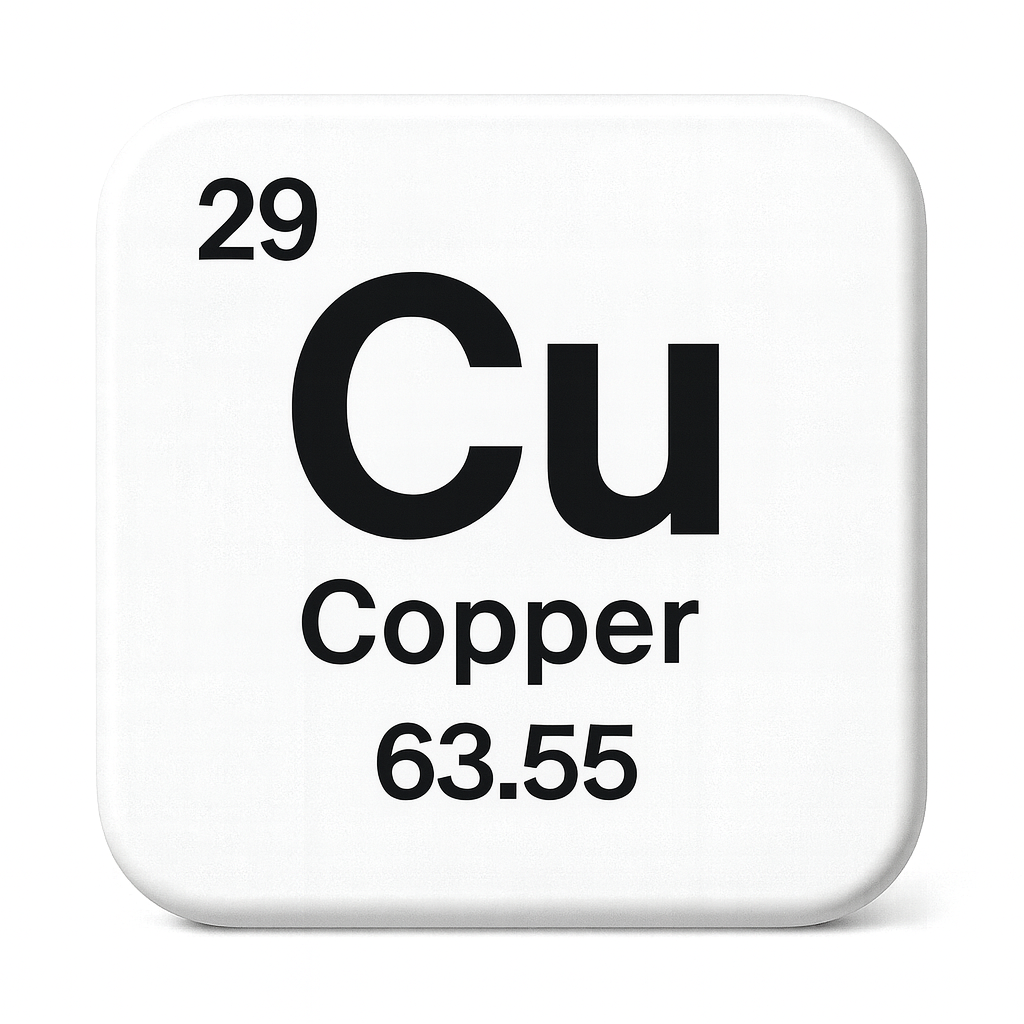
Copper is a reddish-orange metallic element with the chemical symbol Cu and atomic number 29. It is one of the oldest metals used by humans and remains one of the most important materials in modern industry due to its excellent electrical and thermal conductivity, corrosion resistance, and malleability.
Copper is a ductile, soft, and highly conductive metal, second only to silver in electrical performance. Because of this, it is the primary material for electrical wiring, motors, generators, circuit boards, and power transmission systems. It’s also used extensively in plumbing, roofing, electronics, and industrial machinery. In addition, its ability to form alloys easily makes it the foundation for other important engineering metals such as brass (copper + zinc) and bronze (copper + tin).
When exposed to air, copper slowly oxidizes, forming a thin, protective surface layer known as a patina. Initially reddish-brown, this layer eventually turns greenish-blue (copper carbonate), as seen on the Statue of Liberty. This natural patina protects the metal underneath from further corrosion, which is why copper can last for centuries even in harsh environments.
Copper is also an essential trace element in the human body, necessary for enzymes that aid in energy production, connective tissue formation, and iron absorption. However, excessive exposure to copper dust or compounds can be toxic.
Industrially, copper is mined primarily from sulfide ores such as chalcopyrite (CuFeS₂) and bornite (Cu₅FeS₄). The metal is extracted and refined through smelting and electrorefining. Major producers include Chile, Peru, China, the United States, and the Democratic Republic of Congo.
In terms of physical properties, copper has a melting point of 1,085°C (1,985°F), a density of 8.96 g/cm³, and an unmistakable metallic reddish luster. It is nonmagnetic, easily formed into sheets or wires, and highly recyclable—nearly all copper ever mined is still in use today because it can be reused without losing quality.
Copper Alloy
Copper alloy is a metal made by combining copper with one or more additional elements to improve strength, hardness, corrosion resistance, wear resistance, machinability, conductivity, or formability. Pure copper is highly conductive and corrosion resistant, but it is also relatively soft, so alloying it with elements such as zinc, tin, aluminum, nickel, silicon, beryllium, or phosphorus allows the material to perform better in demanding industrial and fastener applications.
Common copper alloys include brass, which is primarily copper and zinc; bronze, which is traditionally copper and tin but may include other elements; silicon bronze, which offers good corrosion resistance and strength; phosphor bronze, known for fatigue resistance and spring properties; copper-nickel alloys, used in marine and corrosive environments; and beryllium copper, valued for high strength, electrical conductivity, and non-sparking properties.
In fasteners, copper alloys are often selected when corrosion resistance, electrical conductivity, thermal conductivity, appearance, or non-magnetic behavior is important. They may be used for screws, nuts, bolts, washers, electrical connectors, marine hardware, grounding components, spring contacts, and specialty parts exposed to moisture or chemicals. While copper alloys generally do not match the high tensile strength of alloy steel fasteners, they provide a useful balance of conductivity, durability, corrosion resistance, and workability in applications where ordinary carbon steel or stainless steel may not be the best fit.
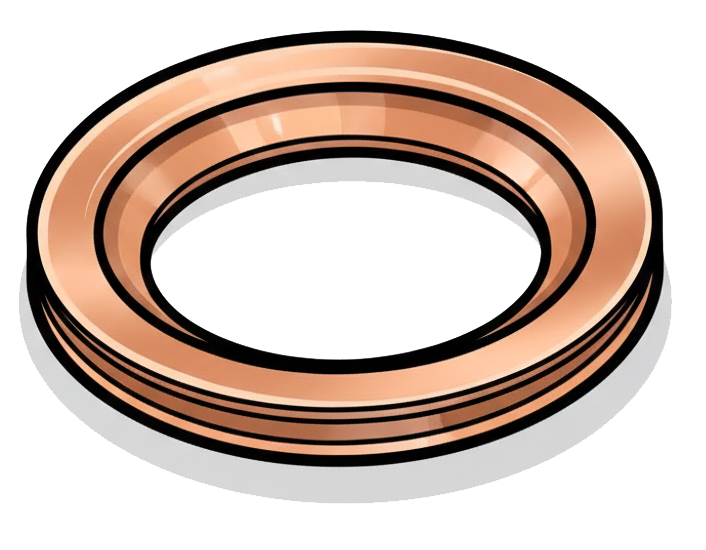
Folded Copper Washer
A folded copper washer is a sealing washer made from a strip of copper that has been bent or folded over itself, creating a double-layered structure rather than a single solid disc. This fold gives the washer a U-shaped or crimped cross-section, making it more compressible and flexible than a standard flat copper washer.
Because copper is naturally soft and ductile, the folded design allows the washer to deform under bolt load, letting it conform more tightly to mating surfaces and create a better fluid-tight seal. This makes it especially useful in applications that experience vibration, temperature changes, or slight surface irregularities—conditions where a solid washer may not compress enough to maintain sealing integrity. Folded copper washers are often used in hydraulic systems, brake and fuel fittings, oil systems, and HVAC or refrigeration connections.
Unlike a single-layer solid copper washer, which behaves more like a rigid spacer or crush ring, a folded copper washer behaves more like a gasket. The layered structure gives it greater resiliency and sealing performance while still retaining the corrosion resistance and thermal conductivity associated with copper.