Learning Hub
Glossary
Beryllium (Be)
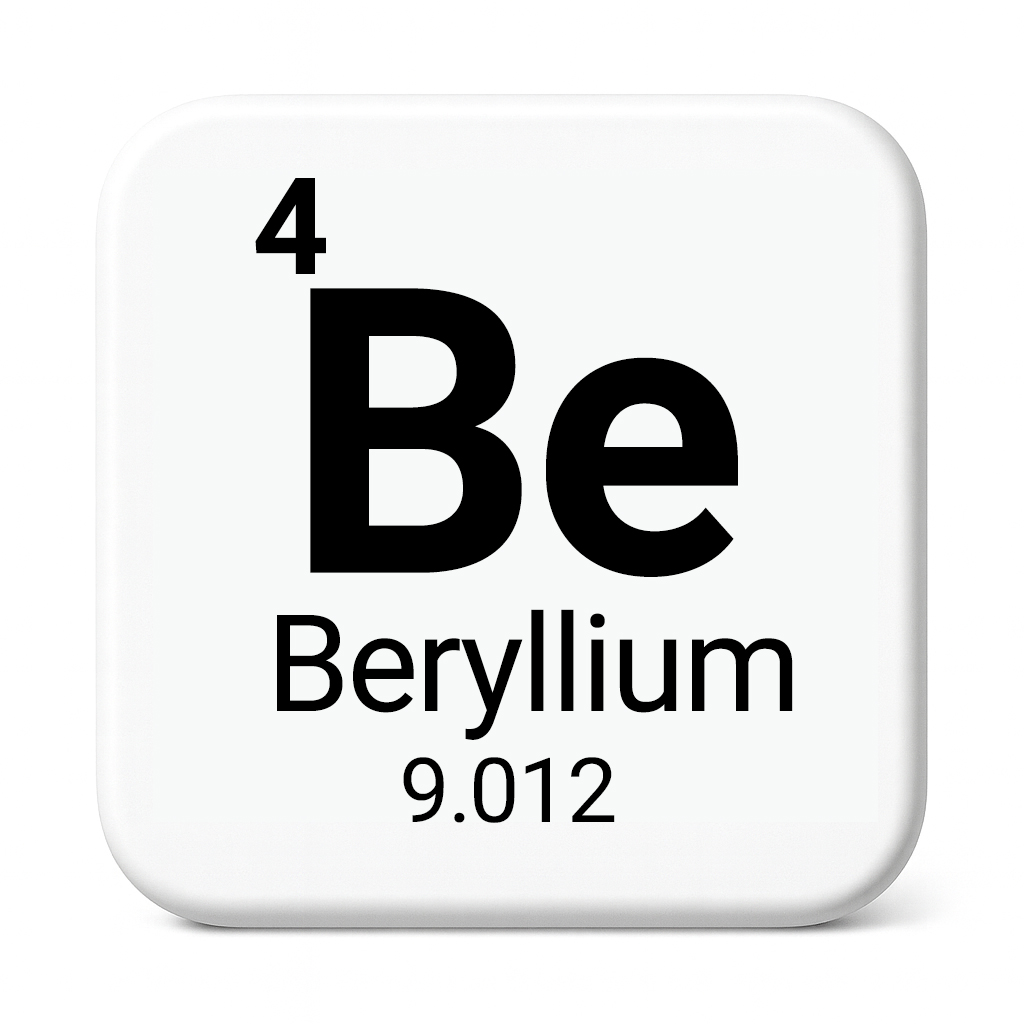
Beryllium is a chemical element with the symbol Be and atomic number 4. It is the lightest member of the alkaline earth metals and, at room temperature, it is a solid metal with a very low density, a relatively high melting point, and unusually high stiffness for its weight. It does not occur naturally as a free metal in usable form, but is found in minerals, especially beryl.
From an engineering standpoint, beryllium is important because it combines light weight, high rigidity, good thermal behavior, and unusual transparency to X-rays. Those properties are why it has been used in specialized aerospace, nuclear, electronic, and instrument applications rather than in ordinary general-purpose hardware. Beryllium is also important as an alloying element, especially in copper-beryllium alloys, which are valued for combining high strength and hardness with useful electrical and thermal conductivity.
Beryllium is not a routine “commodity” metal like carbon steel, aluminum, or common stainless steels. Although it offers valuable performance benefits, it is also associated with major handling concerns because beryllium dust, fumes, mists, and some compounds are toxic, particularly when inhaled. Exposure can lead to beryllium sensitization, chronic beryllium disease, and increased concern for lung cancer risk, which is why workplace exposure is tightly controlled in industries that machine, grind, melt, or otherwise process it.
In a manufacturing and industrial-materials sense, beryllium is best understood as a specialty lightweight engineering metal and alloying element used where stiffness, thermal performance, conductivity, or X-ray and nuclear-related properties justify its cost and handling requirements. It is much more likely to appear in high-performance alloys, precision components, aerospace hardware, connectors, and specialty applications than in standard commercial fasteners or general structural products.