Learning Hub
Glossary
Woodruff Key
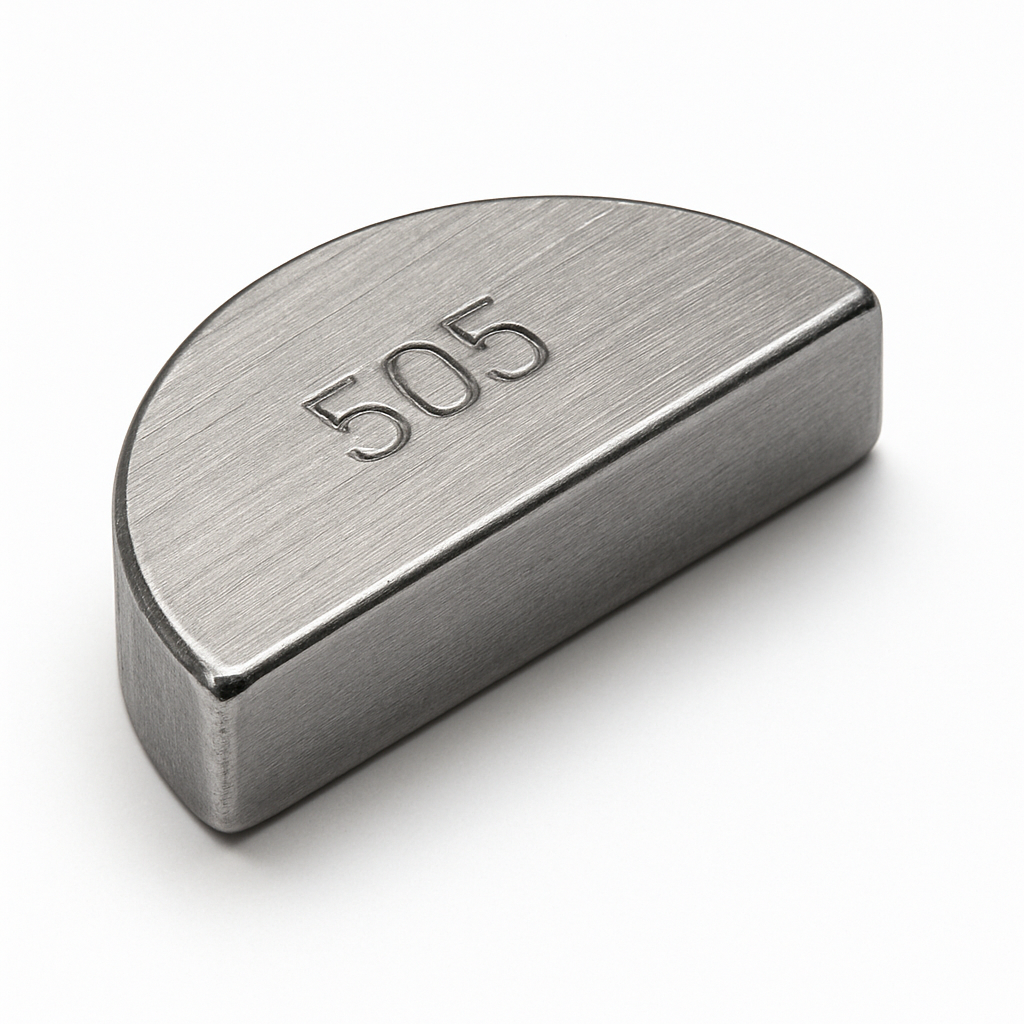
A Woodruff key is a small, semicircular (half-moon) machine key used to lock a rotating hub (gear, pulley, flywheel, etc.) to a shaft so they turn together. A matching Woodruff keyseat is milled as a circular pocket in the shaft; the flat top of the key projects above the shaft and fits into the keyway in the hub.
Because the key seats deeply in the shaft and presents a curved face, it self-aligns—especially helpful on tapered shafts—and is less likely to roll out during assembly. It also tolerates small axial or angular mismatches between hub and shaft better than a straight (rectangular) key. Typical materials are hardened carbon steel or stainless.
Trade-offs: the deep pocket weakens the shaft more than a shallow straight keyseat of the same width, so designers balance ease of assembly and alignment against shaft strength. Common failure modes are key shear and fretting if fits are loose or torque is excessive.
You’ll see Woodruff keys widely in automotive crankshafts and small-engine flywheels, machine tool spindles, alternators, and pumps. Sizes are standardized (inch: ANSI B17.6; metric: DIN 6888), selected by shaft diameter and hub keyway width.
Installation tips: press or tap the key into the shaft seat so its top sits slightly proud (typically ~25–35% of the key height above the shaft OD), align the hub keyway, and slide/press the hub on. Ensure snug fits and clean, burr-free seats to prevent wobble and wear.
AKA: Quadrant Key