
Learning Hub
Glossary
Vacuum Arc Remelting (VAR)
Vacuum arc remelting (VAR) is a secondary (refining) melting process used to make high-quality ingots—especially for specialty steels, titanium alloys, and nickel-based superalloys—by remelting a consumable electrode under vacuum using a DC electric arc. The purpose is not “just to melt it again,” but to tighten chemistry and microstructure control, improve homogeneity, and boost cleanliness for demanding applications.
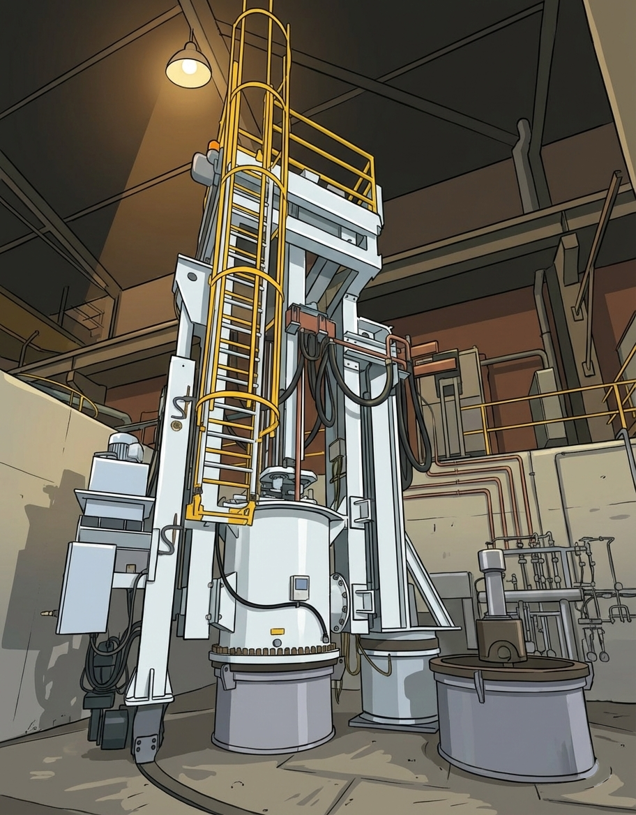
Here’s how it works in one clean mental picture. You start with an alloy that has already been melted and cast into a cylindrical consumable electrode (often produced by vacuum induction melting (VIM) or other melting routes). That electrode is lowered into a vacuum furnace above a water-cooled copper mold (crucible). A high DC current strikes an arc between the electrode tip and the molten pool below, melting the electrode tip so droplets fall into the mold and solidify as a new ingot. The water-cooled copper mold forces directional solidification, and tight control of variables like melt rate and arc gap helps reduce segregation and other ingot defects.
The “vacuum” part matters because it reduces contamination from atmospheric gases and enables processing of reactive alloys without contact with refractories (the copper mold is water-cooled and not a traditional refractory crucible). In practical quality terms, VAR is widely used to improve cleanliness and refine structure, and it’s selected when you need a higher confidence level against issues like segregation-related defects or variability that can shorten fatigue life in high-performance parts.
A useful way to place VAR in the melt chain: VIM is often the chemistry-control primary melt, and VAR is the secondary remelt that focuses on ingot quality and solidification control. You’ll often see specs calling for double- or triple-VAR in some titanium and superalloy supply chains when the application is particularly unforgiving.