
Learning Hub
Glossary
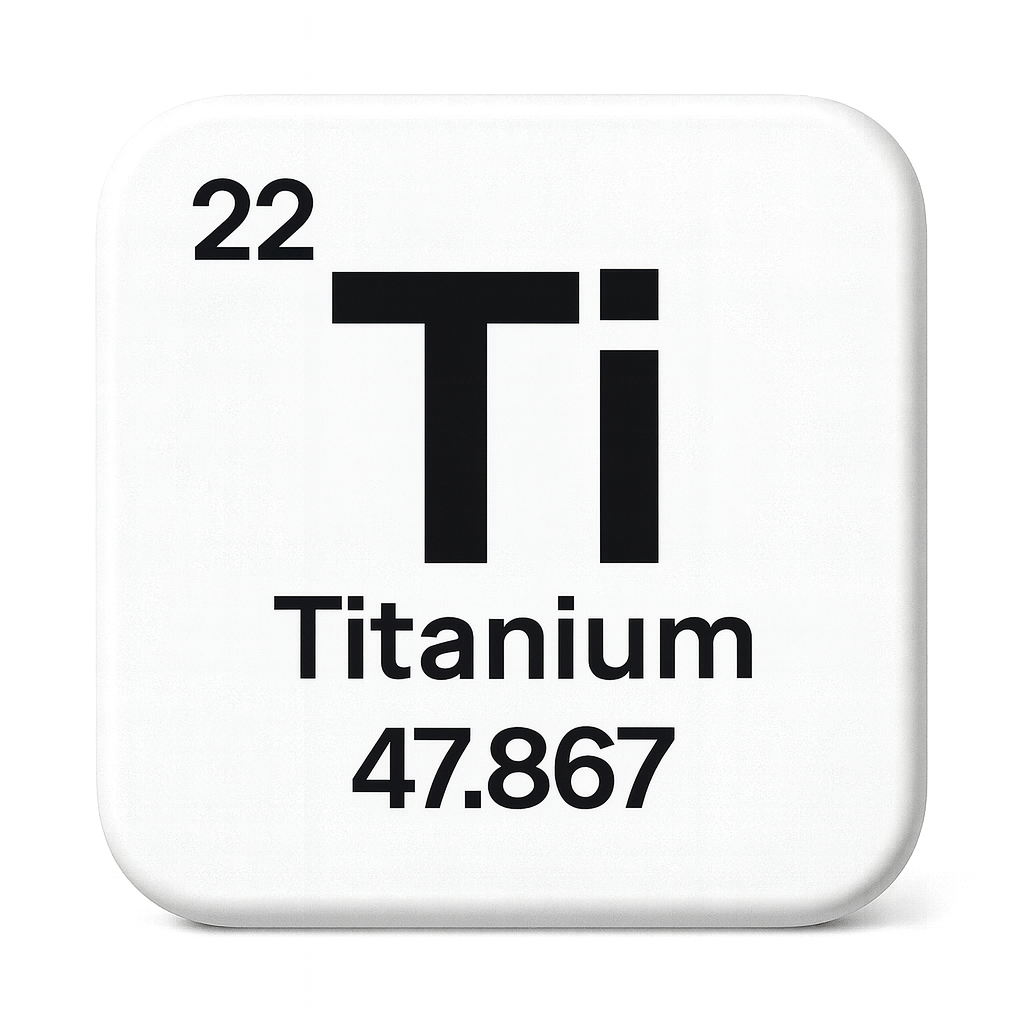
Titanium (Ti)
Titanium is a strong, lightweight, and corrosion-resistant metallic element with the chemical symbol Ti and atomic number 22. It’s a transition metal known for its exceptional combination of high strength-to-weight ratio, biocompatibility, and resistance to extreme environments—making it one of the most valuable structural materials in modern engineering, aerospace, and medical industries.
In appearance, titanium is a lustrous silver-gray metal that is both tough and ductile. It has a melting point of 1,668°C (3,034°F) and a density about 45% lower than steel but nearly as strong. This makes it ideal for applications where both strength and weight reduction are critical, such as aircraft components, jet engines, spacecraft structures, and high-performance automotive parts.
One of titanium’s most remarkable properties is its corrosion resistance. When exposed to air or moisture, it forms a thin, tightly bonded layer of titanium dioxide (TiO₂) on its surface. This oxide film acts as a self-healing barrier against oxidation, saltwater, acids, and most chemicals. As a result, titanium is widely used in marine environments, chemical processing equipment, and medical implants where other metals would corrode.
Titanium’s biocompatibility—meaning it doesn’t react with or harm human tissue—makes it an essential material for surgical implants, prosthetics, dental hardware, and joint replacements. It integrates naturally with bone through a process called osseointegration, providing long-term stability and strength.
In metallurgy, titanium is often alloyed with elements such as aluminum, vanadium, molybdenum, and tin to create titanium alloys (like Ti-6Al-4V), which offer even higher strength, fatigue resistance, and heat tolerance. These alloys are used extensively in aerospace structures, turbine blades, performance bicycles, and high-end fasteners.
Titanium is extracted primarily from ilmenite (FeTiO₃) and rutile (TiO₂) ores, often through the Kroll process, which reduces titanium tetrachloride (TiCl₄) using magnesium to produce metallic titanium. Major producers include China, Japan, Russia, and the United States.
Titanium Carbide (TiC)
Titanium carbide (TiC) is a hard, refractory ceramic compound formed from titanium and carbon. It belongs to the family of transition metal carbides and is known for its extreme hardness, high melting point, and resistance to wear and corrosion. These properties make TiC an important material in industries that require durable, heat-resistant components such as cutting tools, coatings, and high-performance composites.

The material has a crystalline structure similar to sodium chloride, where carbon atoms fit into the spaces between titanium atoms. This arrangement produces very strong atomic bonds, which give TiC a hardness of about 9–9.5 on the Mohs scale. It also has an exceptionally high melting point of around 3,160 °C (5,720 °F). Titanium carbide is highly resistant to oxidation and chemical attack even at elevated temperatures. Its density, approximately 4.9 g/cm³, makes it heavier than boron carbide but still lighter than tungsten carbide, giving it a useful balance of hardness and weight.
Titanium carbide is produced by reacting titanium dioxide (TiO₂) with carbon, usually graphite, at extremely high temperatures in an inert or reducing atmosphere. The resulting TiC can be manufactured as a powder and then sintered into solid shapes, or it can be deposited as a thin coating using methods such as chemical vapor deposition (CVD) or physical vapor deposition (PVD). These different production techniques make it possible to use TiC both as a bulk material and as a surface treatment.
The applications of TiC are diverse. It is widely used in cutting tools, often combined with tungsten carbide (WC) and cobalt, to improve wear resistance and reduce tool chipping. As a protective coating, TiC is applied to tool surfaces and machine parts to extend their service life and enhance hardness. In abrasive applications, it is incorporated into grinding wheels and wear parts that must withstand high friction. In aerospace and defense industries, TiC is valued for its ability to maintain stability and strength at extremely high temperatures. It is also used in ceramics and composite materials to enhance toughness, hardness, and resistance to wear.
Titanium carbide provides many advantages, including extreme hardness, high wear resistance, excellent thermal stability, and strong resistance to corrosion and chemical attack. It significantly improves the durability and performance of cutting tools and industrial components, especially when combined with other carbides. However, it also has limitations. Like many ceramics, it is brittle and can crack under shock or impact loads. It is also more expensive to produce and machine than conventional metals. For these reasons, TiC is most often used in coatings or composites rather than as a standalone structural material.
Titanium dioxide (TiO₂)
Titanium dioxide (chemical formula TiO₂) is a white, inorganic compound made from the element titanium and oxygen. It is one of the whitest and brightest substances known, valued for its exceptional opacity, brightness, and UV resistance. Titanium dioxide occurs naturally in minerals such as rutile, anatase, and brookite, and it is extensively refined and processed for industrial use.
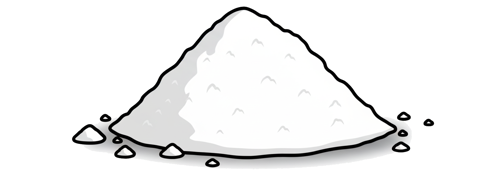
The compound’s primary function is as a white pigment and opacifier, meaning it reflects and scatters light extremely efficiently. This makes it indispensable in products like paints, coatings, plastics, papers, ceramics, rubber, inks, fibers, cosmetics, and food. In fact, titanium dioxide is the most widely used white pigment in the world, often labeled as “Titanium White” or Pigment White 6. Its chemical stability and non-reactivity allow it to retain color brilliance and opacity even in harsh environments, and it does not yellow or degrade over time.
Beyond its use as a pigment, titanium dioxide also has important photocatalytic and UV-protective properties. In sunscreens, it acts as a physical UV blocker, reflecting and scattering ultraviolet light to protect skin from sun damage. In photocatalysis, TiO₂ is used in self-cleaning coatings, air purifiers, and antimicrobial surfaces—when exposed to UV light, it generates reactive oxygen species that break down organic pollutants and kill bacteria.
There are two main crystalline forms used industrially: rutile and anatase. Rutile TiO₂ has a higher refractive index and greater stability, making it ideal for paints and coatings that require high opacity and durability. Anatase TiO₂, on the other hand, has superior photocatalytic activity and is preferred for environmental and catalytic applications.
Titanium dioxide is produced from titanium-bearing ores such as ilmenite (FeTiO₃) and rutile (TiO₂) through one of two methods: the sulfate process, which uses sulfuric acid, or the chloride process, which involves titanium tetrachloride (TiCl₄) and is cleaner and more efficient.