Learning Hub
Glossary
Thread Chaser
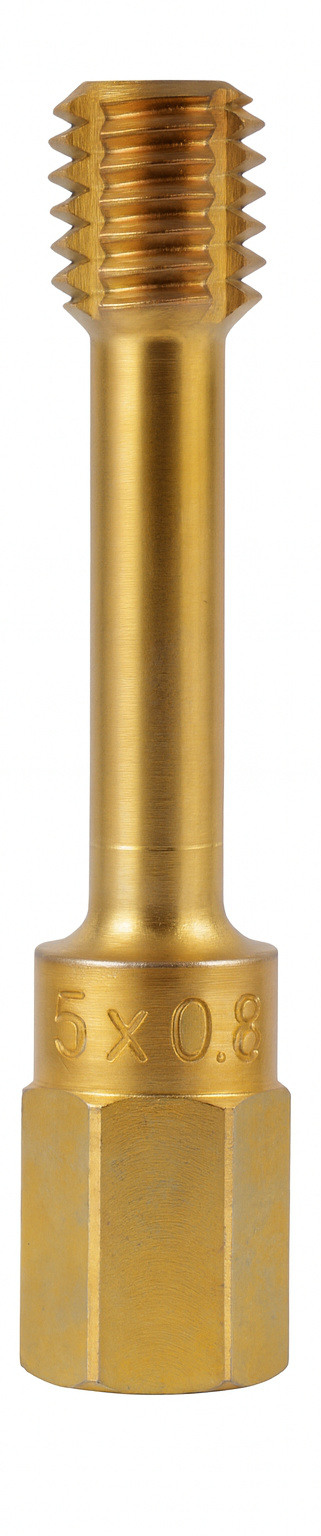
A thread chaser is a tool designed to clean, repair, and restore existing threads on bolts, screws, nuts, or tapped holes. Unlike taps and dies, which are made to cut new threads, a thread chaser works by reforming and clearing damaged or dirty threads without removing significant amounts of material. This helps maintain the strength of the fastener while making it functional again.
Thread chasers come in several forms. Some are hand tools shaped like small files with ridged teeth that match the pitch of threads. Others are tap- and die-style chasers, which look like cutting tools but are made to clean rather than cut. There are also thread-restoring files with multiple pitches for external threads, and full thread chaser kits that contain both internal and external chasers in common metric and imperial sizes.
The purpose of a thread chaser is to restore damaged or dirty threads so fasteners can be reused reliably. They clean out rust, dirt, paint, or minor deformities, reshaping the threads so nuts and bolts fit smoothly. Because they don’t aggressively cut new material, they preserve more of the fastener’s original strength compared to using taps or dies.
Thread chasers are widely used in automotive repair, where they can clean spark plug threads, lug studs, or engine block holes. They are also valuable in maintenance, fabrication, and assembly work to extend the life of fasteners exposed to wear or corrosion. Their advantages include being quick to use, cost-effective, and able to extend the life of expensive or hard-to-replace components.
However, they do have limitations. Thread chasers cannot fix threads that are completely stripped or missing, nor can they create new threads. Their use is also limited by the sizes and thread pitches available in a given tool set. Despite these restrictions, they remain an essential tool for restoring fastener function without weakening parts unnecessarily.