
Learning Hub
Glossary
Lifting Socket
A lifting socket is a high-strength, internally threaded insert that is cast into (or otherwise permanently installed in) a component to provide a rated lifting/hoisting attachment point. In fastener terms, it functions like a heavy-duty female-thread anchor that accepts a compatible lifting eye/eyebolt, lifting loop, hoist ring, or lifting clutch adapter, allowing the part to be lifted, handled, or positioned safely during manufacturing, shipping, and installation.
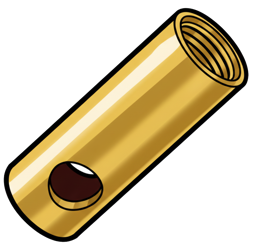
Key identifying features
- Internal threads sized to match the designated lifting hardware.
- Common in threaded socket lifting systems for precast, where the socket is designed for lifting and transport of concrete elements.
- Many designs include a lateral cross-hole below the threaded section to accept a reinforcing bar that ties into the rebar cage for anchorage in concrete.
- Often supplied with thread protection plugs to keep concrete/debris out during casting and handling.
Common applications
- Precast concrete handling (lifting, turning, transporting, erecting panels/slabs/beams).
- Heavy assemblies where a clean, reusable threaded lift point is preferred over slings wrapped around the load.
Important note (safety-critical)
Lifting sockets are engineered lifting points and must be used with the correct matching lifting hardware and rated working load limits (WLL) per the manufacturer/system documentation.
AKA: Threaded Lifting Socket, Cast-in Lifting Socket, Flat Plate Lifting Socket