
Learning Hub
Glossary
Hexavalent Chromium
Hexavalent chromium (Cr⁶⁺) is a toxic, high-oxidation state of the element chromium. It is commonly found in industrial processes, coatings, and chemical compounds. Unlike trivalent chromium (Cr³⁺), which is an essential nutrient in small amounts, hexavalent chromium is hazardous to human health and the environment.
In industrial applications, hexavalent chromium compounds are used for electroplating, stainless steel production, corrosion-resistant coatings, pigments, dyes, and wood preservatives. Its strong oxidative properties make it highly effective for creating durable and protective finishes on metals, which is why it has historically been widely used in fastener coatings and plating.
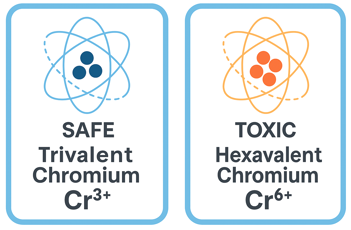
Health and safety concerns are significant with hexavalent chromium. It is recognized as a carcinogen, capable of causing lung cancer, respiratory problems, and skin irritation upon prolonged exposure. Inhalation of hexavalent chromium particles is especially dangerous, and strict occupational safety regulations limit worker exposure. Many industries have moved toward safer alternatives, such as trivalent chromium coatings or non-chromium-based finishes, to reduce risks.
Environmental regulations, including those from OSHA, EPA, and the European Union’s RoHS and REACH directives, have heavily restricted the use of hexavalent chromium in recent years. Despite its effectiveness as a corrosion inhibitor, the toxic nature of Cr⁶⁺ has made the transition to safer coatings a priority for manufacturers, particularly in fastener production and surface finishing.