
Learning Hub
Glossary
Brass (Metal Alloy)
Brass is a metal alloy made primarily of copper (Cu) and zinc (Zn). It is known for its bright gold-like appearance, excellent corrosion resistance, and workability, making it one of the most widely used and versatile alloys in both industrial and decorative applications.
The exact properties of brass vary depending on the ratio of copper to zinc and the presence of small amounts of other elements such as lead, tin, aluminum, or nickel. Typically, brass contains 55–95% copper and 5–45% zinc.
- Higher copper content produces a softer, more ductile brass with a deeper reddish tone and superior corrosion resistance.
- Higher zinc content yields stronger, harder brass with a lighter yellow color but slightly reduced corrosion resistance.
Brass is valued for several key characteristics. It is malleable and ductile, allowing it to be easily machined, stamped, rolled, or cast into complex shapes. It also has low friction, non-sparking properties, and good thermal and electrical conductivity. These features make it ideal for fasteners, fittings, valves, bearings, gears, electrical connectors, and musical instruments.
Because brass resists tarnishing and corrosion—especially in water and marine environments—it is commonly used in plumbing components, marine hardware, and decorative applications like architectural accents, lamps, and door hardware. Certain types, such as naval brass and admiralty brass, include small additions of tin for enhanced resistance to saltwater corrosion.
The alloy also has favorable acoustic qualities, which is why it’s widely used in musical instruments such as trumpets, trombones, and saxophones—collectively known as “brass instruments.”
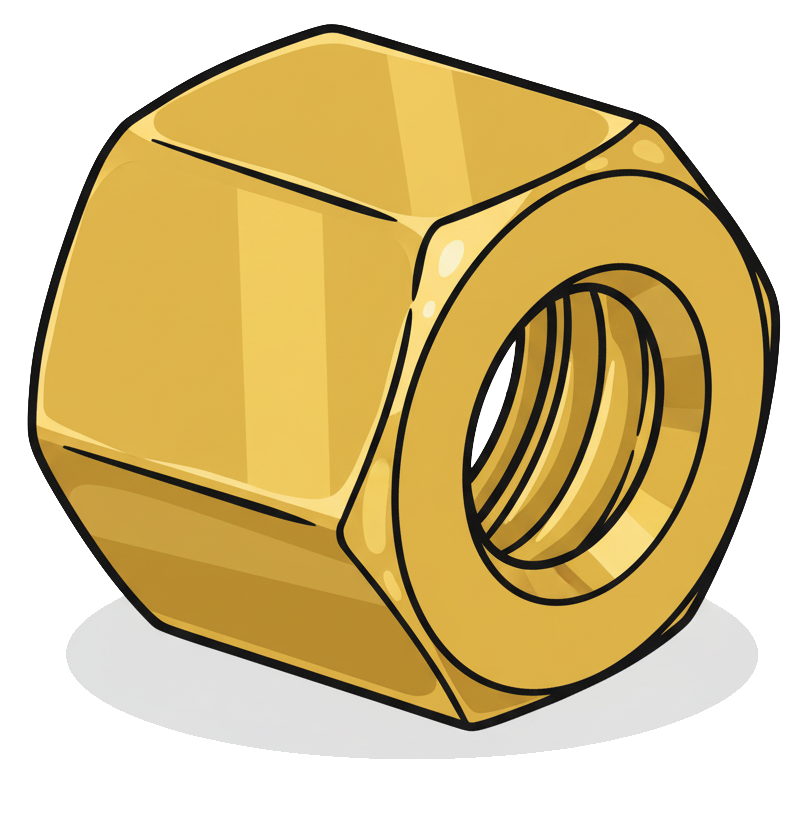
DZR Brass
DZR brass, short for dezincification-resistant brass, is a specially formulated brass alloy designed to resist the selective loss of zinc in corrosive environments. Standard brass is primarily made from copper and zinc, but under certain water, chemical, marine, or plumbing conditions, the zinc can be leached out of the alloy through a corrosion process called dezincification. When that happens, the remaining material becomes porous, copper-rich, brittle, and mechanically weaker, even if the part still appears intact on the outside.
DZR brass is made to reduce that risk. It typically contains controlled amounts of copper and zinc, along with small additions of elements such as arsenic, tin, or other inhibitors that help prevent zinc from being selectively removed. The alloy chemistry and heat treatment are controlled so the brass maintains better structural integrity when exposed to aggressive water conditions, especially where ordinary brass might gradually weaken.
In industrial, plumbing, marine, and fastener-related applications, DZR brass is used where brass parts may be exposed to moisture, water flow, chlorides, elevated temperatures, or mildly corrosive environments. It is commonly associated with valves, fittings, connectors, threaded components, plumbing hardware, water-system parts, and other components where corrosion resistance and pressure retention matter. For fasteners and threaded assemblies, DZR brass can be useful where the part needs the machinability, corrosion resistance, and appearance of brass, but with improved reliability in environments that could attack standard brass.
DZR brass is not the same thing as stainless steel, bronze, or copper-nickel, and it is not immune to all corrosion. Its main advantage is specifically its improved resistance to dezincification, not unlimited chemical resistance or high-strength structural performance. It is selected when brass is still the preferred material, but the service environment presents a known risk of zinc loss, weakening, leakage, cracking, or premature failure.
Free Machining Brass
Free machining brass is a brass alloy formulated to cut cleanly and efficiently during machining operations such as turning, drilling, milling, tapping, threading, knurling, and screw machining. It is designed to produce small, breakable chips, reduce tool wear, improve surface finish, and allow parts to be made quickly with tight dimensional control. The most common free machining brass is C360 brass, often called free-cutting brass or 360 brass.
Free machining brass is primarily a copper-zinc alloy with a small amount of lead added to improve machinability. The lead does not fully dissolve into the copper-zinc structure. Instead, it exists as tiny dispersed particles throughout the material. During cutting, those lead particles act like internal chip breakers and lubricating points, helping the cutting tool move through the brass more easily. This is why C360 brass is known for excellent machinability compared with many other copper alloys.
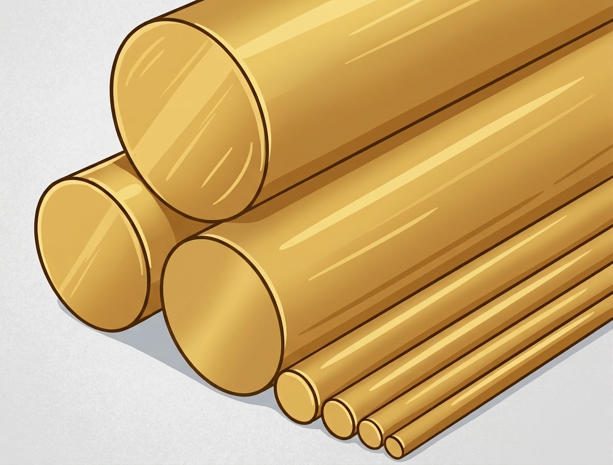
In fastener and industrial applications, free machining brass is commonly used for precision parts that need clean threads, good appearance, corrosion resistance, and efficient production. Examples include brass nuts, screws, threaded inserts, standoffs, spacers, fittings, bushings, electrical connectors, valve components, instrument parts, and custom screw-machine parts. It is especially useful when a part has fine details, internal threads, shoulders, grooves, knurls, or tight tolerances.
Free machining brass has good corrosion resistance in many indoor, dry, mildly corrosive, and non-severe service environments. It also has good electrical and thermal conductivity compared with steels, and it machines to a bright, smooth finish. However, it is not usually selected for high-strength structural fastening, high-temperature service, severe marine exposure, or aggressive chemical environments unless the specific alloy and application have been properly evaluated.
The lead content that makes free machining brass so easy to cut can also limit where it can be used. In drinking-water systems, food-contact parts, medical applications, electronics, and export-controlled or regulated products, lead content may be restricted by standards such as RoHS, REACH, or low-lead plumbing requirements. For those situations, manufacturers may use low-lead or lead-free machinable brass alternatives instead.
AKA: Free Cutting Brass
Naval Brass
Naval brass is a copper-zinc-tin alloy designed for good strength, corrosion resistance, and serviceability in marine and industrial environments. It is a type of brass, but unlike ordinary copper-zinc brass, naval brass contains a small amount of tin, which improves resistance to corrosion in seawater and helps reduce dezincification, a corrosion process where zinc is selectively leached out of the brass.
The most common naval brass grade is C46400, often called naval brass 464. A typical composition is roughly 60% copper, 39% zinc, and 1% tin, though exact chemistry depends on the applicable specification. The copper provides corrosion resistance and ductility, the zinc adds strength and hardness, and the tin improves performance in wet, chloride-containing, or mildly aggressive environments.

Naval brass is commonly used for marine hardware, propeller shafts, valve stems, pump components, fittings, fasteners, nuts, bolts, washers, rivets, turnbuckles, and structural marine parts. It is especially useful where a part needs better corrosion resistance than ordinary brass but does not necessarily require stainless steel or bronze.
In fastener applications, naval brass is valued because it is corrosion resistant, machinable, non-sparking, and more galvanically compatible with other copper alloys than stainless steel may be in some marine assemblies. However, it is not as strong as alloy steel and is not usually selected for high-strength structural bolting. Its strength is moderate, and its main value is the combination of corrosion resistance, workability, and durability in marine-style service.
Naval brass should not be confused with silicon bronze. Both are copper-based alloys used in marine hardware, but silicon bronze is a copper-silicon alloy with excellent seawater corrosion resistance and is often preferred for premium marine fasteners. Naval brass is generally stronger than some standard brasses and more seawater-resistant because of its tin content, but silicon bronze is often considered superior for long-term saltwater exposure