
Learning Hub
Glossary
Bolt Preload
Bolt preload is the tension, or stretch, intentionally created in a bolt when it's tightened. This tension generates a powerful clamping force between the bolt's head (or nut) and the materials being joined. By stretching the bolt like a spring, the tightening process creates a tensile force within the bolt and an opposing compressive force on the joint, effectively holding the parts together securely. This "built-in" clamping force is crucial for ensuring a joint remains stable and reliable, resisting external stresses like vibration, shear forces, and thermal expansion.
The proper application of bolt preload is essential for several reasons. It prevents loosening by keeping joints secure even under dynamic loads and vibrations. Preload also ensures that external forces are distributed evenly between the bolt and the joint, protecting the bolt from bearing the entire load. This stress distribution helps to avoid fatigue failure, significantly improving the bolt's lifespan. Additionally, in applications involving gaskets, preload is vital for compressing the gasket to create a leak-proof seal.
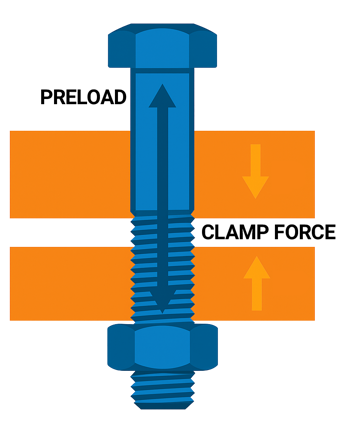
Several factors influence the amount of preload a bolt achieves. While applied torque is the most common method for creating preload, its effectiveness can be inconsistent due to friction. Lubrication plays a significant role, as it reduces friction at the threads and under the bolt head, allowing more of the applied torque to be converted into clamping force. The bolt's material and geometry also matter, as stronger bolts can withstand higher preloads without yielding. Finally, different tightening methods, such as angle tightening or direct tensioning, can offer more precise control over the resulting preload than simple torque application.