
Learning Hub
Glossary
Blaise Pascal
Blaise Pascal (1623–1662) was a French mathematician, physicist, inventor, and religious philosopher/writer—one of those rare people who left fingerprints on both hard engineering physics and big-deal philosophy. He was a prodigy, wrote influential work in mathematics while still a teenager, and spent much of his short life bouncing between rigorous scientific experimentation and intense religious thought.
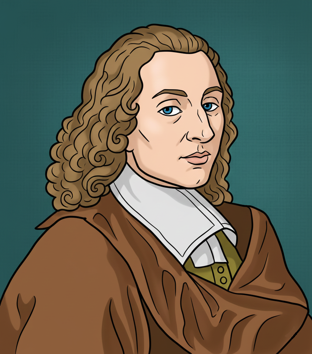
On the engineering/physics side, Pascal helped lay foundations for fluid mechanics and pressure. His work on fluids is tied to what’s commonly called Pascal’s principle (pressure applied to a confined fluid is transmitted throughout the fluid), and he also contributed to experiments and arguments about vacuum in the 1640s that pushed back on the then-common “nature abhors a vacuum” idea. The SI pressure unit—the pascal (Pa)—was later named in his honor.
On the math/invention side, he’s famous for the Pascaline (an early mechanical calculating machine he developed to help with tax/accounting work) and for major early contributions to probability theory through correspondence with Pierre de Fermat—work that eventually became foundational for statistics, risk, and decision-making.
Later in life, Pascal became equally known for influential religious and philosophical writing, especially Pensées (which includes the idea popularly called “Pascal’s wager”) and Lettres provinciales, written amid major theological disputes of his era.