Learning Hub
Glossary
Aluminum Fastener
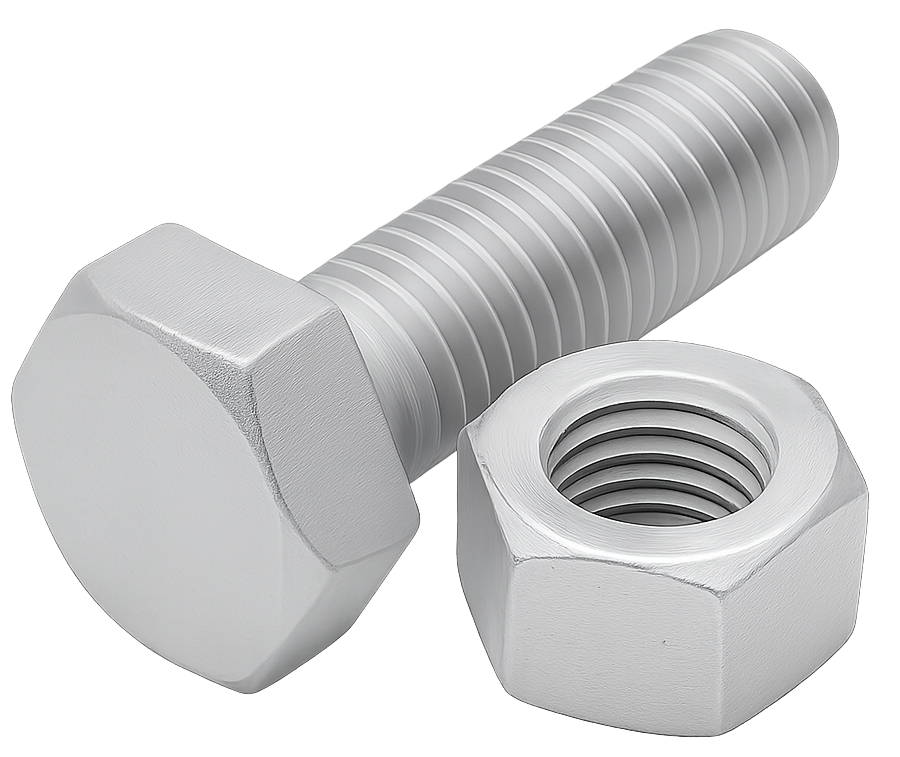
An aluminum fastener is a fastening component—such as a bolt, screw, nut, rivet, or washer—made primarily from aluminum or aluminum alloys rather than traditional steels or other metals. These fasteners are chosen when a combination of light weight, corrosion resistance, and non-magnetic properties is required.
One of their most important features is that they are lightweight. Because aluminum has a much lower density than steel, aluminum fasteners are especially valuable in weight-sensitive industries like aerospace, automotive, and electronics. They also offer corrosion resistance, since aluminum naturally develops a thin oxide layer that shields it from atmospheric corrosion, particularly in non-saline environments. Additionally, they are non-magnetic, which is useful in applications where magnetic interference could disrupt electronic systems or other sensitive equipment. Another notable property is their conductivity, as aluminum is a good conductor of both electricity and heat, making certain fasteners suitable for electrical applications.
Aluminum fasteners see wide use across several industries. In aerospace and automotive applications, they help reduce weight, which improves performance and fuel efficiency. In electronics and electrical equipment, they are preferred for their non-magnetic nature and conductive qualities. In marine environments, they can be applied in boats, docks, and offshore structures, particularly when combined with protective coatings or specially designed alloys to resist saltwater damage. In architectural and construction projects, aluminum fasteners are ideal for lightweight assemblies, facades, and structures where corrosion resistance is critical.
Despite their advantages, aluminum fasteners have certain limitations. They generally have lower strength compared to steel, which means they cannot usually handle the same loads, though high-strength aluminum alloys such as 7075-T6 can enhance performance. They are also susceptible to thread galling, as aluminum threads are softer and can wear or strip if over-tightened. Finally, there is a galvanic corrosion risk when aluminum fasteners are used in contact with dissimilar metals like steel in moist or salty environments, unless protective insulation or coatings are applied.