Learning Hub
Glossary
Uranium (U)
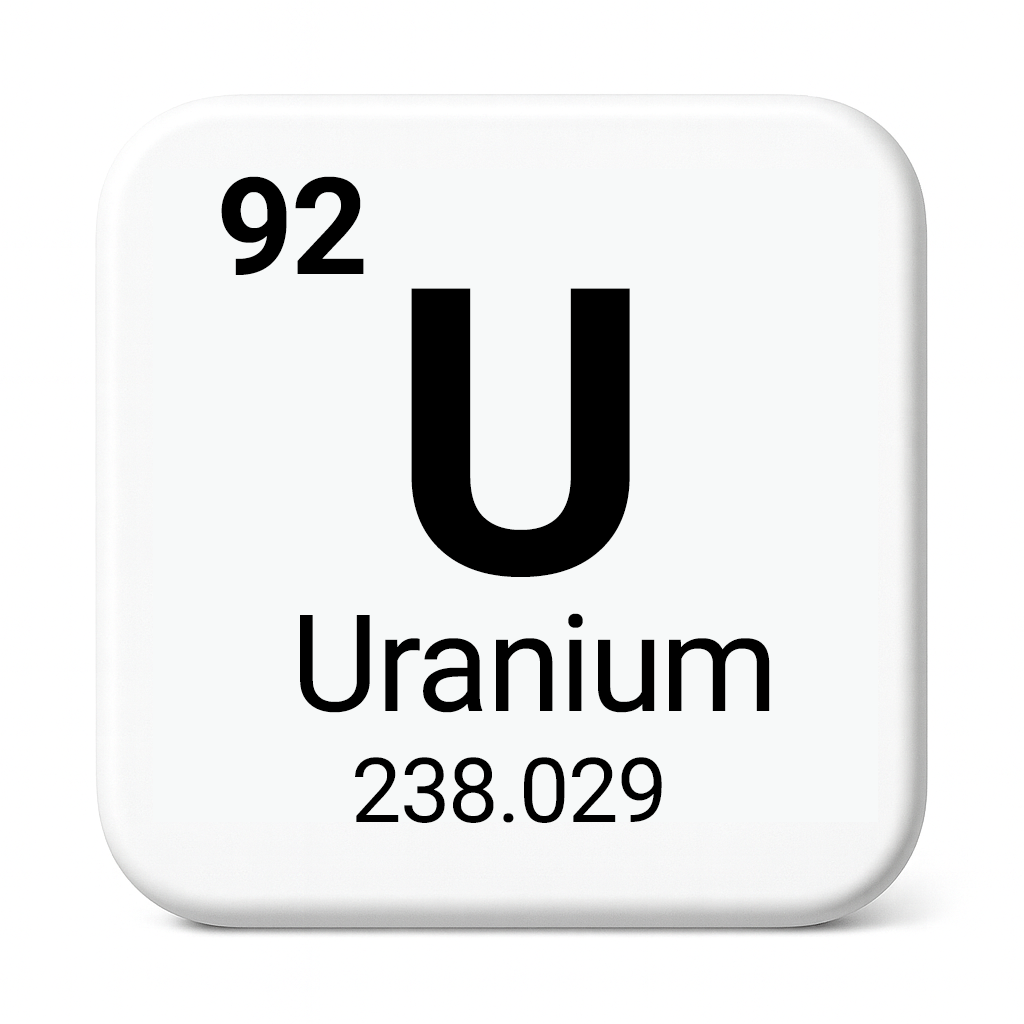
Uranium is a dense, silvery-gray metallic chemical element with the symbol U and atomic number 92. It is a naturally occurring radioactive metal found in small amounts in rocks, soil, water, and certain mineral deposits. Uranium belongs to the actinide series of elements and is one of the heaviest naturally occurring elements commonly found in the Earth’s crust.
Uranium is best known for its use as a fuel in nuclear power generation. This is possible because one isotope of uranium, uranium-235, can undergo nuclear fission, meaning its atomic nucleus can split into smaller nuclei and release a large amount of energy. Most natural uranium, however, is uranium-238, which is much more abundant but does not fission as easily under normal reactor conditions.
In nature, uranium is usually not found as pure metal. It occurs in uranium-bearing minerals and ores, such as uraninite and pitchblende. After mining, uranium ore is crushed and processed to concentrate the uranium into a material commonly called yellowcake, which is mostly uranium oxide. That material can then be further refined and processed for approved industrial, energy, medical, or research uses.
Uranium is radioactive, which means its atoms slowly decay over time and release radiation. Because of this, uranium must be handled with strict safety controls. The level of hazard depends on the form of uranium, its concentration, its isotope composition, how it is handled, and whether it can be inhaled or ingested as dust or soluble compounds. Dense solid uranium metal is different from uranium powder, uranium compounds, or enriched uranium, each of which presents different safety and regulatory concerns.
Beyond nuclear energy, uranium has also been used historically in glass, ceramics, counterweights, shielding, military applications, and scientific research. Many of these uses are now tightly controlled or limited because of uranium’s radioactivity, chemical toxicity, and regulatory status.