
Learning Hub
Glossary
Tensile Ductility Test
A Tensile Ductility Test is a standardized method used to measure how well a material can stretch, elongate, and undergo plastic deformation under a pulling force before it breaks. It provides key information about the ductility, toughness, and overall performance of a material when subjected to tension.
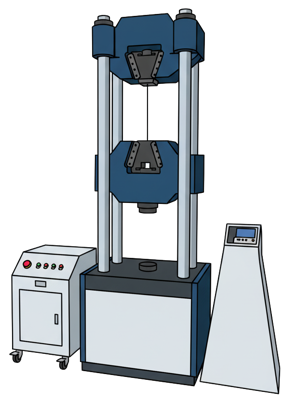
During the test, a specimen such as a machined metal rod, fastener, or another standardized piece is placed in a tensile testing machine. The machine gradually applies a pulling force along the specimen’s axis until the material deforms and eventually fractures. Throughout the test, important data is recorded, including the elongation of the specimen, which shows how much it lengthens as a percentage of its original length, the reduction of area at the fracture point caused by necking, and the full stress-strain behavior, which illustrates the relationship between applied stress and strain from the yield strength through the ultimate tensile strength and finally to fracture.
The purpose of the Tensile Ductility Test is to evaluate how a material responds when exposed to tensile loads. Materials with high tensile ductility, such as mild steel or aluminum, are able to stretch significantly before breaking, while more brittle materials like cast iron or hardened steel fracture with very little elongation.
This type of test is widely used in fastener manufacturing, structural engineering, and materials science. For fasteners in particular, it ensures that bolts, screws, and other components have the toughness required to deform safely without failing suddenly under load, thereby verifying their reliability in real-world applications.