Learning Hub
Glossary
Belleville Spring Washer
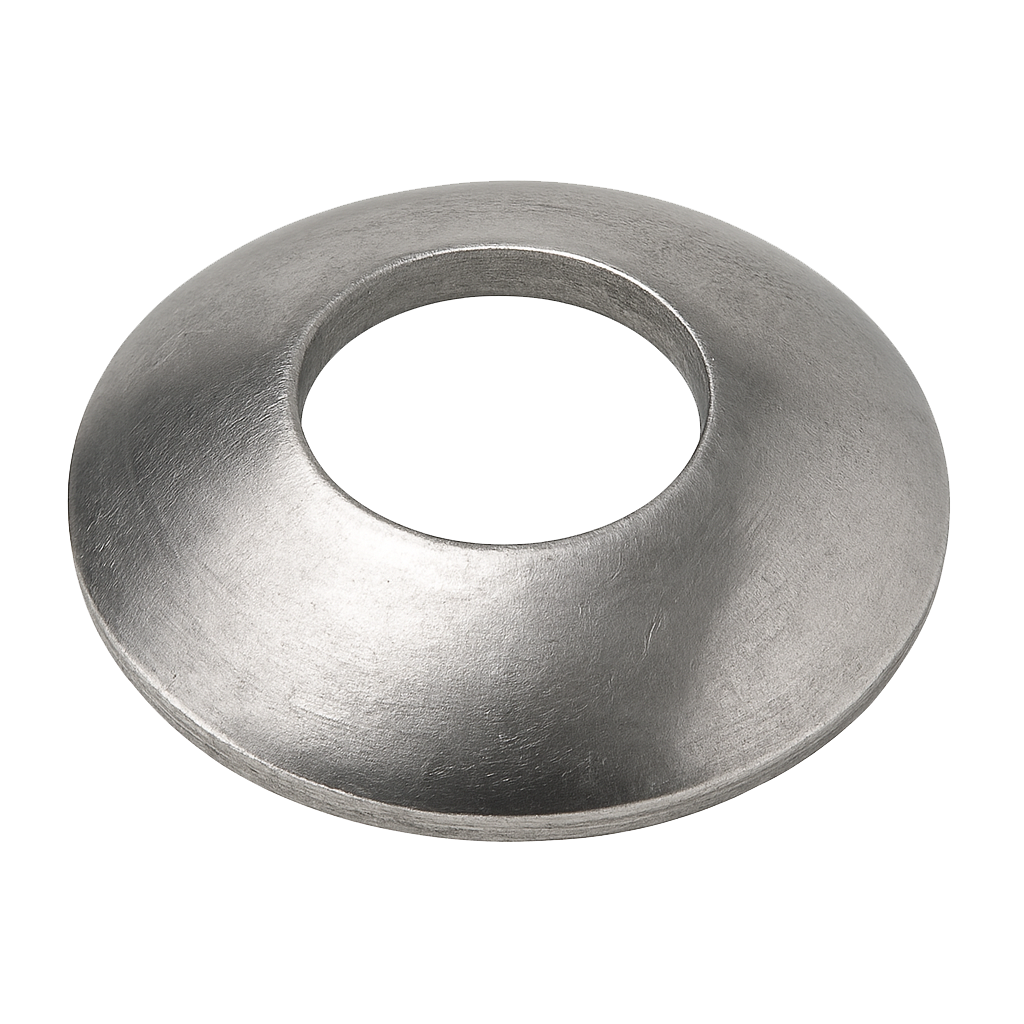
A Belleville spring washer is a conical-shaped disc that acts like a spring within a bolted or fastened joint. Unlike flat washers that simply distribute load, a Belleville washer flexes under compression, creating a reactive force that maintains tension even as the joint expands, contracts, or vibrates. Sometimes called conical spring washers or Belleville disc springs, they are named after Julien Belleville, the French engineer who patented the design in the 19th century.
The washer’s shallow cone shape allows it to deflect elastically when tightened under a bolt or nut. This action helps maintain clamping force despite joint relaxation, thermal expansion, or material creep, while also absorbing shock and vibration to prevent loosening. Belleville washers can also spread loads more evenly across a joint. Multiple washers can be stacked to tailor their performance: stacking in parallel increases load capacity, stacking in series increases deflection, and combining both allows for customized load-deflection behavior.
Belleville washers offer several advantages. They provide high load capacity in a compact form, maintain bolt tension under dynamic conditions, and perform well in vibration-prone environments. They can be tailored through stacking and are available in various materials, including carbon steel, stainless steel, and Inconel, to meet strength and corrosion resistance requirements.
These washers are widely used across industries. In automotive and aerospace, they are found in engines, brakes, suspensions, and landing gear. In power generation and heavy industry, they are used in turbines, compressors, and machinery to handle thermal expansion. In electronics, they maintain reliable pressure on connectors, while in structural and mechanical joints, they add security to fasteners exposed to fluctuating loads.
Overall, Belleville spring washers are essential where maintaining clamping force is critical. Their ability to deliver high spring force in a small space makes them indispensable in safety-critical and high-performance applications, often preferred over coil springs or wave washers for compact, reliable load management.
Crescent Spring Washer
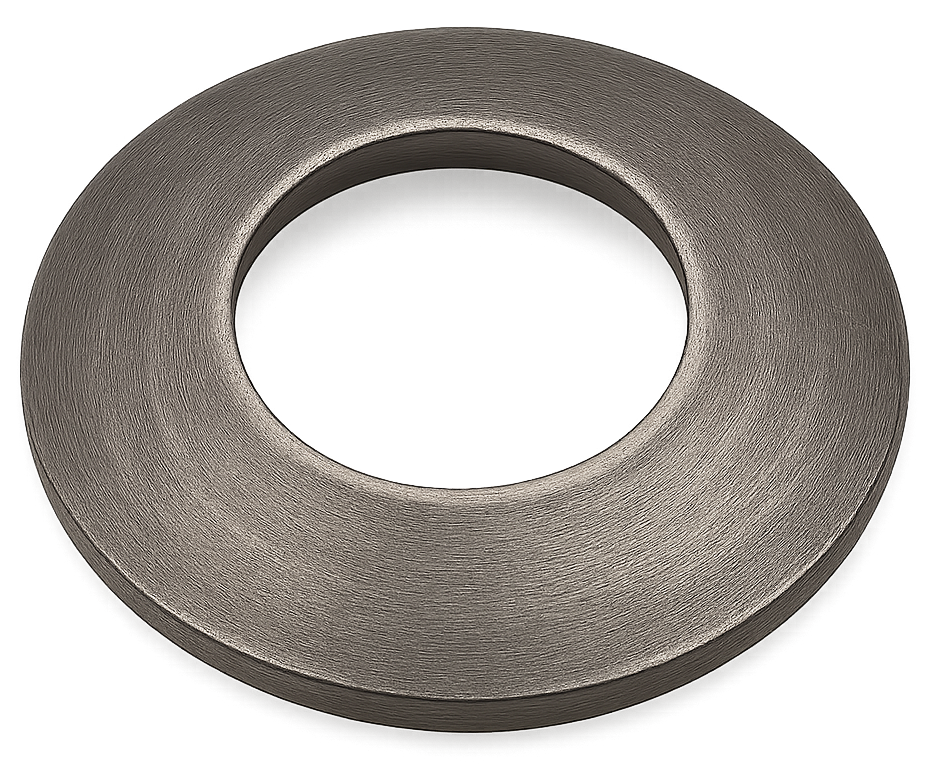
A Crescent Spring Washer—also known as a C-washer or curved spring washer—is a type of washer shaped like a slightly curved disc (resembling a crescent or shallow arc). It is used to provide light, continuous spring pressure between fastened surfaces, helping to maintain tension and absorb vibration.
Dome Spring Washer
A dome spring washer is a type of spring washer with a semi-spherical or convex shape. It's also known as an umbrella washer or cup washer. Unlike flat washers, which only distribute a load, a dome spring washer functions as a spring, providing constant tension to a bolted assembly. This tension helps to prevent fasteners from loosening due to vibrations, thermal expansion, or contraction.
The key characteristics of a dome spring washer are its high load capacity and small deflection range. This makes it ideal for applications that require a strong clamping force but have limited space. Its unique shape allows it to absorb shocks and vibrations, which helps to maintain the tightness and integrity of an assembly. Additionally, it helps to control and maintain consistent tension, compensating for any changes in the material of the assembly.
Dome spring washers are similar to, but distinct from, Belleville washers (or conical spring washers). Both function as springs, but a dome spring washer has a smoother, rounded profile, whereas a Belleville washer has a more defined conical shape with a flat rim. Dome spring washers are better suited for applications that require a lower spring rate and more travel, making them excellent for shock absorption, while Belleville washers are designed for very high-load applications with minimal deflection.