Learning Hub
Glossary
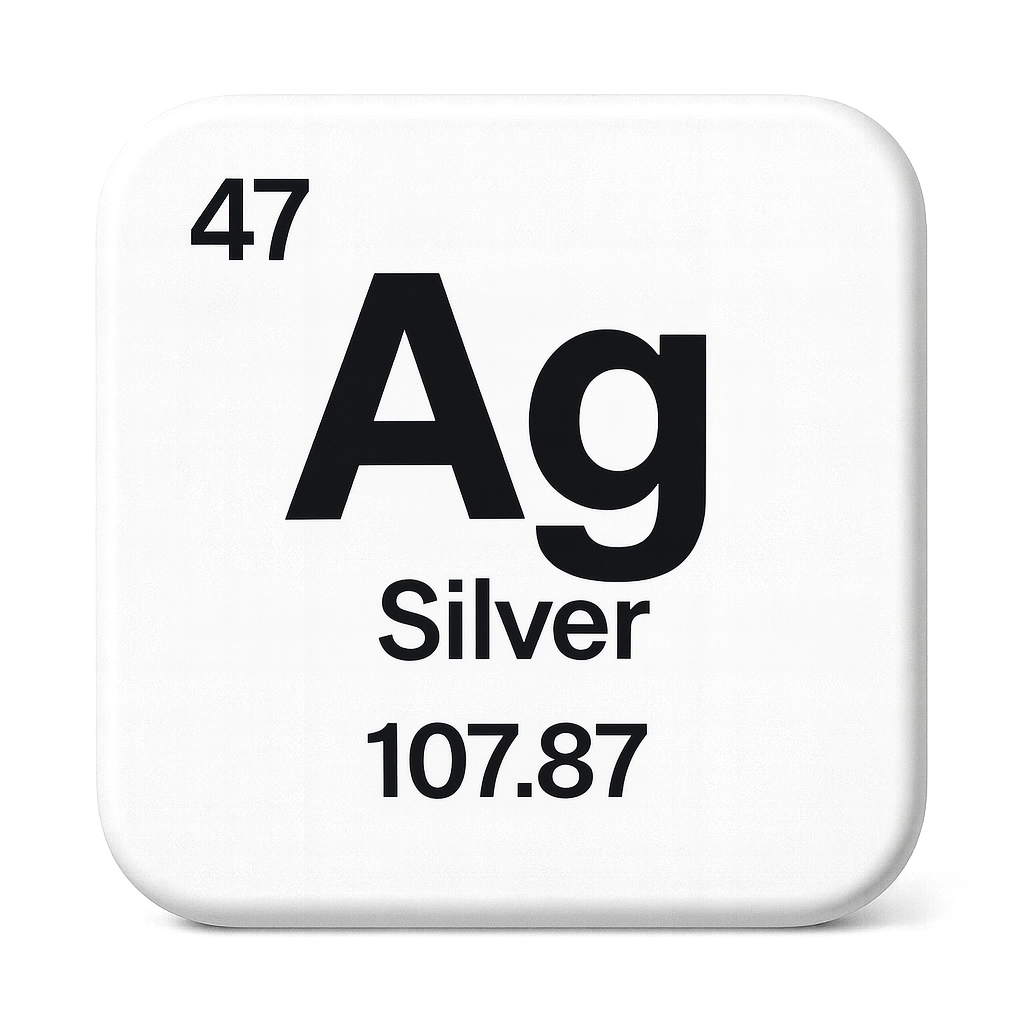
Silver (Ag)
Silver is a naturally occurring metallic element with the symbol Ag and atomic number 47. It is classified as a precious metal and is known for its brilliant white luster, high reflectivity, and exceptional physical performance. Silver is the best electrical conductor of all elements, the best thermal conductor of all metals, and one of the most malleable and ductile materials in existence. In nature, it appears both as native metal and within mineral ores such as argentite, chlorargyrite, galena, and chalcopyrite. Most commercial silver is produced as a byproduct of refining copper, lead, zinc, and gold. Although silver has a long history in currency, jewelry, and decorative objects, the majority of modern silver usage is driven by industrial manufacturing, especially in electronics, photovoltaics, catalysts, brazing alloys, batteries, medical technology, and other applications that require high reliability and efficient energy transfer.
Silver has a unique set of physical and chemical properties that make it exceptionally valuable in manufacturing. It possesses the highest electrical conductivity, highest thermal conductivity, and one of the highest levels of reflectivity among metals. It is corrosion-resistant but will tarnish in sulfur-rich environments, and although silver is soft and not suitable for structural or load-bearing components, it can be formed, drawn, or plated into extremely fine and precise geometries. Silver also exhibits natural antimicrobial behavior, making it useful in medical devices, filtration systems, and sterilization applications. Because of these attributes, silver has become an essential industrial material that supports modern electronics, precision optics, energy systems, and chemical processing.
While silver itself is not used as a structural fastener due to its softness and cost, it is important in the fastener ecosystem through coatings, plating, and specialized alloys. Silver-plated screws, studs, nuts, washers, and electrical terminals are widely used in high-performance electrical equipment such as switchgear, contactors, circuit breakers, and high-amperage connectors where conductivity and low resistance are critical. In aerospace, cryogenic systems, and high-temperature environments, silver plating provides excellent galling resistance, stable torque-tension behavior, and reliable performance under thermal cycling. Silver also functions as a dry-film lubricant at elevated temperatures—often up to around 650°C—allowing threaded components in turbines, exhaust assemblies, and aircraft engines to achieve accurate preload without seizing.
Silver’s industrial presence extends even further through brazing rods, solder alloys, and filler metals used to join components in HVAC systems, electrical assemblies, and precision mechanical applications. Silver-bearing brazing materials produce strong, conductive, and heat-resistant joints. The metal also appears in optical coatings, mirrors, catalytic converters, photovoltaic cells, RFID antennas, circuit boards, sensors, automotive electronics, antimicrobial coatings, and precision instruments. Today, more than half of all mined silver is consumed directly by industry rather than decorative or monetary uses.