Learning Hub
Glossary
External Retaining Ring
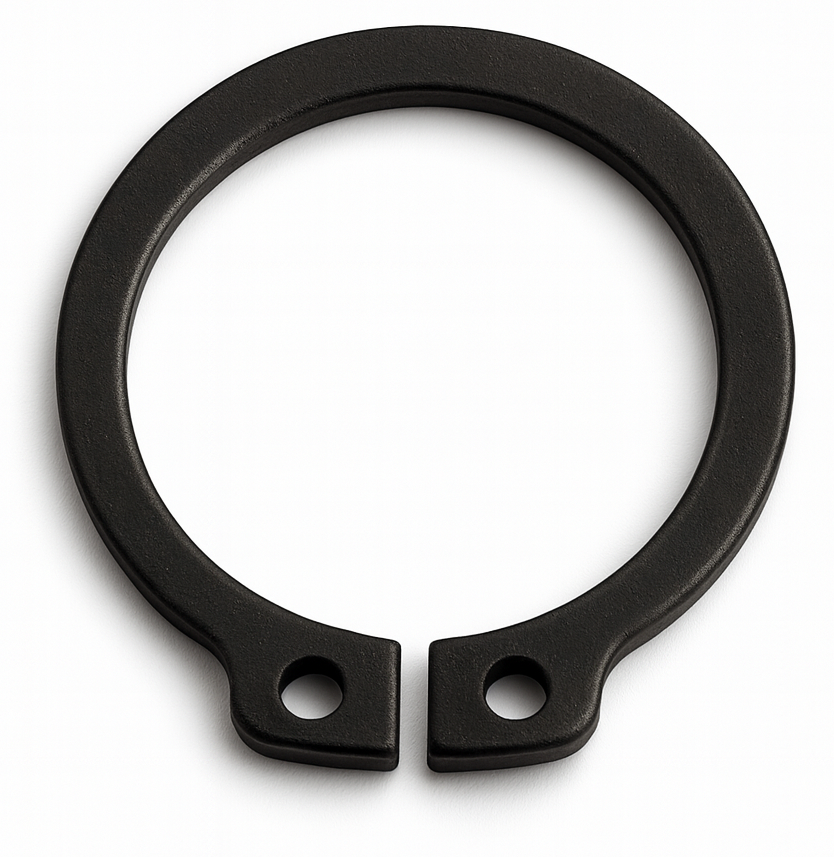
An external retaining ring—also called an external circlip or snap ring—is a spring-steel ring that snaps into a groove machined around the outside of a shaft. Once seated, it forms a shoulder that blocks axial movement of parts such as bearings, gears, spacers, and pulleys. “External” indicates it fits around a shaft; the counterpart is an internal retaining ring that seats inside a bore.
During installation, the ring is elastically expanded and then springs back into the shaft groove. Thrust loads are transferred from the retained parts through the ring to the groove wall or shoulder. Most rings are made from carbon spring steel or stainless steel, with finishes like phosphate or zinc for corrosion protection. Sizing is based on shaft diameter, and groove width and depth follow standards such as DIN 471 and ASME B18.27 for external rings.
Common styles include the standard circlip with lug holes, installed with snap-ring pliers; the E-ring, which pushes radially into a groove for quick installation; the spiral (spiral-wound) ring, which winds into the groove to provide 360° contact without lugs; and the constant-section (C-ring), which has a uniform rectangular cross-section suited to high loads and impact.
For installation, use proper pliers or applicators and avoid over-expanding the ring. Many stamped circlips have a sharp “punch” edge and a rounded “die” edge—orient the sharp edge toward the primary thrust direction for the best retention. Always verify groove dimensions and shaft chamfers, and select material and finish appropriate to the environment and load.
Internal Retaining Ring
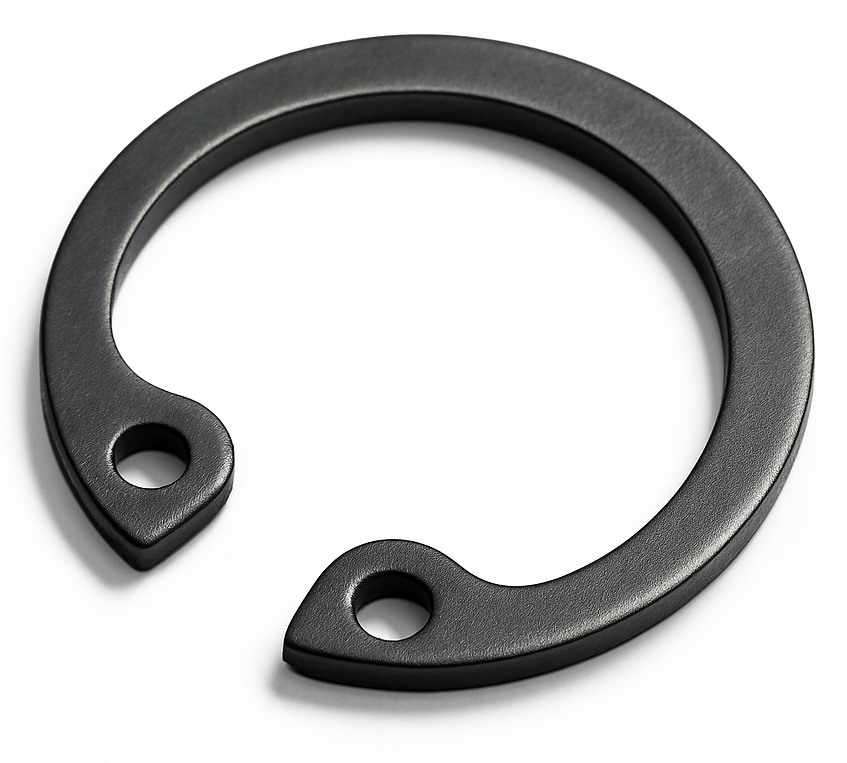
An internal retaining ring (internal circlip/snap ring) is a spring-steel ring that fits into a groove inside a bore to create a shoulder that prevents components from moving axially out of a housing. It’s the counterpart to an external ring: instead of sitting on a shaft, it seats inside a hole to retain bearings, bushings, seals, or gears.
During installation the ring is compressed, inserted into the bore, and released so it springs into the machined groove. Axial thrust from the retained part is taken by the ring and transferred to the groove wall. Typical materials are carbon spring steel or stainless, with protective finishes such as phosphate, black oxide, or zinc. Rings are sized by bore diameter, and groove width/depth follow standards such as DIN 472 and ASME B18.27 for internal rings.
Common internal styles include the standard circlip with lug holes (installed with snap-ring pliers), spiral (spiral-wound) rings that wind into the groove and provide 360° contact with no lugs, and constant-section (C-rings) with a uniform rectangular cross-section for high load/impact service. (E-style rings exist for bores, but E-rings are more common on shafts.)
Good practice: use the correct pliers/applicator and avoid over-compressing; many stamped circlips have a sharp “punch” edge and a rounded “die” edge—orient the sharp edge toward the primary thrust direction for best retention. Verify groove dimensions and chamfers, and select material/finish to suit the operating environment and load.