
Learning Hub
Glossary
Polymer
A polymer is a substance made of macromolecules, meaning very large molecules built from many repeating structural units. In common chemistry language, those repeating building blocks are usually called monomers, and when many of them chemically join together they form a polymer chain or network. IUPAC defines a polymer as “a substance composed of macromolecules,” and standard chemistry references describe polymers as natural or synthetic materials whose molecules consist of repeated simpler units.
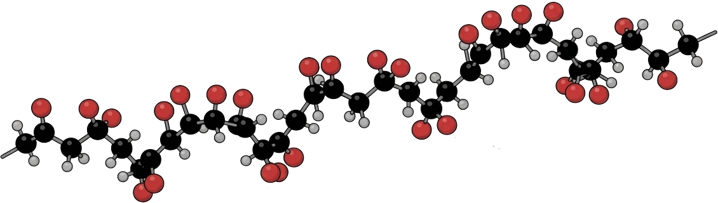
Polymers can be natural, synthetic, or somewhere in between. Natural polymers include materials such as proteins, cellulose, starch, and nucleic acids, all of which are essential to living systems. Synthetic polymers include familiar industrial materials such as polyethylene, polypropylene, nylon, polyester, and many plastics and elastomers. Not every polymer is a plastic, but most plastics are polymer-based materials. The exact behavior of a polymer depends on its chemistry, molecular size, and structure, including whether the chains are mostly linear, branched, or cross-linked into a three-dimensional network.
From a manufacturing and materials standpoint, polymers matter because they can be engineered for very different properties. Some are flexible, some rigid, some transparent, some heat-resistant, and some highly resistant to chemicals or wear. That is why polymers are used in packaging, coatings, textiles, adhesives, seals, insulation, medical devices, automotive parts, and countless molded or extruded products. The basic idea stays the same across all of them: a polymer is a material whose performance comes from very large molecules built by repeating smaller units into long chains or connected molecular structures.