
Learning Hub
Glossary
Dezincification
Dezincification is a corrosion process that selectively removes zinc from a copper-zinc alloy, most commonly brass, leaving behind a weakened, porous, copper-rich structure. Since brass gets much of its strength and utility from the combination of copper and zinc, the loss of zinc can seriously reduce the material’s mechanical integrity even if the part still looks mostly intact from the outside.
Dezincification typically occurs when brass is exposed to certain corrosive environments, especially water containing chlorides, low pH conditions, stagnant water, soft water, high temperatures, or environments with dissolved oxygen and other aggressive ions. In a fastener, fitting, valve, plumbing component, or marine hardware application, the zinc-rich areas of the brass can gradually dissolve away. What remains is often a reddish or pinkish copper-colored surface, along with a brittle, sponge-like internal structure that may crack, leak, crumble, or fail under load.
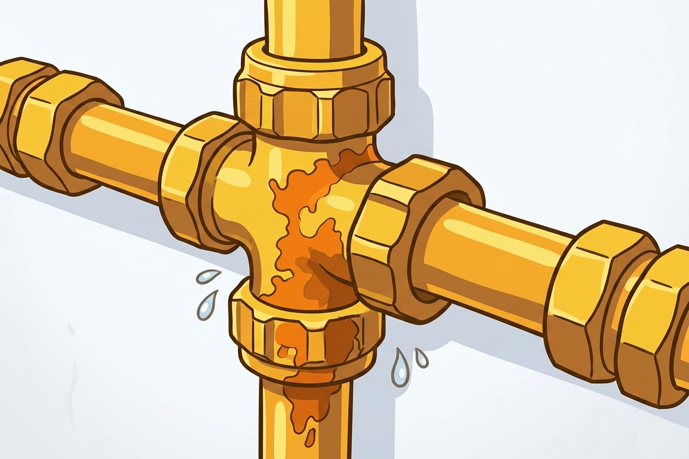
There are two common forms of dezincification: uniform dezincification and localized or plug-type dezincification. Uniform dezincification affects a broad surface area more evenly, while plug-type dezincification attacks specific spots and can create deep, hidden zones of weakness. Plug-type attack is especially dangerous because the outside of the component may appear serviceable while the interior has lost strength.
In industrial and fastener applications, dezincification matters because it can turn a seemingly solid brass part into a structurally unreliable component. Brass nuts, screws, threaded inserts, fittings, washers, valves, and marine components may lose thread strength, clamping ability, pressure-retention capability, or resistance to vibration. This is one reason material selection is important when brass parts are used in wet, marine, chemical, plumbing, or outdoor environments.
Dezincification can be reduced by using dezincification-resistant brass, often called DZR brass, or by choosing a different copper alloy such as bronze, silicon bronze, phosphor bronze, copper-nickel, or stainless steel depending on the application. Alloying additions such as arsenic, tin, or other elements may also improve dezincification resistance in specific brass grades. The best prevention is matching the alloy to the service environment rather than assuming all brass behaves the same in corrosive conditions.