
Learning Hub
Glossary
Decarburization
Decarburization is the loss or removal of carbon from the surface layer of steel or iron when it is exposed to a high-temperature environment containing oxygen, hydrogen, or other reactive gases. This process alters the metal’s chemical composition near the surface, reducing the carbon content and, as a result, lowering its hardness, strength, and wear resistance.
During heat treatment, forging, or annealing, if steel is not properly protected, the carbon atoms at the surface react with oxygen or water vapor in the furnace atmosphere to form carbon monoxide (CO) or carbon dioxide (CO₂). As these gases escape, they deplete the surface of carbon, creating a softer, weaker layer while the inner core retains its original carbon content and mechanical properties.
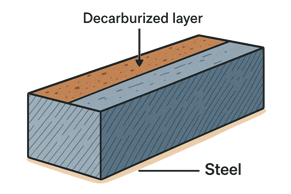
Decarburization can occur in two forms: partial, where only a portion of the surface is affected, and complete, where all carbon near the surface is lost. The depth of decarburization depends on factors like temperature, exposure time, and atmosphere composition.
In engineering, decarburization is undesirable because it can lead to reduced fatigue strength, poor wear resistance, and premature failure in components such as bolts, gears, springs, and shafts. To prevent it, manufacturers use controlled-atmosphere furnaces, vacuum heat treatment, or protective coatings to maintain carbon stability during processing.