
Learning Hub
Glossary
Deburr
Deburr means to remove unwanted sharp edges, raised material, rough projections, or small metal fragments called burrs from a part after it has been cut, drilled, machined, stamped, punched, threaded, sawed, ground, or otherwise manufactured. A burr is usually a thin lip or ragged edge of displaced material left behind when tooling cuts or forms the workpiece.
In fastener and metalworking applications, deburring is important because burrs can interfere with fit, assembly, thread engagement, seating, safety, and appearance. A burr on a screw, bolt, nut, washer, stamped clip, machined spacer, or threaded insert can cause poor mating, cross-threading, inaccurate torque readings, uneven bearing surfaces, sharp handling edges, or damage to nearby components. On precision parts, even a very small burr can prevent the part from seating properly or meeting dimensional requirements.
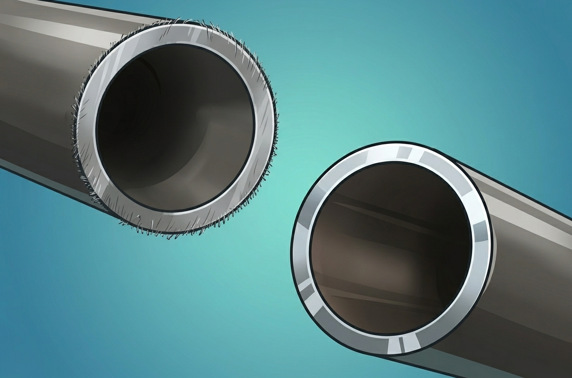
Deburring can be done in several ways, including manual filing, brushing, sanding, tumbling, vibratory finishing, abrasive blasting, belt grinding, chamfering, countersinking, thermal deburring, electrochemical deburring, or robotic/mechanical edge finishing. The best method depends on the material, part size, production volume, edge condition, tolerance requirements, and whether the part needs a smooth cosmetic finish or simply needs sharp edges removed.
In manufacturing, “deburr” may be used as a process instruction, such as “deburr all edges,” meaning the part should be free of loose metal, sharp projections, and rough edges that could affect handling or function. It does not necessarily mean the part is polished. It means the objectionable burrs have been removed so the part is safer, cleaner, and more suitable for assembly or use.