
Learning Hub
Glossary
Conversion Coatings
A Conversion coating is a chemical treatment applied to the surface of metals to enhance corrosion resistance, improve paint adhesion, and sometimes provide lubrication. Unlike simple coatings that add a separate layer on top of the metal, conversion coatings work by chemically altering the metal’s surface itself, creating a thin, protective compound layer that bonds directly to the substrate. This makes the finish more durable and resistant to chipping or peeling compared to applied coatings like paint.
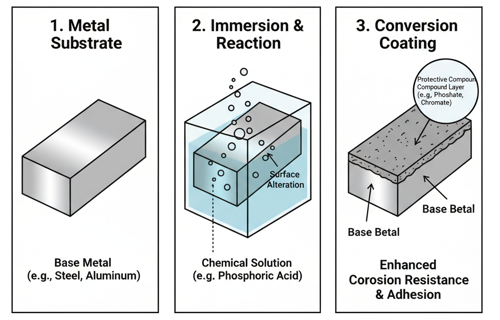
The process typically involves immersing or spraying the metal with a solution that reacts with its surface. The reaction converts the outermost metal layer into an insoluble compound—such as phosphate, chromate, or oxide—that tightly adheres to the base material. Each type of conversion coating has specific benefits: phosphate coatings are common in automotive and industrial uses for improving paint adhesion; chromate coatings are widely used on aluminum and zinc for corrosion protection; and anodizing, a form of oxide conversion, is used to harden aluminum surfaces while allowing for coloring.
Conversion coatings are commonly found in industries where both corrosion resistance and paint performance are critical. They are used in aerospace, automotive, appliances, and construction fasteners, where untreated metals might quickly corrode or fail. Beyond corrosion resistance, these coatings also reduce friction, prevent galling, and extend service life. In fastener applications, conversion coatings are particularly important because they not only protect against rust but also ensure that applied paints, sealants, or additional coatings adhere effectively, providing long-term reliability in harsh environments.