
Learning Hub
Glossary
Blind Bolt
A blind bolt is a fastener designed to be installed from one side of the joint when the back side, or “blind side,” cannot be reached during assembly. Instead of requiring access to both sides like a conventional nut-and-bolt assembly, a blind bolt is engineered so that installation from the accessible side creates a retained or expanded locking condition on the hidden side, allowing the joint to be secured where rear access is limited or impossible. In aerospace hardware, manufacturers describe blind bolts as one-sided installation fasteners that form a blind-side head and provide controlled clamp or preload performance after installation.
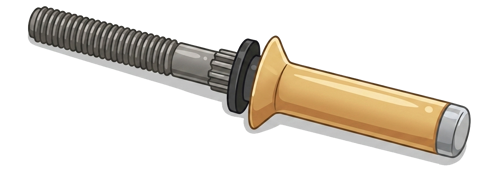
Blind bolts are commonly used in aircraft structures, transportation equipment, enclosed assemblies, and other applications where the structure is boxed in, already closed off, or otherwise inaccessible from behind. Their purpose is to give the installer some of the functional benefits of a bolted joint in places where a standard bolt, washer, and nut cannot practically be assembled. Depending on the design, the fastener may use an internal sleeve, pin, locking collar, or other mechanical feature that expands, upsets, or locks on the blind side as the tool is operated from the accessible side. Aerospace examples from Howmet describe blind bolts that form a solid blind-side head and are intended for metallic or composite structures with specified shear, tensile, fatigue, and self-locking capabilities.
A blind bolt is not exactly the same thing as a blind rivet, even though both are installed from one side. A blind bolt generally refers to a higher-strength, more bolt-like fastening system intended to provide a more engineered structural joint, while a blind rivet is a rivet system that deforms during installation and is usually categorized separately.