

Understanding Zinc Trivalent Finishes
If you've ever worked with threaded fasteners, you've likely encountered finishes such as Zinc Clear Trivalent, Zinc Black Trivalent, and Zinc Yellow Trivalent. Because they have different appearances, it's easy to assume they're completely different finishes.
They're not.
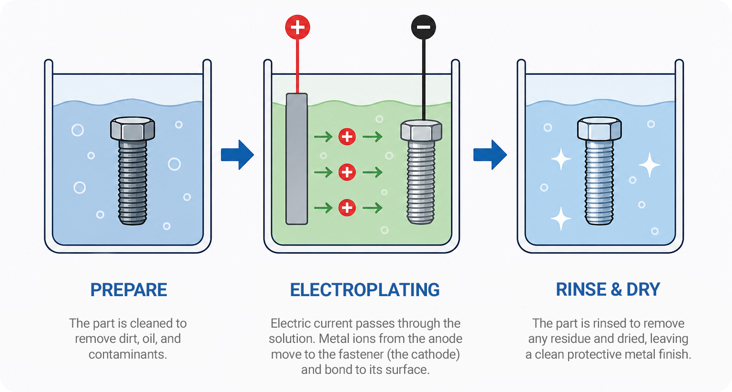
Every zinc trivalent finish is created using the same basic process. It begins by thoroughly cleaning the steel fastener to remove oils, dirt, and other surface contaminants left behind during the manufacturing process that could interfere with plating. Once cleaned, the fastener is submerged in a zinc electroplating bath, where an electrical current deposits a thin, uniform layer of metallic zinc onto the surface of the steel, giving the fastener the bright silver appearance commonly associated with zinc plating.
The basic zinc electroplating process is illustrated below.
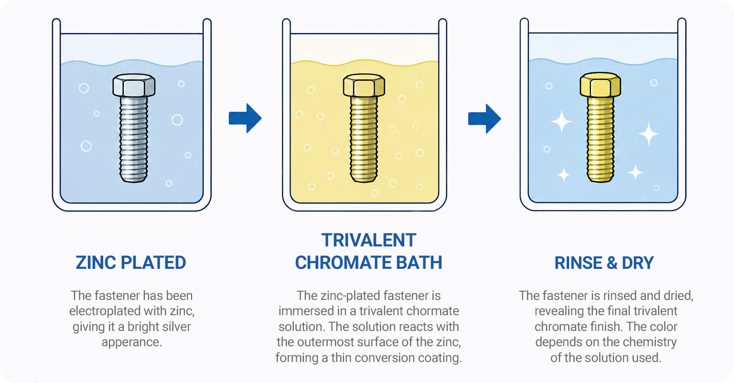
After the electroplating process is complete, the fastener is placed in a trivalent chromate solution. The trivalent chromate reacts with only the outermost surface of the metallic zinc, transforming the surface into a thin protective film. This is known as a conversion coating, which helps protect the zinc while giving the finish its final appearance. After the conversion coating has formed, the fastener is then rinsed to remove any remaining solution and allowed to fully cure before the finished part is ready for use.
The trivalent chromate conversion process is illustrated below.
Together, the zinc plating and the conversion coating work in layers. The conversion coating helps slow corrosion of the zinc beneath it, while the zinc protects the underlying steel by acting as a sacrificial metal. This means the zinc is designed to corrode before the steel does. This layered approach is what makes zinc trivalent finishes one of the fastener industry's most widely used protective finishes.
Why Are Zinc Trivalent Finishes Available in Different Colors?
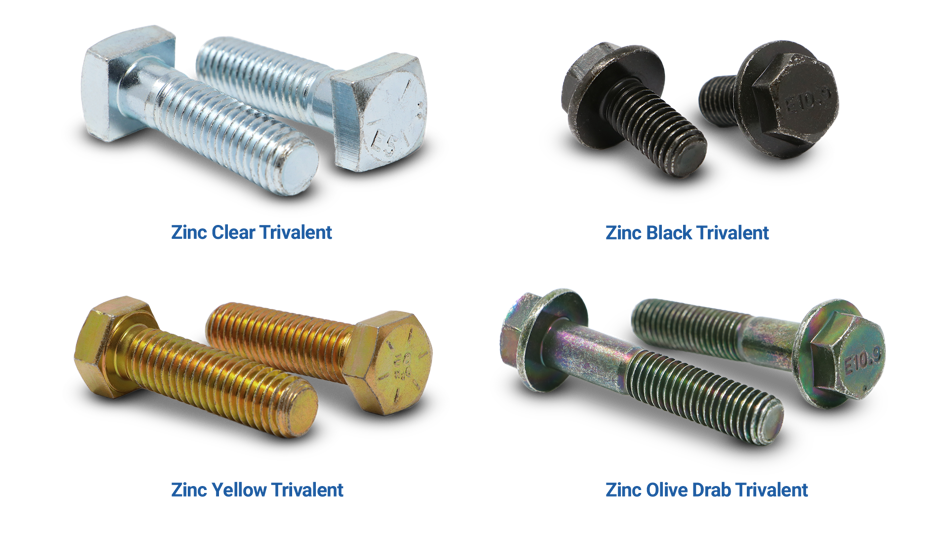
The color of a zinc trivalent finish is determined by the chemistry of the trivalent chromate solution used during the conversion coating process. Because different trivalent chromate solutions use different chemistries, they produce conversion coatings with different appearances. A clear trivalent chromate solution forms a nearly transparent film that preserves the bright silver appearance of the zinc plating, while black, yellow, and olive drab trivalent chromate solutions produce films with their respective colors. Examples of Zinc Clear Trivalent, Zinc Black Trivalent, Zinc Yellow Trivalent, and Zinc Olive Drab Trivalent finishes are shown below.
 Does the Color Affect Corrosion Performance?
One of the most common misconceptions about zinc trivalent finishes is that the color determines corrosion resistance.
It does not.
A Zinc Clear Trivalent finish is not automatically less corrosion resistant than a Zinc Black Trivalent finish, and a Zinc Yellow Trivalent finish does not automatically provide more protection than either. The color of a zinc trivalent finish also has no relationship to the fastener's grade or mechanical properties.
Color is simply one characteristic of the specified finish. Corrosion resistance is determined by the finish requirements identified in in any relevant product documentation, not by the color of the conversion coating. Likewise, a fastener's grade is determined by the material and mechanical property requirements defined by the applicable industry standard, not by the finish applied.
How Zinc Trivalent Finishes Compare to Zinc Flake Coatings
Because both zinc trivalent finishes and zinc flake coatings help protect steel from corrosion, they are sometimes confused with each other. However, they are created using different processes.
As mentioned earlier, zinc trivalent finishes begin with electroplating, followed by a trivalent chromate.
Zinc flake coatings, on the other hand, are non-electrolytically applied coatings. Rather than depositing zinc onto the fastener through electroplating, zinc flake coatings use a completely different manufacturing process to apply a zinc-rich coating to the surface of a fastener.
If you'd like to learn more about zinc flake coatings, be sure to read our companion piece, What Are Zinc Flake Coatings and Why Are They Important?
Putting It All Together
Although Zinc Clear Trivalent, Zinc Black Trivalent, Zinc Yellow Trivalent, and Zinc Olive Drab Trivalent each have different appearances, they all begin with the same electroplating process. The trivalent chromate applied afterward is what gives each finish its unique appearance while helping protect the zinc beneath it.
Whether you're purchasing, specifying, sourcing, or simply learning about fasteners, understanding how zinc trivalent finishes are created and why they look different will help you communicate more confidently with customers, suppliers, and coworkers.
If you have questions about zinc trivalent finishes or any of the fasteners we supply, contact Earnest Machine at 800-327-6378 or [email protected]. We're always happy to help.